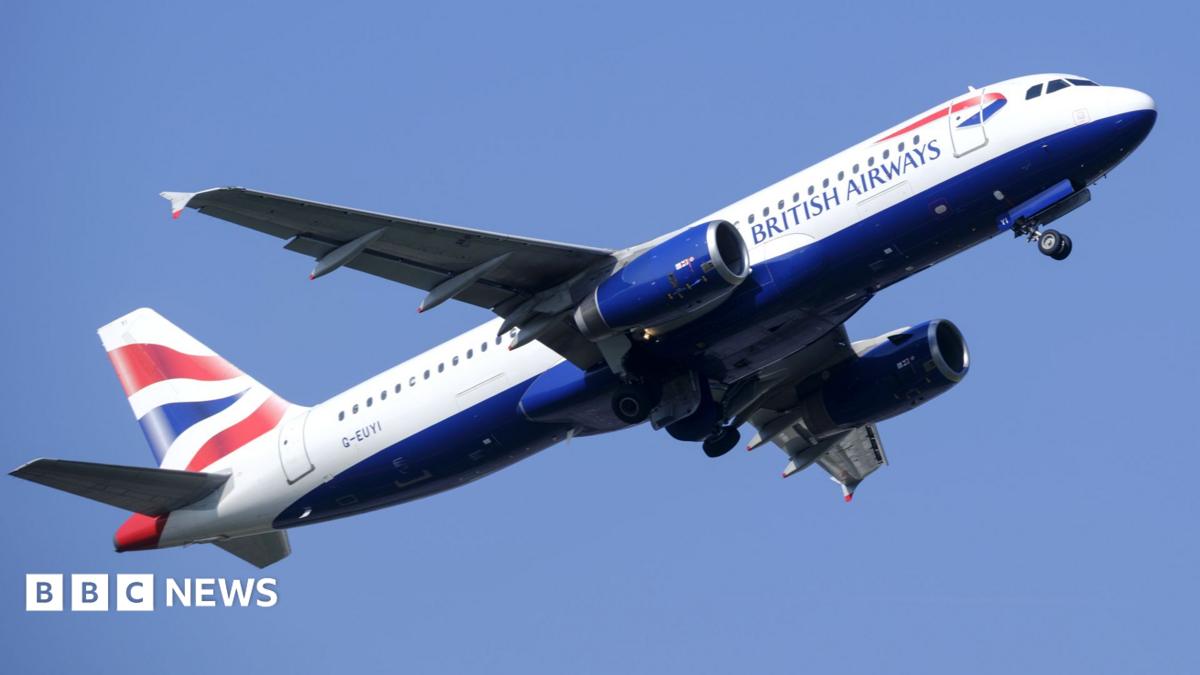
BA919 Near-Catastrophe: A Defining Moment for Aviation Safety
A British Airways flight, BA919, from Dusseldorf to Heathrow on July 6 faced a severe operational anomaly, culminating in a Mayday distress call and critical manual intervention by the flight captain. As the Airbus A320 approached one of the world’s busiest airports, a sequence of technical failures and aerodynamic challenges unfolded, triggering immediate investigations by UK and French aviation authorities. Passenger accounts vividly describe a sudden, violent maneuver post-aborted landing, inducing widespread fear and highlighting the profound psychological toll such near-disasters inflict, even when ultimately averted.
Technical Malfunctions, Degraded Flight Modes, and Critical Stall Warnings
The operational crisis initiated with a critical data system failure as the Airbus A320 began its approach to Heathrow. This malfunction immediately triggered an initial stall warning, drastically increasing the flight crew’s operational complexity and demanding rapid, high-pressure assessment. Consequently, the crew engaged “alternate law” mode—a flight control configuration that disengages certain automated flight protection systems, thus shifting greater reliance onto manual piloting skills and crew judgment.
Reports indicate a stall warning condition emerged at approximately 4,000 feet directly over London’s densely populated financial district, Canary Wharf. This was followed by a second, critical stall warning at around 3,000 feet, just miles from the airport, signaling persistent aerodynamic challenges at dangerously low altitudes. This escalating sequence prompted the crew to issue a full Mayday distress call, underscoring the severe, imminent threat and amplifying the potential societal and infrastructural implications of a catastrophic outcome.
The Indispensable Human Element: Captain’s Manual Override and Pilot Training Imperatives
The unfolding crisis underscored the indispensable role of human intervention when automated systems falter. With the co-pilot’s attempts proving insufficient, the captain executed a direct, physical override to regain control of the aircraft. This decisive act, characterized by industry sources as “virtually unheard of” in modern commercial aviation for its critical, late-stage nature, showcases exceptional airmanship and challenges the prevailing reliance on advanced automation. It emphatically reinforces pilots as the ultimate safeguard in unforeseen circumstances.
The profound psychological toll of such a near-disaster is evident in reports of the captain being placed on “stress leave.” This highlights the significant mental and emotional burden on aviation professionals and prompts critical considerations for airline support systems and mental health provisions. Consequently, this incident serves as a crucial case study, inevitably triggering a deeper examination of pilot training protocols. The focus will be on reinforcing manual flying skills and emergency procedures, particularly for degraded flight control modes, ensuring crews are prepared for even the most improbable scenarios within an increasingly automated cockpit environment.
Regulatory Scrutiny, Stakeholder Impact, and Systemic Vulnerabilities
The incident, classified as “serious” by the UK’s Air Accidents Investigation Branch (AAIB) due to its high accident potential, immediately triggered a comprehensive, international investigation. With France’s BEA also involved, the collaborative effort underscores the global commitment to aviation safety, ensuring thorough technical and operational reviews. British Airways, while fully cooperating, adheres to strict protocols precluding further comment, balancing transparency with investigative integrity. This event, described as the U.K.’s “most serious near-miss in years,” could have resulted in a “hull loss,” highlighting the critical, fine margin between incident and catastrophe and signaling a catalyst for broader industry discussions on air traffic management, aircraft system reliability, and emergency response frameworks.
Beyond operational concerns, the BA919 incident carries significant reputational and financial ramifications. Vivid passenger accounts of distress question in-flight crisis communication protocols, directly impacting public perception of airline safety and potentially eroding customer confidence. For British Airways, this translates into potential long-term impacts on market share and operational budgets, alongside direct investigation costs. Indirectly, Airbus, as the A320 manufacturer, faces scrutiny regarding its data systems and flight control architecture, with any findings on design or system vulnerabilities potentially affecting its global fleet. This collective exposure places the entire aviation sector under a renewed focus on its safety record, particularly concerning advanced automation and human-machine interaction, serving as a critical data point for regulators, airlines, and manufacturers to evaluate the robust safety ecosystem.
Future Paradigms: Reinforcing Resilience and Continuous Improvement
Ultimately, the BA919 near-miss over London serves as a stark reminder of the intricate, multi-layered safety protocols underpinning modern aviation. It provides invaluable data for refining existing safeguards and underscores the critical interplay between automated systems and human expertise, particularly in degraded flight modes. Lessons learned from this specific incident will undoubtedly inform the ongoing evolution of airworthiness directives, operational procedures, maintenance schedules, software updates, and rigorous crew training mandates across the global industry.
The incident’s high-profile nature and proximity to a major urban center have amplified public discourse on aviation safety, fostering heightened awareness beyond industry experts. This collective vigilance exerts pressure on regulatory bodies and airlines to demonstrate proactive measures and transparent communication. It reinforces the industry’s unwavering commitment to relentless self-assessment and adaptation, ensuring that every near-miss becomes a powerful catalyst for systemic improvement, rather than a precursor to a future disaster, thereby upholding commercial aviation’s exceptional safety record.