
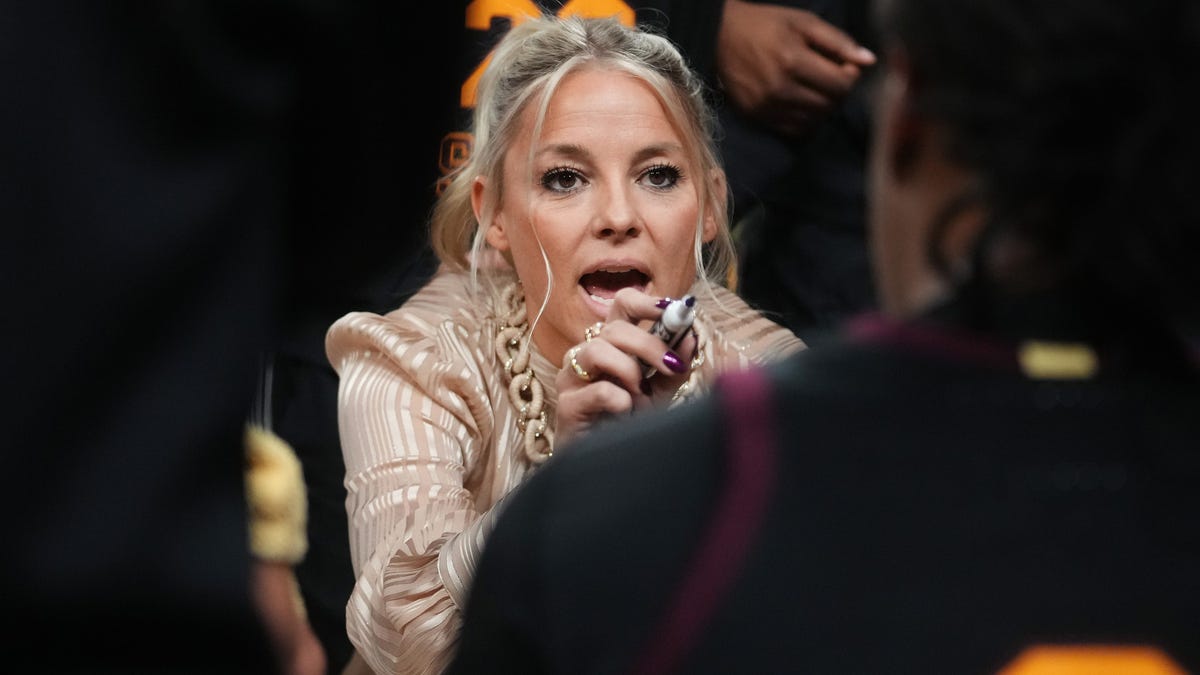
The Arizona State University women’s basketball program faces an immediate test of its organizational depth as it returns to the NCAA Tournament for the first time since 2017. Head coach Molly Miller, the architect of a 24-10 turnaround season, did not travel to Iowa City for the team’s First Four matchup against Virginia due to an undisclosed illness. This leadership vacuum at the peak of the postseason creates a complex operational challenge for a program attempting to validate its rapid reconstruction.
The Norman Factor: Veteran Continuity
To mitigate the impact of Miller’s absence, ASU has pivoted to associate head coach Stephanie Norman. Her elevation is more than a temporary substitution; it is a strategic hedge. Norman brings an 18-year tenure from the University of Louisville, a perennial national contender, providing the Sun Devils with a surrogate leader who possesses deep institutional knowledge of the NCAA Tournament’s high-pressure environment. Her presence stabilizes the program during the critical 48-hour window where logistical and scouting preparation is most intense.
The internal culture appears resilient to this disruption. Senior guard Marley Washenitz indicated that practice intensity has remained consistent, suggesting that Miller has successfully decentralized leadership. This structural maturity allows the roster to function autonomously under established protocols, even when the primary decision-maker is physically absent.
Tactical Hybridity and Real-Time Logistics
While Miller is sidelined, she remains integrated into the team’s workflow via remote film analysis and scouting. However, this hybrid model faces limitations during game flow. While Miller can influence the pre-game blueprint, Norman is tasked with the real-time tactical adjustments and emotional management required to navigate the momentum swings of March Madness. The program has categorized Miller’s status as hour-to-hour, forcing the staff to maintain multiple contingency plans for the First Four and a potential subsequent matchup against Georgia.
Institutional Stakes and Brand Momentum
This tournament appearance is the culmination of Miller’s immediate impact since moving from Grand Canyon University. By revitalizing the ASU brand within a single season, she has restored the program’s recruiting leverage. A successful performance in Iowa City—regardless of who is on the sideline—would serve as a powerful testament to the structural integrity of the program. The First Four format is inherently unforgiving; the winner must immediately pivot to face a rested No. 7 seed. Consequently, the efficiency of Norman’s rotation management and the team’s ability to execute a remote-scouted game plan will define the Sun Devils’ postseason legacy.

Photo by 127071 on Pixabay.