
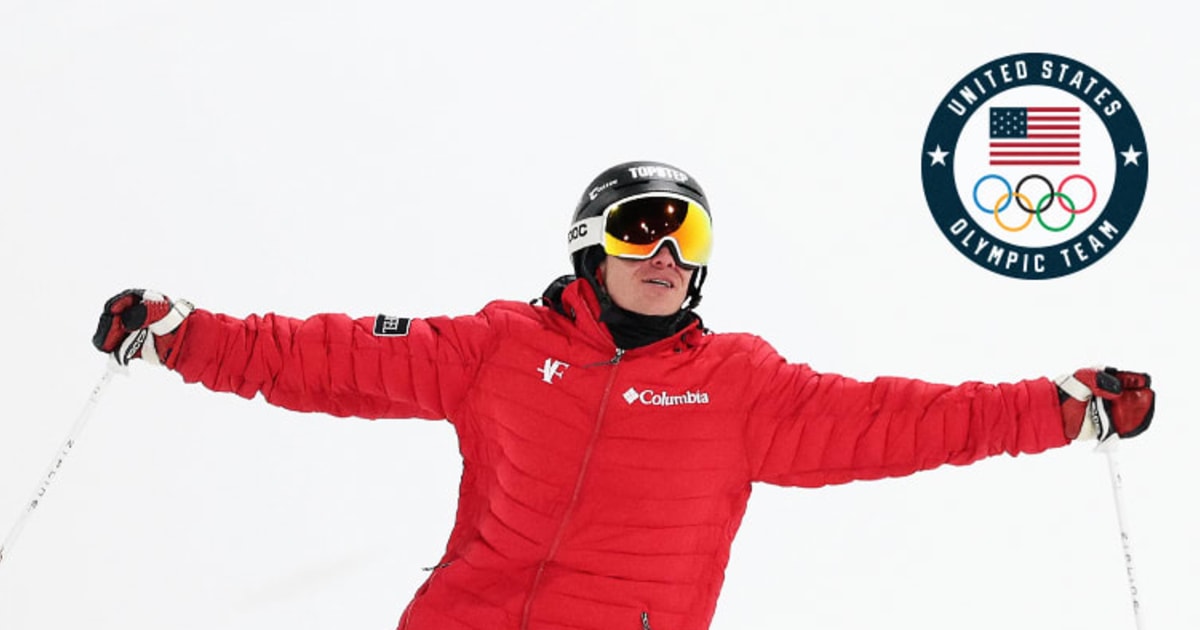
Alex Ferreira’s Ascendancy in Freeskiing: A Study in Elite Performance and Strategic Trajectory
Alex Ferreira’s recent competitive achievements, notably an unprecedented undefeated season, signify a profound strategic evolution in elite freeskiing. His consistent performance across high-stakes events provides a critical analytical framework for understanding the interplay of strategic development, sustained excellence, and competitive dynamics at the pinnacle of winter sports. This ascendance not only redefines individual standing but also offers crucial insights into athlete development paradigms and the commercial viability within the freeskiing ecosystem.
Foundational Influences and Early Career Trajectory
Ferreira’s early exposure to high-performance athletics, rooted in his father Marcelo’s professional soccer career and mother Colleen’s long-distance running background, cultivated a robust competitive drive. This familial immersion fostered a distinct mindset, translating into a disciplined approach to training and competition that is crucial for sustained elite performance.
His initiation into competitive freeskiing at age ten, specifically an aerials event orchestrated by his mother, exemplifies an unconventional yet effective talent identification pathway. This early, often serendipitous, exposure can unlock latent potential, proving crucial for developing the complex motor skills and competitive resilience essential for eventual elite-level performance and adaptation.
The strategic pivot from moguls to halfpipe skiing represents a critical career decision, underscoring the adaptive nature of professional athletic development. This transition, driven by an evolving skill set and identification of a more advantageous competitive niche, optimized Ferreira’s potential for success within a highly specialized sport. Such a strategic reallocation of focus and resources, informed by self-assessment and guidance, is paramount for achieving maximal competitive advantage and ascending to global prominence.
The Dual Peaks of Competitive Excellence: Olympics and X Games
Ferreira’s distinction as a two-time Olympic medalist (PyeongChang 2018 silver, Beijing 2022 bronze) places him within an elite cohort of winter sports athletes. These Olympic accolades confer unparalleled prestige, strategically elevating an athlete’s global profile and unlocking significant long-term sponsorship and media leverage.
Concurrently, his multiple Winter X Games gold medals (Aspen 2019, 2020, 2024) affirm consistent dominance within a distinct, commercially driven competitive circuit. The X Games, emphasizing innovation, style, and raw athleticism, serve as a crucial platform for athletes to push technical boundaries, appealing to a specific demographic within the freeskiing audience and expanding market reach.
Excelling in both Olympic and X Games arenas demands a versatile competitive strategy, necessitating adaptation to differing judging criteria, course designs, and competitive pressures. This dual success highlights a comprehensive skill set, exceptional mental fortitude, and a holistic competitive intelligence critical for navigating freeskiing’s diverse ecosystem. Consistently performing at this elite level across distinct platforms significantly enhances an athlete’s marketability, attracting a broader endorsement portfolio and solidifying global icon status, thereby maximizing both reputational capital and long-term financial leverage.
The 2023-24 Season: A Benchmark of Unprecedented Dominance
The 2023-24 season established a historic benchmark for Ferreira, marking him as the first halfpipe skier to achieve an undefeated season across all entered competitions. This unprecedented accomplishment signifies a rare degree of sustained competitive superiority, redefining performance expectations within the sport.
Such a flawless season evidences not only exceptional physical conditioning and technical mastery but also an unparalleled mental game, enabling consistent peak execution under intense competitive pressure. This level of dominance intrinsically reshapes competitive paradigms, compelling rivals to critically re-evaluate their training methodologies and strategic approaches.
The operational implications for Ferreira’s training regimen and support staff are substantial, indicative of a highly optimized system encompassing physical preparation, technical refinement, and psychological conditioning. Achieving an undefeated season in a high-variability sport like freeskiing underscores the criticality of meticulous planning, data-driven execution, and adaptive coaching strategies.
Strategically, this unparalleled consistency in victory provides significant leverage in negotiations with sponsors, equipment manufacturers, and media partners. It unequivocally solidifies Ferreira’s brand as a proven, high-ROI asset, offering tangible returns for entities aligning with his sustained success.
Athlete Branding and Performance Psychology
Ferreira’s reported preparation elements, such as “praying to Lionel Messi” and specific dietary choices like blueberries, illuminate the personalized rituals and psychological strategies adopted by elite athletes. These practices, while seemingly idiosyncratic, serve a crucial functional role in mental preparation, focus, and the management of competitive anxiety, demonstrating the individualized nature of peak performance routines.
Such personal anecdotes significantly enrich an athlete’s public persona and brand narrative, fostering deeper fan and media engagement. They humanize the pursuit of excellence, creating a relatable and memorable athlete identity that extends beyond mere competitive results, thereby enhancing market differentiation.
The “Hotdog Hans” persona further exemplifies the cultivation of a distinct athlete identity, a strategic asset for optimizing media engagement and commercial partnerships. In a competitive landscape, a unique and engaging personality serves as a powerful differentiator, significantly enhancing an athlete’s brand equity and market value.
Collectively, these individualized strategies, alongside a dedicated focus on ‘mental prep,’ underscore the increasing recognition of sports psychology and holistic well-being as integral components of elite performance. Their strategic integration is paramount for sustained success and resilience within demanding competitive environments.
Institutional Support and Ecosystem Impact
Ferreira’s ascent to elite status is intrinsically linked to the comprehensive support structures provided by national sports organizations, exemplified by his affiliation with Team USA. Such programs offer indispensable resources—including advanced coaching, cutting-edge medical support, and access to world-class training facilities—critical for the holistic development and sustained maintenance of top-tier athletic talent.
The acknowledgment of “Made It Moment Support” and “Making Team USA presented by Xfinity” highlights the crucial role of corporate sponsorships in funding national sports initiatives. These partnerships are vital for the financial sustainability and operational viability of elite sports programs, directly enabling the provision of comprehensive athlete support.
An athlete’s consistent success, especially on the Olympic stage, generates a multiplier effect: amplifying sport visibility, enhancing appeal, inspiring new generations of participants, and attracting further investment. This cascading impact strategically reinforces the entire ecosystem, from grassroots development pipelines to professional circuits.
Furthermore, Ferreira’s educational background from Colorado Mountain College ’21 exemplifies the integration of academic pursuits with athletic development—a dual-career pathway model increasingly recognized for fostering well-rounded individuals and providing critical post-competition transition avenues. This holistic investment strategically enhances an athlete’s long-term welfare and career optionality.
Economic and Market Implications of Sustained Excellence
The sustained high performance of an athlete like Alex Ferreira carries significant economic implications for the winter sports industry. His consistent victories and high media visibility directly stimulate consumer interest in freeskiing, driving increased market demand for equipment, apparel, and related services, thereby enhancing revenue streams across the sector.
Event organizers and media rights holders derive substantial benefits from the heightened profile of dominant athletes. Their participation elevates competition quality and guarantees increased viewership, translating into higher event valuation and greater revenue potential through enhanced ticket sales, advertising, and broadcast rights agreements, driven by sustained audience engagement.
For corporate sponsors, strategic alignment with a consistently successful and charismatic athlete like Ferreira offers substantial brand exposure and positive equity transfer. The demonstrable return on investment (ROI) from such endorsements is considerable, influencing future marketing efficacy and partnership strategies across the sports industry.
Furthermore, the relentless demands of elite athletes for superior equipment serve as a powerful catalyst for innovation, driving research and development within manufacturing sectors. Ferreira’s pursuit of perfection on the halfpipe indirectly translates into significant advancements in ski design, binding technology, and protective gear, with broader market benefits and industry-wide technological transfer.
Legacy and Future Trajectory in Freeskiing
Alex Ferreira’s career trajectory—defined by foundational athletic influences, strategic specialization, and a historic undefeated season—establishes an indisputable legacy within freeskiing. His achievements redefine standards for competitive excellence and consistency, even within a sport inherently characterized by dynamic performance variables.
His sustained presence at the sport’s pinnacle will undoubtedly influence future generations, serving as a model for achieving dominance through meticulous preparation, strategic decision-making, and adaptive execution. This profound impact transcends individual performance metrics, fundamentally shaping the developmental paradigms and aspirational goals of emerging talent.
The strategic implications of Ferreira’s career journey are far-reaching for national teams and private academies, influencing their approach to athlete development. His success underscores the critical need to integrate raw talent, psychological resilience, and adaptive career planning, presenting a compelling case study for optimizing athletic potential and establishing best practices.
As freeskiing continues its evolution, athletes like Ferreira—who consistently push performance boundaries and cultivate a strong public presence—are instrumental in shaping its cultural resonance and market capitalization. His contributions underscore the intricate, symbiotic interplay between individual achievement, institutional support, and broader market forces defining elite sports.
Photo by senolsengul on Pixabay.