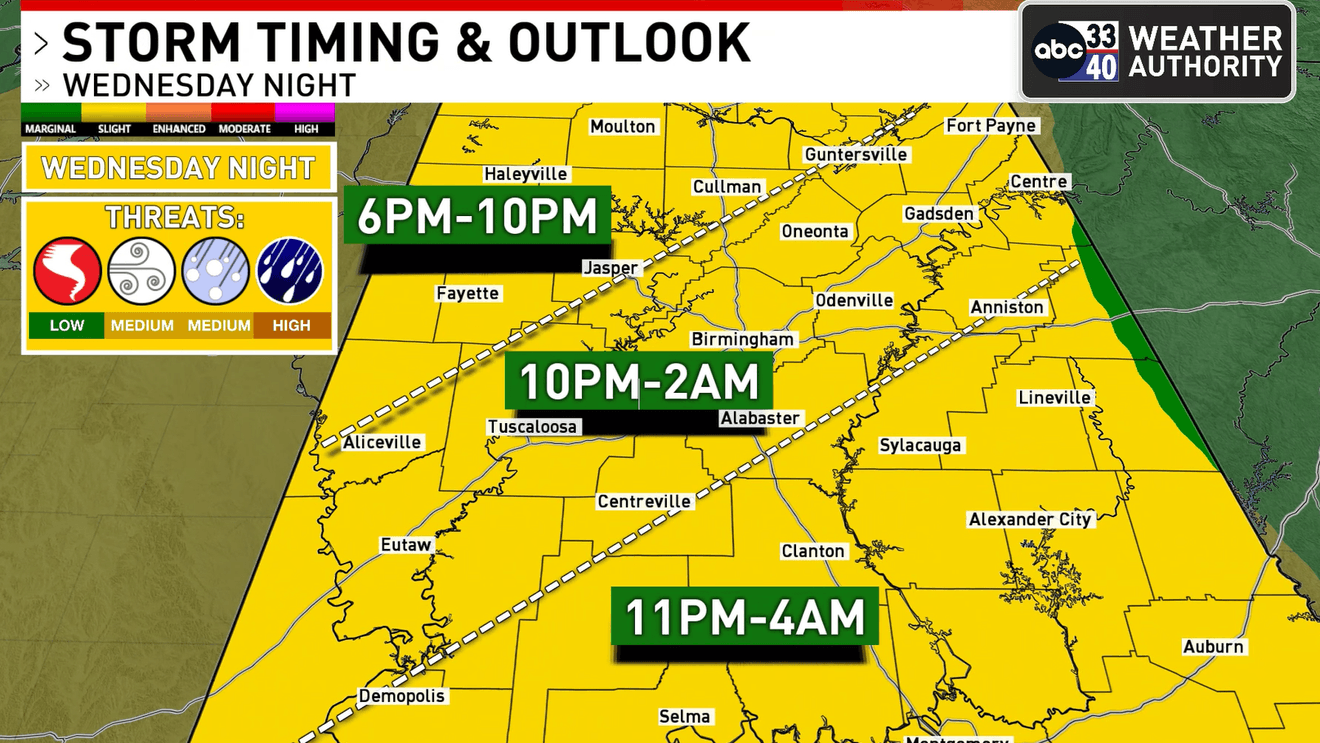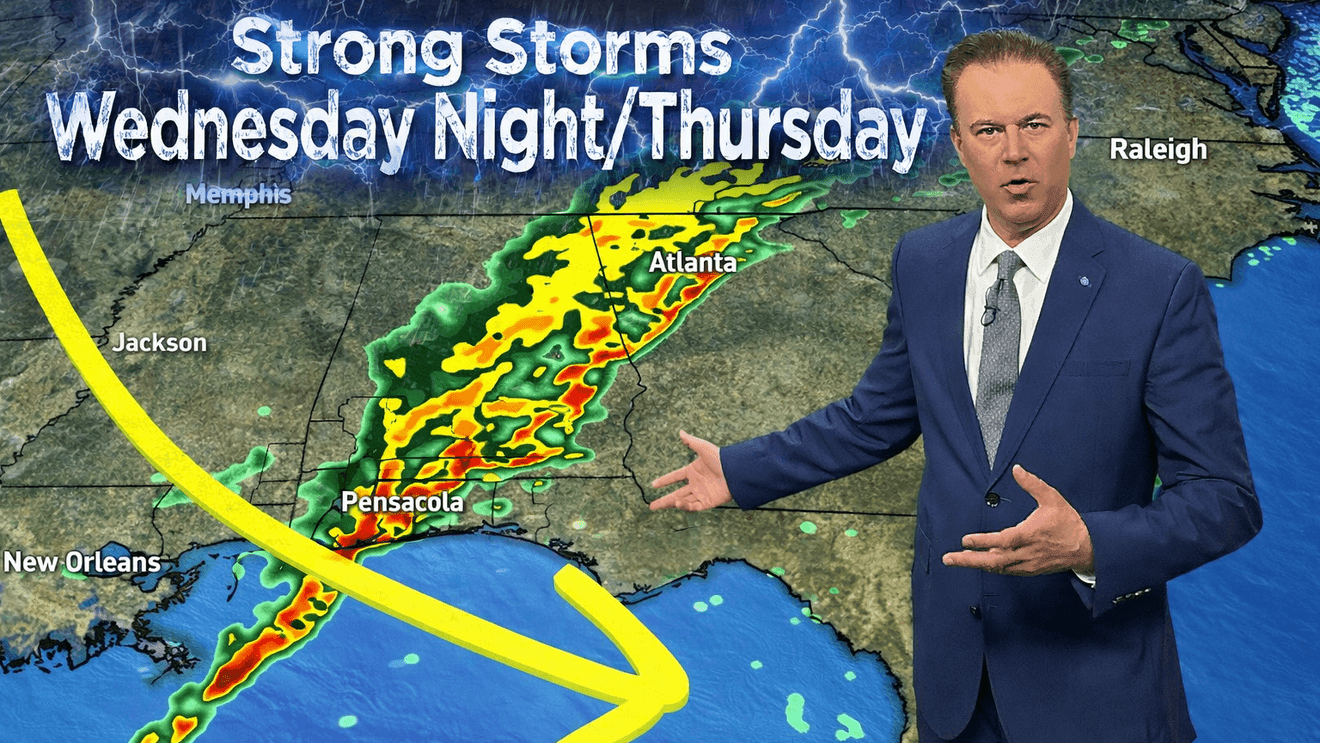
The progression of a synoptic-scale cold front across the Southeastern United States has initiated a transition from convective instability to significant thermal decline. This meteorological shift, categorized by the Storm Prediction Center (SPC) as a Level 1 to Level 2 risk profile, demands high-level coordination between municipal emergency management and utility infrastructure providers to mitigate systemic disruptions.
Meteorological Dynamics and Grid Resilience
Regional power grid integrity faces immediate mechanical pressure from forecasted gradient wind gusts exceeding 30 mph, particularly in the I-20 corridor. These conditions necessitate the rapid mobilization of repair crews during nocturnal hours, where logistical latency and visibility constraints increase operational costs for energy firms. The technical environment is characterized by deep-layer wind shear and increasing instability, parameters capable of sustaining organized linear storm structures that threaten localized distribution networks.
Institutional Risk Assessment and Resource Allocation
The designation of a Tornado Watch for the Black Belt region (Sumter, Greene, Hale, and Perry counties) underscores the specific vulnerability of rural infrastructure to nocturnal convective events. Public safety frameworks utilize these SPC risk assessments—where Level 2 (Slight) indicates a higher frequency of severe reports than Level 1 (Marginal)—to prioritize the deployment of emergency personnel and the activation of community shelters. This categorization serves as a primary decision-making metric for industrial facility managers determining shift adjustments or facility hardening measures.
Logistical Volatility and Supply Chain Continuity
The temporal window of the storm line—entering northwest Alabama mid-afternoon before tracking southeast—presents a prolonged hazard to the regional transportation network. Reduced visibility and hydraulic loading on major arteries like I-20 and I-65 induce significant friction for commercial freight operations. Potential secondary road closures due to minor flooding threaten to disrupt just-in-time supply chains, requiring real-time infrastructure assessment as the system exits the region by Thursday morning.
Financial Exposure and Thermal Management Transition
The presence of large hail and damaging straight-line winds introduces quantifiable risk to property and casualty insurance portfolios. Historical data suggests localized hail events significantly impact regional loss ratios through automotive and residential claims. As the front passes, operational focus shifts from convective mitigation to thermal management. Projected temperatures in the 30s introduce a frost threat by Friday morning, creating metabolic stress for the agricultural sector and necessitating a spike in natural gas delivery to meet sudden heating demand.
Technological Integration in Public Safety
The Alabama weather communication ecosystem—integrating NOAA Weather Radios, specialized mobile applications, and lead meteorologists—functions as a multi-layered redundancy system. This infrastructure is critical for overcoming the limitations of traditional media during overnight hours, ensuring that warning data reaches stakeholders despite the loss of visual monitoring. By analyzing these events through a structural lens, regional planners can improve grid hardening and drainage resilience, ultimately stabilizing the municipal budgets frequently eroded by these recurring weather cycles.