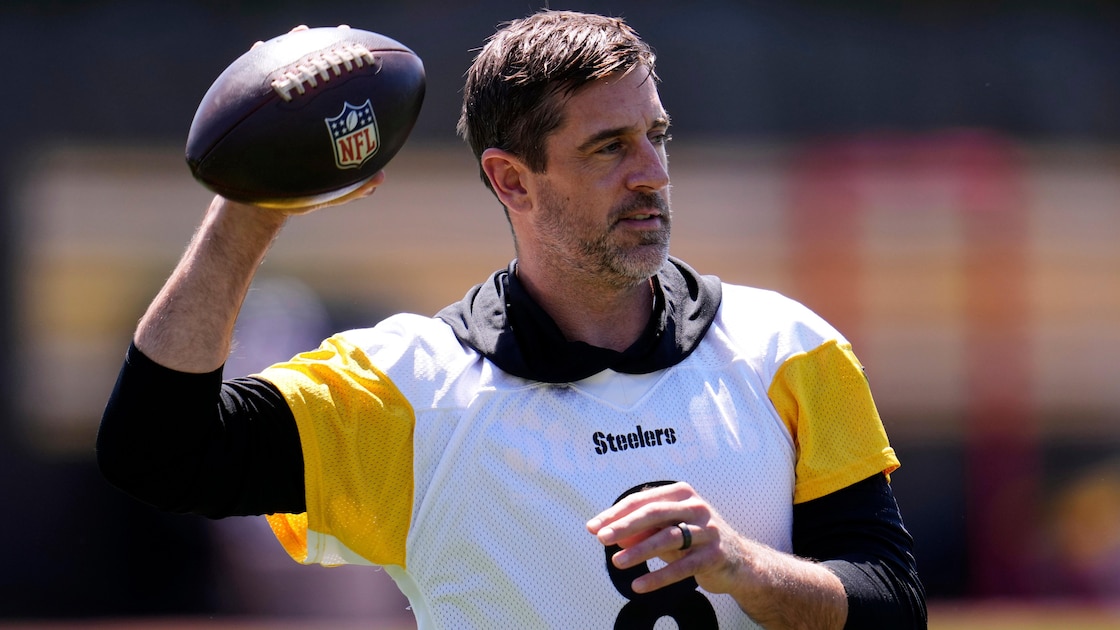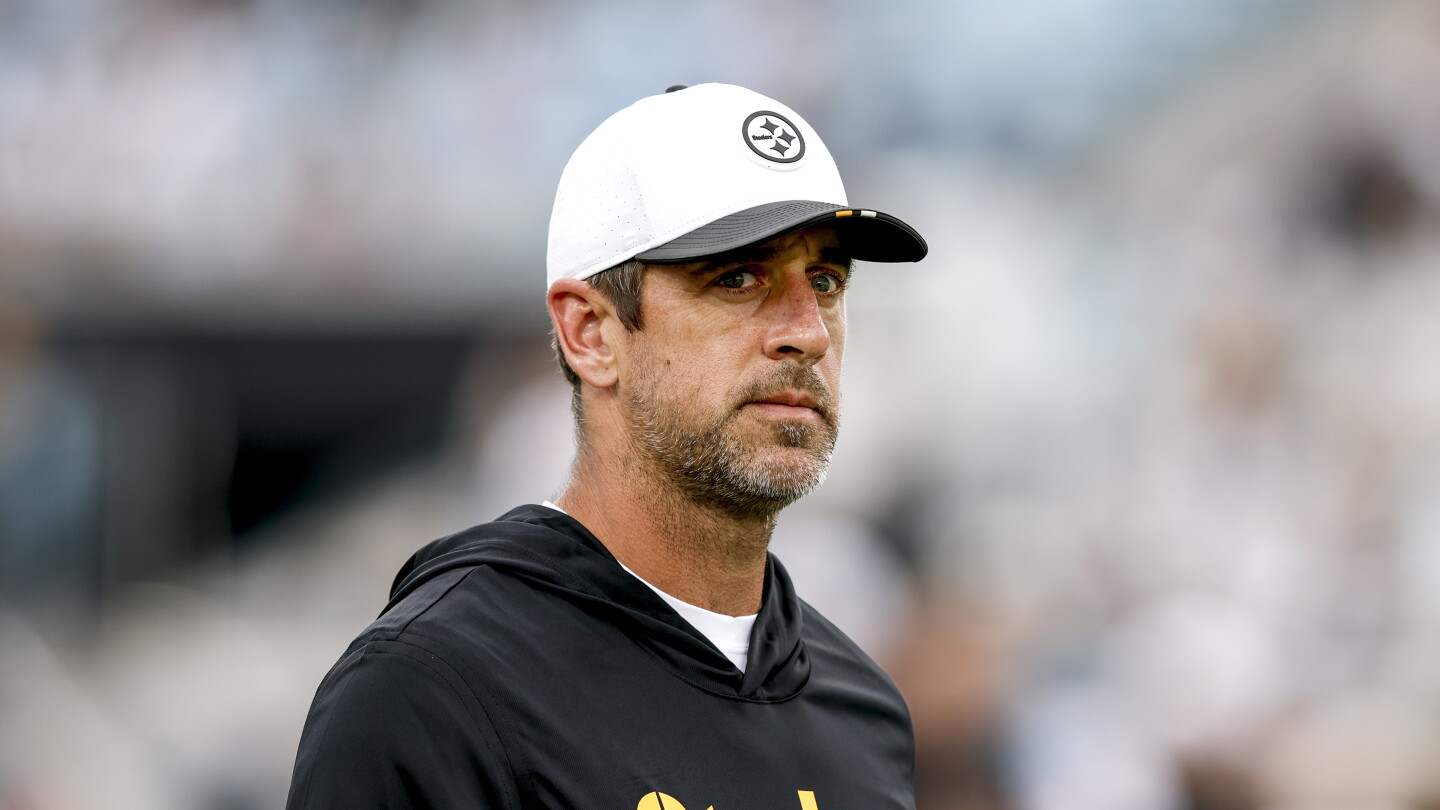
The public rapprochement of Pittsburgh Steelers quarterback Aaron Rodgers with his long-estranged family represents a calculated maturation of his personal brand as he approaches his professional twilight. By disseminating intimate photographs with his parents, Ed and Darla, and his brother, Luke, via Instagram, the 42-year-old signal-caller has systematically moved to resolve a decade-long narrative of familial discord that has frequently competed with his gridiron achievements. This deliberate maneuver—understatedly captioned “Another bonding week #fam”—signals a concerted effort to optimize his legacy architecture before his anticipated retirement at the conclusion of the 2026 NFL season.
The Timing of PR Disintermediation and Legacy Optimization
Executing this public reconciliation immediately prior to the commencement of the 2026 NFL training camps carries immense strategic utility. Entering his 22nd league campaign and his second under center for the Pittsburgh Steelers, Rodgers is acutely aware of how off-field narratives shape his historical valuation. By actively resolving this domestic estrangement now, he neutralizes a persistent vector of media distraction that has lingered since his family dynamics were thrust into the media ecosystem in 2016.
This transition into a self-curated, redemptive final chapter allows Rodgers to frame his departure from the sport around themes of maturity, resolution, and personal evolution. The visible inclusion of his parents and brother in his social media output marks a departure from the defensive, combative posture that characterized his PR strategy during the height of the estrangement. For corporate partners and league stakeholders, a rehabilitated, wholesome personal narrative significantly enhances Rodgers’ post-career marketability, smoothing his transition from polarizing active competitor to revered elder statesman of the sport.
Furthermore, bypassed traditional media conduits allow Rodgers to maintain absolute sovereignty over the visual and textual framing of the reunion. This direct-to-consumer communication model has become the cornerstone of his late-career public relations strategy. By presenting the reconciliation on his own platforms, he preempts speculative tabloid journalism and establishes a primary-source narrative that legacy media outlets are forced to adopt.
The Reality TV Catalyst and the Reclamation of Autonomy
The public evolution of the Rodgers family rift illustrates the modern commodification of athlete private lives at the intersection of reality television and professional sports. The domestic divide first became public commodity in 2016 during his younger brother Jordan’s appearance on the reality television program The Bachelorette. This exposure instantly transformed private domestic friction into national entertainment fodder, illustrating how the personal boundaries of elite athletes are routinely eroded by the demands of the modern attention economy.
For years, Rodgers characterized the subsequent media onslaught as a highly distorted, unidirectional narrative that subjected his private life to unchecked public speculation. His description of the ongoing scrutiny as “death by a thousand cuts” underscores the cumulative reputational tax paid by athletes who opt for silence in the face of continuous tabloid interest. Ultimately, the systemic pressure to address these private matters compelled a shift from passive silence to active media engagement, proving that total privacy remains untenable for modern cultural icons.
His subsequent appearances on The Pat McAfee Show in March 2024 and his introspection within the Netflix docuseries Aaron Rodgers: Enigma represent a coordinated counter-offensive to reclaim his history. These alternative platforms provided the temporal runway required to articulate nuanced personal perspectives free from the rigid constraints of traditional sports broadcasting. By contextualizing the initial split around his parents’ dogmatic religious structures, Rodgers successfully pivoted the public conversation from petulant rebellion to a complex search for individual philosophical autonomy.
Organizational Stability and Commercial Synchronicity
For the Pittsburgh Steelers, the mitigation of their starting quarterback’s high-profile domestic distractions represents a clear operational win. Off-field controversies inevitably complicate a franchise’s public relations apparatus and risk fracturing locker room cohesion. By proactively addressing these personal loose ends during the quiet phase of the offseason calendar, Rodgers ensures that his media availability throughout the grueling 2026 campaign remains focused on competitive execution rather than personal drama.
The Steelers’ decision to retain Rodgers this offseason emphasizes their commitment to maximizing a razor-thin championship window under head coach Mike McCarthy. The high-profile reunion of Rodgers and McCarthy in Pittsburgh resurrects one of the most historically productive player-coach partnerships in modern NFL history, layering their pursuit of a title with profound professional nostalgia. Keeping Rodgers’ cognitive bandwidth entirely unencumbered by off-field static is critical for an organization that has structured its entire short-term strategic planning around his arm talent.
From a commercial perspective, a harmonious personal life aligned with a historic retirement campaign yields a highly lucrative narrative for both the Steelers and the NFL. The league’s entertainment division routinely leverages the redemptive personal arcs of its star athletes to drive broad-demographic engagement and television viewership. A narrative arc blending familial reconciliation, legacy preservation, and one final championship pursuit provides the league with a premier, universally appealing marketing vehicle.
The Nuance of Partial Reconciliation and Ongoing Boundaries
Despite the highly publicized display of family unity, the conspicuous absence of his brother Jordan from the shared imagery highlights the complex reality of deep-seated interpersonal healing. Multi-party familial disputes are rarely resolved in a clean, linear fashion, and the selective composition of the public photographs suggests that certain relationships remain subject to ongoing boundary negotiations. This missing link prevents the reconciliation from being packaged as an absolute, Hollywood-style resolution, reminding observers that personal boundaries are still actively enforced.
This partial detente underscores the delicate tightrope public figures walk when attempting to repair fractured relationships under the persistent gaze of the media. The tactical decision to reintegrate certain family members while maintaining distance from others reflects a highly disciplined approach to privacy. It suggests that while Rodgers is willing to share curated milestones of personal growth, he remains fiercely protective of his inner emotional architecture.
This ongoing complexity is amplified by the institutional memory of modern digital media, which ensures that any step toward reconciliation is analyzed as much for who is missing as who is present. Consequently, Jordan’s absence serves as an authentic anchor, preventing the public relations initiative from appearing overly sanitized or artificial. It signals to the public that the process of rebuilding trust within a highly scrutinized family is a marathon, not a singular social media event.
Philosophical Divergence and Athlete Empowerment
Rodgers’ historical critiques of his upbringing in a rigid, dogmatic religious environment offer valuable context for the ideological forces that drove the decade-long estrangement. His public rejection of the shame, guilt, and strict organizational structures associated with his childhood church aligns with a broader macroeconomic shift of individuals seeking spiritual and personal autonomy outside traditional institutions. For Rodgers, this divergence was not merely a passive disagreement, but an essential component of an emergent self-identity that directly collided with his family’s core values.
Publicly addressing religious deconstruction is an exceptionally rare move for elite athletes, who historically avoid polarizing cultural topics to protect their broad, cross-demographic commercial appeal. Rodgers’ willingness to articulate these complex, sensitive themes exemplifies the modern era of athlete empowerment, where high-profile competitors prioritize authentic self-expression over traditional, risk-averse public relations advice. This intellectual independence has cultivated a deeply loyal segment of the public that values ideological non-conformity, even as it alienates more traditionalist consumer demographics.
The subsequent family reunion suggests that both Rodgers and his parents have reached a mature stage of mutual accommodation, elevating primal familial bonds above rigid ideological alignment. This evolution represents a significant departure from the unyielding positions that characterized the early, volatile years of the split. It demonstrates that the perspective granted by time, combined with the imminent conclusion of a historic career, can foster a pragmatism where shared moments of human connection supersede ideological differences.
The Legacy Landscape of the 2026 Season
As the 2026 NFL campaign unfolds, the twin storylines of Rodgers’ final competitive push and his personal domestic resolution will remain inexorably linked. His behind-the-scenes efforts to mend personal relationships mirror his professional desire to deliver a triumphant final act alongside Mike McCarthy. This holistic approach to legacy management indicates that Rodgers views his final year in the league as a unique, time-delimited window to achieve profound closure across all dimensions of his life.
The ultimate efficacy of this strategic pivot will depend on how cleanly Rodgers can compartmentalize the emotional demands of family healing while meeting the hyper-focused physical requirements of NFL play. The brutal, unforgiving nature of a professional football season offers zero margin for psychological distraction, rendering personal life stability a direct performance variable. If these restored familial bonds serve as a emotional anchor rather than a cognitive drain, they could prove to be the critical catalyst that enables Rodgers to execute at a championship level one last time.
In the final estimation, Rodgers’ farewell season will likely be remembered as much for his personal transformation as for his statistical output. By choosing to confront his most prominent personal vulnerability before a global audience, he has ensured that his career post-mortem will be defined by themes of agency, reconciliation, and self-determination. While the durability of this family healing remains to be tested, it stands as a definitive, highly coordinated statement of intent from one of the most enigmatic and scrutinized figures in the history of modern professional sports.