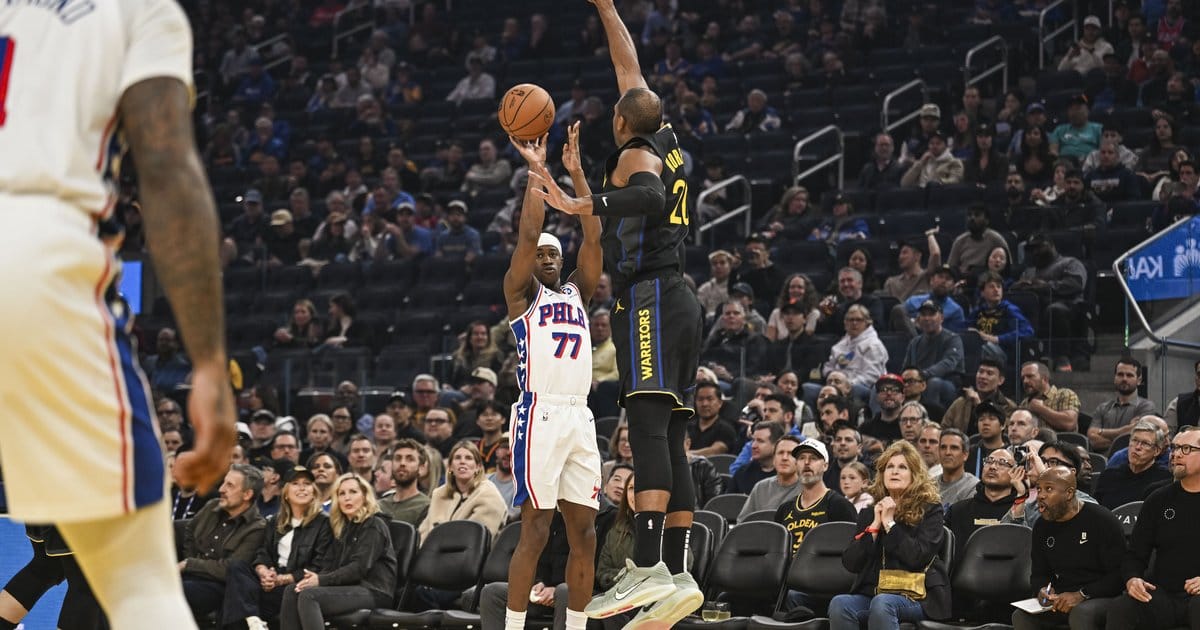
The Golden State Warriors are under increasing scrutiny as their on-court performance contrasts with the strategic maneuvers being undertaken by their front office. This pressure intensifies following a recent 113-94 loss to the Philadelphia 76ers on February 3, 2026.
Strategic Pressures Amidst On-Court Performance
The recent performance of the Golden State Warriors, culminating in a decisive 113-94 loss to the Philadelphia 76ers, has amplified the strategic pressures on the team’s leadership. This defeat occurred on February 3, 2026, a date marked by the Warriors’ front office, including principals such as Joe Lacob and Mike Dunleavy, being actively involved in trade discussions.
The Sixers’ Momentum
Conversely, the Philadelphia 76ers are experiencing a period of significant success, marked by their fourth consecutive victory against the Warriors. This winning streak underscores a period of positive momentum for the Philadelphia franchise, reflecting a robust performance strategy. The team secured this latest win with a score of 113-94, a result that highlights the efficacy of their current operational approach.
Player Performance Context
Rookie VJ Edgecombe was a notable contributor for the 76ers, scoring 25 points and securing seven rebounds in the victory. His performance is emblematic of the Sixers’ current trajectory, contributing significantly to their recent success. The Warriors, meanwhile, were without key personnel, including Stephen Curry, during this matchup, a factor impacting their competitive capacity.
Franchise Operations and Market Dynamics
The confluence of on-court results and front-office activity for the Warriors illustrates a critical juncture for the franchise. The imperative to address roster composition through trades, while simultaneously navigating the realities of game outcomes, points to the complex operational environment within professional sports leagues. This environment necessitates a dual focus on immediate competitive performance and long-term strategic planning, influenced by league-wide dynamics such as player movement and competitive balance.
The Nature of Professional Sports Management
The ongoing efforts of Warriors management to assess and potentially reshape the roster reflect standard operational procedures within the National Basketball Association (NBA). Front offices are tasked with continuous evaluation of team performance against strategic objectives, often leading to considerations of trades and acquisitions. This process is inherently dynamic, requiring constant adaptation to player availability, team chemistry, and evolving competitive landscapes, particularly as the season progresses towards its latter stages.
Impact on Stakeholders
The implications of these strategic deliberations and on-court results extend to various stakeholders. For the players, it pertains to their roles, performance expectations, and potential roster changes. For the ownership and management, it involves financial investments, franchise valuation, and the pursuit of competitive success. For the fanbase, these dynamics shape expectations, engagement, and the overall perception of the team’s direction and future prospects. The pressure on the Warriors’ front office is a manifestation of the high stakes involved in maintaining a competitive standard within a major professional sports league.
Institutional Context of League Operations
The scenario involving the Warriors and the 76ers unfolds within the broader institutional framework of the NBA. This framework includes league-wide rules governing player contracts, trades, and salary caps, all of which influence organizational strategies. The ability of teams to make significant roster adjustments is circumscribed by these policies, requiring careful strategic planning and execution. The timing of such decisions, as indicated by the Warriors’ active trade discussions around the February 3rd game, often aligns with critical points in the league’s calendar, such as trade deadlines.
Strategic Imperatives in Team Management
The strategic imperatives for an NBA franchise extend beyond immediate game results. They encompass building a sustainable competitive model, managing player development, and optimizing the team’s financial structure. The decision-making processes of entities like the Warriors’ front office are informed by extensive data analysis, scouting, and an understanding of market trends and competitive cycles. The pressure faced by the Warriors’ leadership is indicative of the expectation to achieve and maintain a high level of performance, a common benchmark for franchises operating at the pinnacle of professional sports.
The Role of Player Performance and Development
The performance of individual players, such as VJ Edgecombe for the 76ers, is a crucial component in the strategic calculus of any team. For a developing player to make a significant impact, as Edgecombe has in contributing to the Sixers’ fourth consecutive win, it suggests effective player development programs and scouting initiatives. This aspect of team building is critical for franchises seeking to maintain a competitive edge without relying solely on veteran talent or high-cost acquisitions. The contrast between the emerging success of Sixers’ talent and the strategic challenges facing the Warriors highlights different approaches to team composition and long-term planning.