Procedural Rigor Activated: MDSO Responds to Threat Report
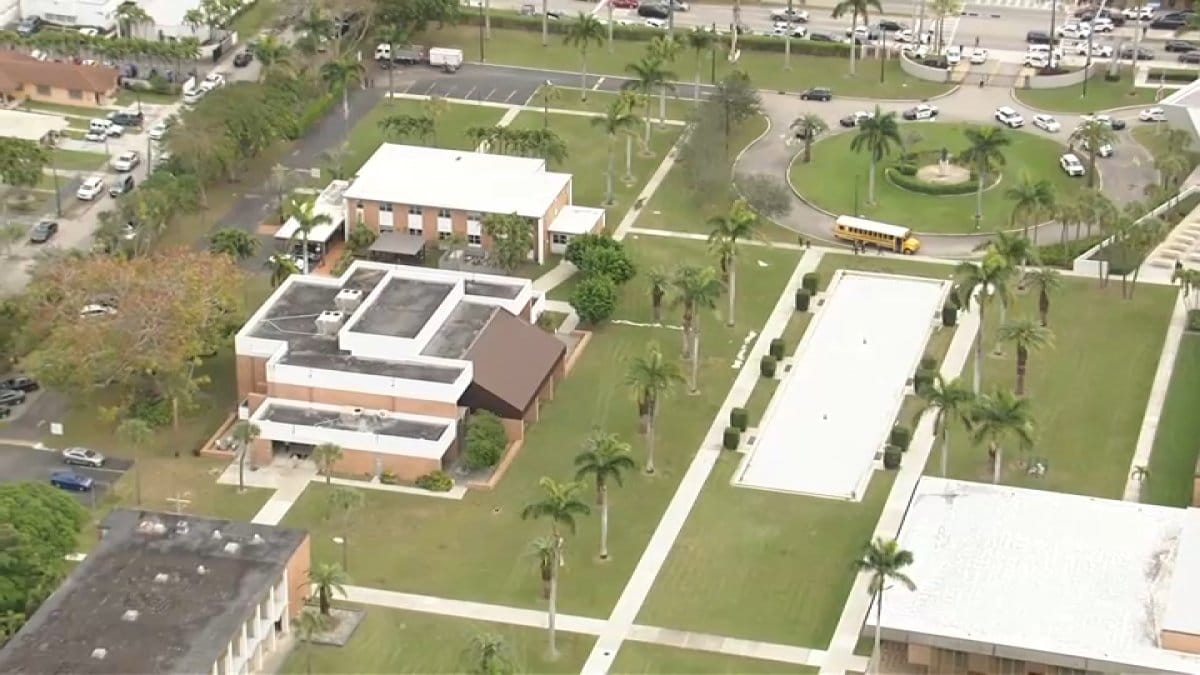
The Miami-Dade Sheriff’s Office (MDSO) initiated a thorough investigation following reports concerning a ‘potential armed subject’ allegedly located on the campus of Christopher Columbus High School. This action immediately triggered comprehensive security measures, placing Christopher Columbus High School, St. Brendan Elementary, and two other nearby schools in Miami under lockdown as a necessary precaution. The swift, expansive deployment of deputies across the campuses was a mandated execution of standard operating procedures designed for rapid threat containment and physical verification.
This incident, centered in Southwest Miami-Dade, FLA., represents a critical activation of integrated institutional security protocols. The law enforcement response, characterized by the immediate search operation, underscores the systemic commitment to treating any report involving a potential threat to life—even if unverified initially—with the highest level of administrative urgency and physical mobilization.
The Operational Mandate of Law Enforcement in School Security
The involvement of the Miami-Dade Sheriff’s Office in a high-priority search operation highlights its central role in managing emergent security crises within the local educational infrastructure. Under prevailing jurisdictional agreements and policy frameworks, the MDSO is tasked not only with criminal investigation but also with immediate risk mitigation whenever specific threats to life are reported on school property. The immediate deployment of deputies to search Christopher Columbus High School and the adjacent campuses serves as a demonstration of the institutional priority placed on public and educational safety.
Standard operating procedures (SOPs) within modern law enforcement crisis response dictate that initial reports of a potential armed subject cannot be dismissed or minimized, regardless of their immediate verifiability. This mandates a protocol-driven approach: rapid establishment of a security perimeter, systematic clearing of facilities, and intensive investigation to either confirm or neutralize the threat. The subsequent search conducted by deputies across multiple school sites is the structural manifestation of this mandate, ensuring that no potential areas of vulnerability are overlooked during the critical initial response window.
Policy Frameworks Governing Threat Assessment and Response
The response dynamic observed—an immediate, large-scale deployment based solely on a ‘report’—is dictated by the precautionary principle inherent in contemporary educational security policy. This framework prioritizes maximum safety intervention based on potential risk, rather than waiting for definitive proof of immediate danger. The institutional incentive is structurally aligned to favor an over-response (a lockdown followed by search) over the administrative or reputational risks associated with inaction.
This reliance on immediate action is embedded in institutional security plans, recognizing that the speed of law enforcement mobilization must surpass the speed at which a reported situation could potentially escalate. Consequently, the MDSO and school administrators are institutionally constrained to treat the mere existence of a report of a potential armed subject as sufficient justification for activating the highest levels of security protocol, thereby maximizing liability avoidance and adherence to public safety expectations.
Administrative Architecture of Multi-Campus Lockdowns
The decision to place not only Christopher Columbus High School but also St. Brendan Elementary and two other schools under lockdown illustrates the structural requirements for coordinated threat mitigation in densely populated educational zones. Lockdowns are procedural tools—administrative states—designed to isolate students and staff from potential external threats. The activation of this protocol across multiple, proximate facilities reflects a deliberate policy choice to expand the containment area.
In security planning, when a potential subject’s location or status is unconfirmed, neighboring institutions are administratively drawn into the response perimeter. St. Brendan Elementary, as a nearby campus, was placed on lockdown to prevent any lateral movement of the subject into that facility and to ensure that the primary police operation at Christopher Columbus High School was not compromised by uncontrolled civilian movement nearby. This multi-campus coordination is a feature of modern security architecture, emphasizing layered protection and regional administrative alignment during crises.
The Role of Lockdown Procedures in Crisis Governance
Lockdown protocols function as a critical administrative bridge between the report of a threat and the law enforcement determination of safety. They provide essential time for deputies to assess and clear the premises methodically. Institutionally, a lockdown is a governance decision that temporarily suspends normal operations to prioritize life safety. This procedural mechanism requires explicit clarity on command and control—which in this case was vested in the MDSO—allowing them to execute the search while internal school staff manage the immediate safety of those confined inside.
The procedural integrity of the lockdown ensures that, even in the absence of verified danger, the institution fulfills its primary fiduciary duty of care to its students. This structural rigor reinforces public trust by demonstrating that systems are prepared to deploy comprehensive administrative tools immediately upon the emergence of risk signals, however preliminary those signals might be.
Editorial Synthesis: Understanding Procedural Responses to Uncertainty
The facts documented—MDSO investigating a report leading to four campus lockdowns and searches—provide a factual case study in how complex institutional systems respond to high-risk uncertainty. It is crucial for high-authority reporting to clarify that the operational response (the lockdown and search) is a procedural activation triggered by the *report* of a potential threat, not necessarily the verified *presence* of that threat.
The incident demonstrates the non-negotiable threshold for institutional action in contemporary public safety environments. School systems and law enforcement agencies are structurally engineered to react swiftly and broadly to minimize catastrophic risk, even when information remains incomplete or provisional. This disciplined adherence to established security protocols defines the contemporary standard for managing potential security breaches within sensitive institutional contexts.
The MDSO’s sustained investigative activity and searching of the campuses reflect a commitment to procedural exhaustion—the requirement that resources remain deployed until the threat has been thoroughly investigated and the operational areas have been demonstrably secured. Until law enforcement formally concludes its search and assessment phase, the structural focus remains entirely on mitigation and confirmation, upholding the principle that safety is achieved through verified clearance.