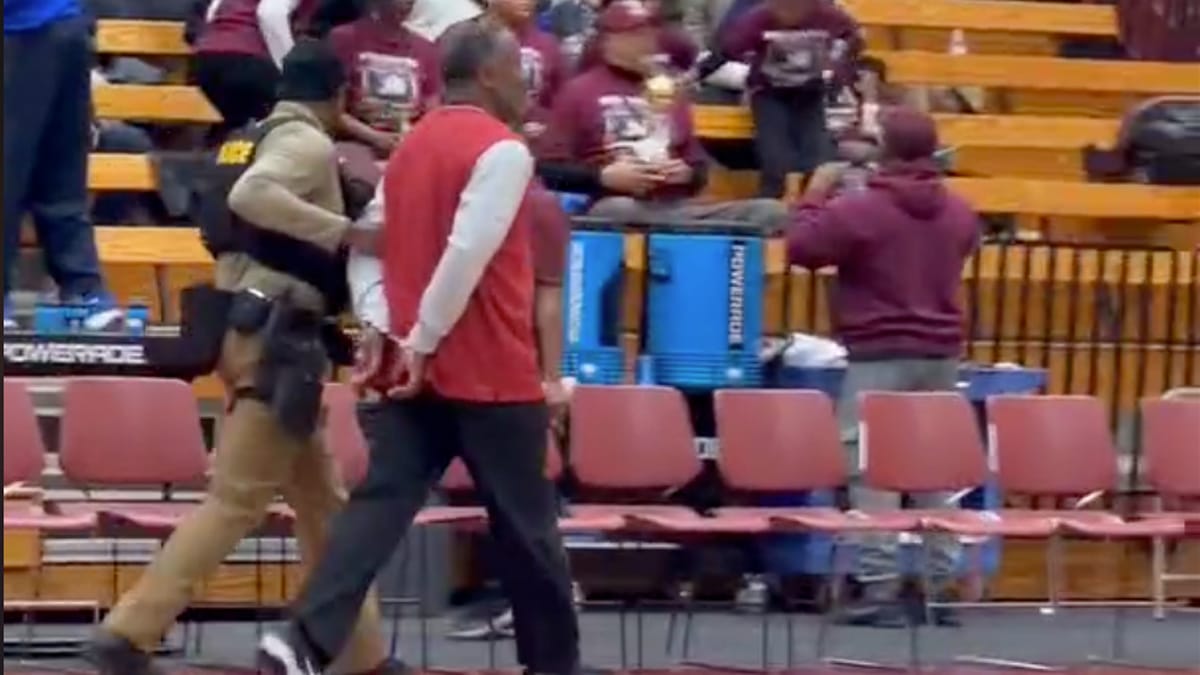
Tuskegee Coach Benjy Taylor Handcuffed, Initiating Legal and Institutional Scrutiny
An unprecedented incident has drawn significant attention to collegiate athletics, specifically involving Tuskegee University men’s basketball coach Benjy Taylor. Following his team’s loss to Morehouse College—a contest emblematic of the intense rivalry within Historically Black Colleges and Universities (HBCUs) in Division II basketball—Coach Taylor was handcuffed and escorted from the court by police. This public removal has instigated a detailed legal and institutional review process.
Coach Taylor’s immediate public reaction underscored a profound sense of bewilderment. He stated that he was ‘at a loss for words’ regarding the circumstances of his detainment and removal. This expression conveys not only personal shock but also a perceived departure from the established norms of conduct for coaches at the conclusion of a sporting event. Such an unexpected intervention by law enforcement, particularly against a university official, typically signals a significant procedural breach or an escalated situation that warranted immediate and decisive action beyond standard game management protocols.
Engagement of Civil Rights Counsel and Allegations of Violation
In response to the incident, Coach Taylor has taken a crucial formal step by retaining civil rights attorneys. This action elevates the matter beyond an internal university issue or an athletic dispute into a potential legal challenge concerning civil liberties and professional rights. The engagement of legal counsel suggests an intention to thoroughly investigate whether the actions taken against him by law enforcement adhered to constitutional standards, including protections against unreasonable force or unlawful detention.
Taylor further articulated his personal distress, stating he felt ‘violated’ by the experience of being handcuffed by police on the court. It is essential, for accuracy and legal integrity, to frame this statement as a personal allegation and a subjective experience, rather than a judicial determination of fact. This claim, however, serves as a central element in any forthcoming legal inquiry, prompting an examination into the justification for the use of handcuffs, the level of force employed, and the broader context of police interaction with a university employee in a public setting.
The involvement of civil rights attorneys typically means that the legal team will scrutinize the actions of the law enforcement officers for potential breaches of established legal doctrines, such as excessive force, false arrest, or violations of due process. Such cases often hinge on the specific details of the interaction, including whether less restrictive means of control were considered or available, and if there was probable cause for the arrest or detention.
Institutional Frameworks and Law Enforcement Protocols in Collegiate Sports
Collegiate athletic events operate under a complex web of rules and regulations, encompassing not only sports-specific guidelines but also institutional policies and public safety protocols. Law enforcement presence at these events is customary, primarily for crowd control, security, and response to criminal activity. However, the direct intervention of police to handcuff a head coach on the playing surface deviates significantly from conventional methods of managing conflicts or rule infractions within the athletic sphere.
Typically, disputes involving coaches, officials, or players that arise during or immediately after a game are first handled by game officials, followed by athletic department staff, and potentially conference or NCAA disciplinary bodies. The escalation to law enforcement action, particularly involving physical restraint, suggests a perceived immediate threat or a grave violation that bypassed these preliminary administrative layers. This raises critical questions about inter-agency communication, the clarity of roles between university security and external police forces, and the decision-making process that led to such an intervention.
Universities often have established memoranda of understanding (MOUs) with local law enforcement detailing operational procedures for large public gatherings, including sporting events. These MOUs typically outline protocols for incident response, the chain of command, and the level of intervention appropriate for various scenarios. The incident at the Tuskegee-Morehouse game will likely prompt a review of these existing protocols to ensure they effectively balance public safety with the rights and professional standing of university employees and participants.
The Unique Cultural and Reputational Stakes of HBCU Rivalries
The context of an HBCU rivalry game imbues this incident with additional cultural and institutional weight. These games are not merely athletic competitions; they are profound expressions of institutional pride, tradition, and historical resilience within the Historically Black Colleges and Universities community. They serve as annual focal points for alumni engagement, student life, and community gatherings, often transcending the immediate outcome of the contest to embody broader narratives of identity and achievement.
Given this heightened cultural significance, an incident involving a prominent figure like a head coach, especially one resulting in public handcuffing, carries significant reputational risks for all institutions involved. It can impact community perceptions, alumni relations, and even recruitment efforts for both athletic programs and the universities as a whole. The manner in which the universities and law enforcement address this situation will be closely observed by a wide range of stakeholders, including students, faculty, alumni, and the broader collegiate sports community.
Administrative Response, Due Process, and Future Implications
For Tuskegee University’s athletic department and its broader administration, the incident necessitates a comprehensive internal review. This includes evaluating event security measures, assessing the conduct of all personnel involved, and reaffirming commitment to due process for its employees. University administrations are tasked with upholding institutional integrity while navigating potential legal liabilities stemming from interactions between their staff and external agencies.
The process of seeking legal recourse through civil rights attorneys underscores the importance of legal due process, even within the context of a public sporting event. It highlights that individuals, regardless of their professional role, are entitled to legal protections and that their treatment by law enforcement can be subject to rigorous legal challenge. This incident may also lead to a re-evaluation of training programs for both university staff and law enforcement officers on appropriate engagement strategies and de-escalation techniques in high-pressure public environments.
Ultimately, the resolution of this matter, whether through internal administrative actions or judicial processes, will likely have lasting implications. It could influence future policies governing security at collegiate events, clarify the boundaries of law enforcement intervention in professional athletic settings, and underscore the critical importance of respecting individual rights while maintaining public order. The incident serves as a salient case study for how institutions respond to unforeseen challenges that intersect legal, administrative, and public relations domains within the complex ecosystem of higher education and collegiate sports.