The United States is facing an extended partial government shutdown, with projections indicating that federal operations will not resume before Tuesday at the earliest. This prolonged closure stems from an ongoing funding standoff, primarily driven by disagreements over appropriations for the upcoming fiscal period.
Legislative Stalemate and Strategic Calculations
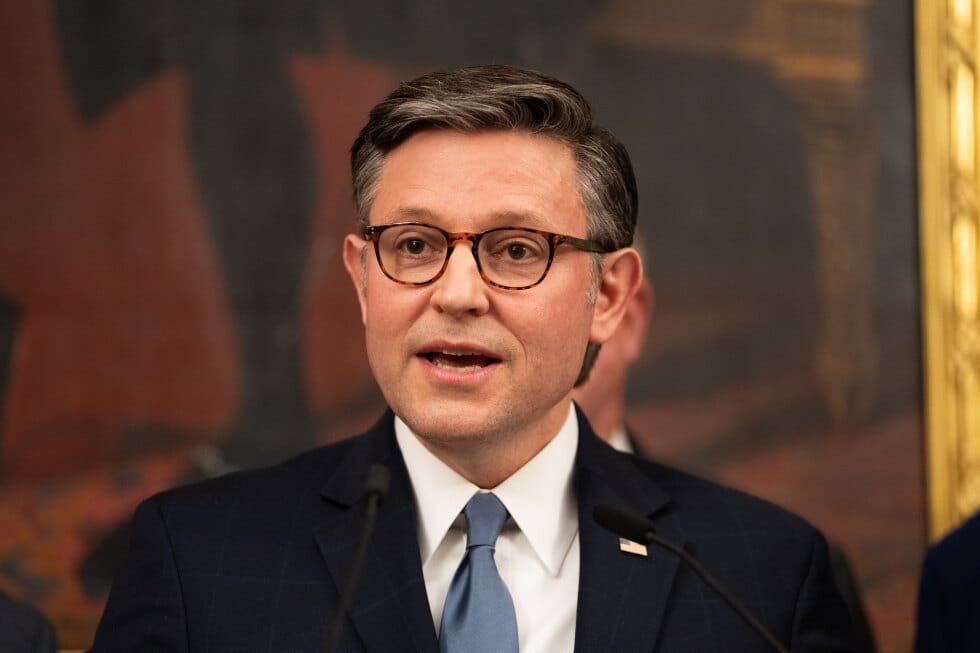
Speaker Mike Johnson is reportedly facing considerable pressure and difficult strategic choices as the partial government shutdown continues to affect federal services. The immediate future of government funding remains uncertain, with indications that a resolution is unlikely in the coming days. This situation highlights the complexities of legislative negotiation and the structural challenges inherent in securing consensus on appropriations bills, especially when contentious policy issues are intertwined with budgetary matters.
The Deepening Debate Over ICE Funding
A significant point of contention fueling the current shutdown is the debate surrounding funding for Immigration and Customs Enforcement (ICE). The differing stances on how much, and under what conditions, ICE should be funded represent a core ideological and policy divide. These debates often reflect broader national discussions about immigration policy, border security, and the operational scope of federal agencies tasked with enforcing immigration laws.
Structural Constraints in Appropriations
The legislative process for appropriations in the United States is designed to require broad consensus, often involving agreement between both the executive and legislative branches, and within Congress itself. When policy priorities diverge significantly between political parties or even within a single party, this can lead to impasses. The need for 60 votes in the Senate for most legislative actions, and the dynamics of a closely divided House of Representatives, introduce structural constraints that can make passing funding bills exceptionally challenging.
The Role of the Speaker in Divided Government
As Speaker of the House, Mike Johnson holds a pivotal position in navigating these legislative challenges. His role involves managing the floor, negotiating with various factions within his party, and engaging with the opposing party and the executive branch. The assertion that Democratic votes may not be available to end the shutdown, as reportedly communicated by Representative Jeffries, underscores the Speaker’s difficult balancing act. He must contend with internal party demands while also seeking pathways to bipartisan agreement, which is often necessary to overcome the structural hurdles of the appropriations process.
Implications of Agency Funding Standoffs
The specific focus on ICE funding suggests that policy disagreements on immigration enforcement and border management have become central to the broader budgetary dispute. These agency-specific debates can become proxies for larger ideological battles, making compromise more difficult. When appropriations for critical agencies become entangled with contentious policy debates, the risk of government shutdowns increases, as evidenced by the current situation. The executive branch’s reliance on congressional appropriations for its operations means that legislative gridlock directly impacts agency functions and the services they provide.
The Federal Government Shutdown as a Political Instrument
Government shutdowns, while disruptive, can also be viewed as a consequence of the political system’s checks and balances. They arise when the legislative branch, through its power of the purse, withholds funding for executive branch operations due to disagreements with the administration or differing legislative priorities. The current partial shutdown illustrates how disagreements over specific agency funding, such as that for ICE, can prevent the passage of broader appropriations bills, leading to a suspension of non-essential federal services.
The lack of an immediate resolution points to a deep-seated division that transcends simple budgetary figures. It reflects fundamental disagreements on policy and the role of government agencies. The continued operation of federal government functions is contingent upon the timely passage of appropriations legislation, and the inability to achieve this signifies a breakdown in the standard legislative workflow, potentially impacting the broader functioning of the federal administration.