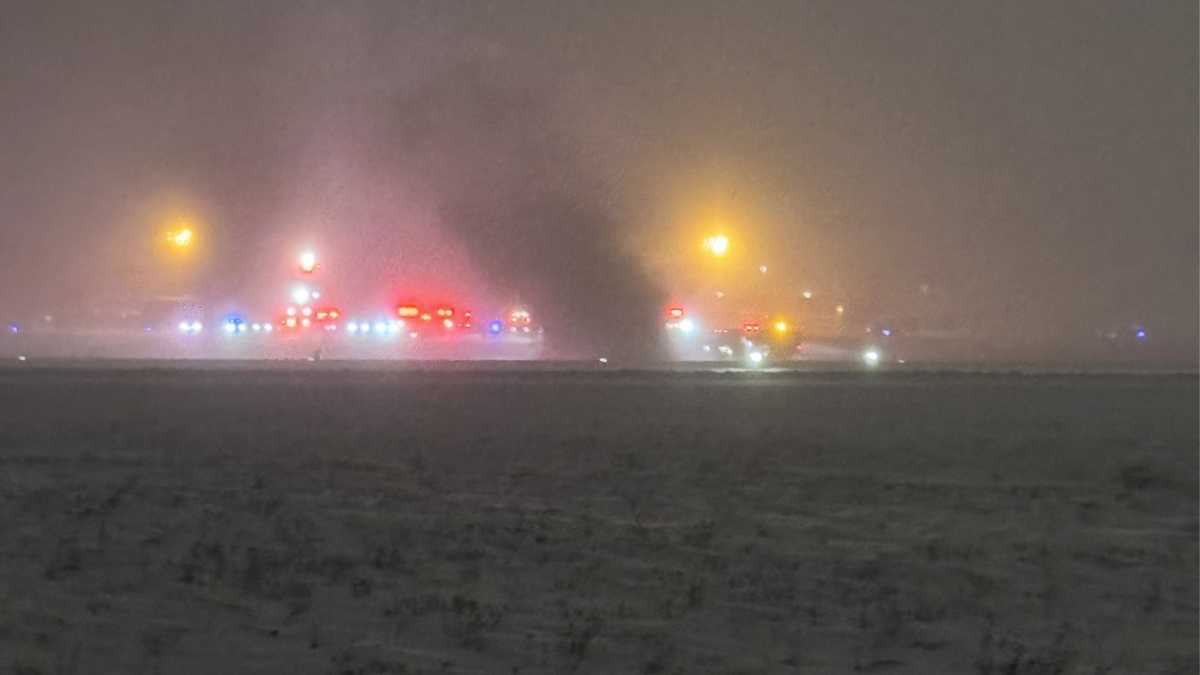
The quiet hum of an evening at Bangor International Airport was abruptly shattered on Sunday, January 25, 2026, as an unfolding drama drew emergency crews to its runways. In the fading light, an urgent scene began to take shape, marked by the arrival of flashing lights and the immediate deployment of first responders. It was an incident that would swiftly close a vital artery of air travel, sparking concern and initiating a rapid, coordinated response.
Reports quickly emerged of a small passenger plane overturning on the tarmac, an unusual and serious event that immediately triggered the airport’s comprehensive emergency protocols. Authorities urged the public to avoid the area as firefighters and other emergency personnel converged on the scene, working to assess the situation and ensure safety. While specific details remained preliminary, the immediate focus was on managing the incident and securing the operational environment.
The Immediate Response at Bangor International
Around 7:45 p.m. EST on that Sunday evening, the call went out, mobilizing crews to Bangor International Airport (BGR). The airport, a crucial hub for northern Maine and a common stopover for transatlantic flights, quickly confirmed an incident had occurred. Its primary runway was closed, a standard but impactful procedure in the face of an aircraft emergency.
Firefighters were among the first on the scene, trained specifically for aviation-related hazards that differ significantly from typical urban emergencies. Their immediate task included ensuring no fuel leaks or fire risks were present, securing the aircraft, and preparing for potential rescue operations. The airport’s swift communication to the public, asking people to stay away, underscored the seriousness of the situation and the need for unimpeded access for emergency vehicles.
A Critical Hub for Maine
Bangor International Airport plays an indispensable role in Maine’s infrastructure, serving commercial flights, cargo operations, and often military and general aviation. Its closure, even partial or temporary, can ripple through regional air travel networks, causing diversions and delays. The incident, therefore, was not just an isolated event on a runway but a disruption affecting many beyond the immediate vicinity.
The airport’s own operations team would have been in constant communication with air traffic control, airlines, and federal aviation authorities. Their coordination is paramount to managing the airspace, rerouting inbound flights, and providing accurate information as the situation develops. This intricate dance of communication and command is a hallmark of emergency management at modern airports.
Understanding Airport Emergency Protocols
Aircraft incidents, while rare, are scenarios for which airports worldwide meticulously prepare. Every international airport, including Bangor, operates under strict regulatory guidelines from bodies like the Federal Aviation Administration (FAA) in the United States. These guidelines mandate comprehensive emergency response plans, regular drills, and specialized training for airport fire and rescue (ARFF) crews.
When an incident like a plane overturning occurs, the response is multi-layered. It begins with the airport’s immediate emergency services, followed by local municipal fire departments, law enforcement, and medical personnel. This coordinated effort ensures that all aspects of an emergency – from fire suppression and structural integrity checks to medical aid and scene security – are addressed simultaneously and efficiently.
The Role of Airport Firefighting
Airport firefighters possess unique expertise, trained to handle highly volatile jet fuel fires, structural aircraft components, and specialized rescue techniques for confined spaces within an aircraft. Their equipment includes high-reach extendable turrets (HRETs) and powerful foam agents designed to quickly suppress aviation fuel fires. Their presence on the Bangor runway was a testament to this specialized preparedness.
Beyond the immediate emergency, these teams also contribute to the initial assessment of the scene, providing crucial information that guides subsequent investigative efforts. Their observations regarding the aircraft’s position, potential damage, and environmental factors can be invaluable to understanding the chain of events leading to the incident.
The Ripple Effect of Runway Closures
A runway closure, especially at an active airport, creates an immediate logistical challenge. Flights scheduled to land would need to be diverted to alternative airports, potentially hundreds of miles away. Outbound flights would be grounded, leading to delays and cancellations. For passengers, this translates into frustration, missed connections, and often unexpected overnight stays.
Airlines face the complex task of re-booking passengers, re-routing aircraft, and managing crew schedules, all while communicating effectively with affected travelers. The financial impact can be significant, ranging from fuel costs for diversions to compensation for delays and cancellations. This incident at Bangor, though localized, had the potential to disrupt travel plans across a broader region.
Economic Impact Beyond the Tarmac
The economic ramifications of an airport incident extend beyond the airlines. Businesses reliant on air cargo, airport concessions, and local transportation services can all experience disruptions. For a city like Bangor, which benefits from airport traffic for tourism and business, even a temporary closure can be felt across the local economy. It underscores the critical infrastructure role airports play in modern society.
Moreover, the process of recovering an overturned aircraft is complex, requiring specialized heavy equipment and skilled personnel to right the plane and remove it from the runway without causing further damage or environmental contamination. This process can be lengthy, further extending the period of operational disruption.
The Imperative of Investigation: Learning from Incidents
Following any aviation incident, particularly one involving an aircraft overturning, a thorough investigation is paramount. In the United States, the National Transportation Safety Board (NTSB) typically leads such inquiries. Their mission is not to assign blame but to determine the probable cause and issue safety recommendations to prevent similar occurrences in the future.
Investigators would examine a multitude of factors, including weather conditions at the time of the incident, the aircraft’s maintenance history, pilot qualifications and experience, air traffic control communications, and any potential mechanical failures. They would also analyze flight data recorders (black boxes), if available on a small passenger plane, for critical information regarding the aircraft’s performance and pilot inputs.
A Global Commitment to Safety
Aviation safety is a field of continuous learning and improvement. Every incident, no matter how minor, provides valuable data that contributes to enhancing safety protocols, aircraft design, and pilot training worldwide. Information from investigations by bodies like the NTSB is often shared internationally, contributing to a global pool of knowledge that benefits all air travelers.
This commitment to rigorous investigation is why air travel remains one of the safest modes of transportation. The process ensures that lessons are learned from every anomaly, translating into refined procedures and technologies that make the skies safer for everyone. The incident at Bangor International Airport, while concerning, will undoubtedly feed into this ongoing cycle of safety enhancement.
The Nature of Small Aircraft Operations
Small passenger planes encompass a wide range of aircraft, from single-engine propeller planes used for private travel or flight training to twin-engine turboprops or very light jets used for regional commuter services or charter flights. While the specific type of aircraft involved at Bangor was not immediately disclosed, understanding the general operational context of such planes is important.
These aircraft often operate out of smaller regional airports or use general aviation facilities at larger airports. They are subject to the same stringent safety regulations as larger commercial airliners, but their operational profiles and the environments in which they operate can present different challenges. Factors such as crosswinds, runway conditions, and the specific dynamics of landing gear can all play a role in incidents like an overturning.
Beyond the Immediate Crisis: Restoring Normalcy
Once the immediate emergency is managed and the investigation begins, the focus shifts to restoring normal airport operations. This involves not only clearing the runway of the aircraft and any debris but also a thorough inspection of the tarmac for any damage. Airport engineers and operations staff work diligently to ensure the integrity of the surface before re-opening it to air traffic.
The resilience of airport staff, emergency responders, and the aviation community at large is always evident in the aftermath of such events. Their coordinated efforts ensure that even in unforeseen circumstances, the paramount goal remains safety, followed closely by the efficient restoration of services. The incident at Bangor serves as a stark reminder of the complexities and dedication inherent in maintaining the world’s airspace.
"Every incident in aviation, regardless of its scale, underscores the tireless dedication of emergency responders and the unwavering commitment to safety that defines the industry. It is a moment for vigilance, learning, and reinforcing the trust placed in those who keep our skies secure."