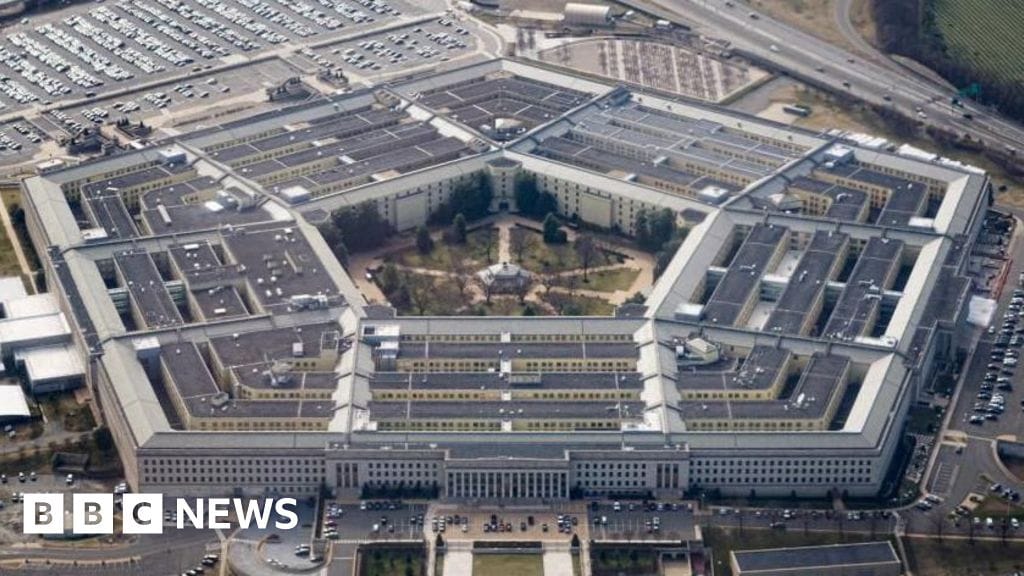
Pentagon Realigns Priorities: China De-emphasized as Top Security Threat
The U.S. Department of Defense has unveiled a new National Defense Strategy, a foundational document that outlines the nation’s security priorities. In a significant departure from recent policy, China has been explicitly stated as no longer the Pentagon’s absolute top security priority.
This strategic shift, detailed in the recently published National Defense Strategy, signifies a re-evaluation of global threats and the allocation of American defense resources. The document suggests a move away from a singular focus on China towards a broader spectrum of security challenges.
Why This Matters: A Changing Global Security Landscape
The decision to de-prioritize China as the paramount security concern carries substantial implications for international relations, defense spending, and global stability. It suggests a recognition that while China remains a significant challenge, other threats and strategic imperatives now demand greater attention.
This re-calibration could lead to a diffusion of U.S. military and diplomatic efforts. Rather than a concentrated strategy against a single adversary, defense planning might broaden to encompass a more diverse range of state and non-state actors, as well as emerging technological and environmental threats.
A Call for Allied Self-Reliance
Crucially, the Trump administration’s defense strategy, as reported, explicitly directs U.S. allies to assume greater responsibility for their own security. This indicates a potential reduction in the perceived U.S. commitment to acting as the sole guarantor of security for its partners.
The strategy appears to be pushing allies towards greater self-sufficiency in defense capabilities. This could foster a more multi-polar security environment where regional powers play a more dominant role in maintaining stability within their respective spheres.
Broader Trends and Implications
The shift in the Pentagon’s top priority reflects broader geopolitical currents. The rise of multiple competing powers, persistent terrorist threats, and the increasing impact of climate change on security are all factors that necessitate a more nuanced defense posture.
Furthermore, domestic pressures and the economic costs of maintaining a global military presence likely contribute to this strategic reassessment. The U.S. may be seeking a more sustainable and domestically palatable approach to national security.
Impact on Alliances and Partnerships
This new strategy could test existing alliances. Allies accustomed to a strong U.S. security umbrella may need to accelerate their own defense modernization and potentially seek new regional security arrangements. This could lead to both increased cooperation and potential friction among allies.
The emphasis on allies handling their own security could spur greater investment in defense by nations that have historically relied heavily on U.S. security guarantees. This might, in turn, lead to a more robust and capable network of regional security architectures.
Looking Ahead: A New Era of Defense Strategy
The National Defense Strategy’s revised priorities signal a potential new era in how the United States approaches global security. The future may see a more distributed and multilateral approach to threat management.
The long-term success of this strategy will depend on how effectively U.S. allies adapt to increased defense responsibilities and how adeptly the U.S. navigates a more complex and potentially fragmented global security landscape. The effectiveness of this pivot will be closely watched by global capitals and defense strategists alike.
The document’s publication occurs amid a period of significant global flux, with evolving threat perceptions and shifting alliances. This strategy is likely to shape defense planning and international security dialogue for years to come, prompting a re-examination of commitments and capabilities across the globe.