
Federal Disaster Aid for Wisconsin Counties Faces Political Scrutiny
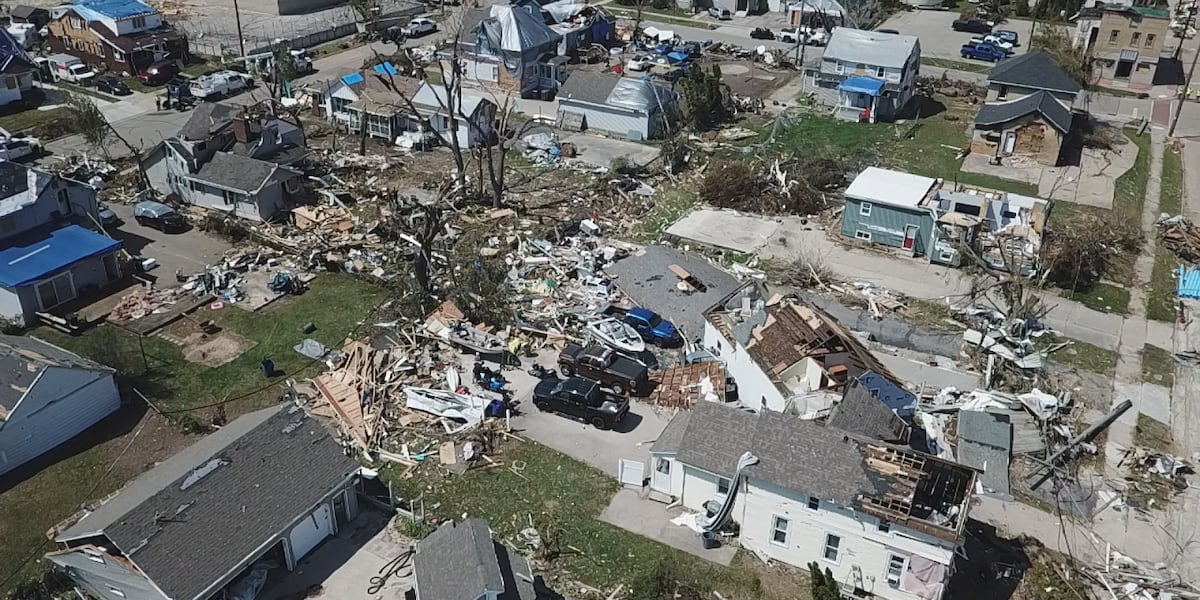
President Donald Trump has approved federal disaster assistance for severe storms and tornadoes that impacted four Wisconsin counties on July 27. The funding is designated for Forest, Outagamie, Vilas, and Winnebago counties, providing grants for temporary housing and home repairs, low-cost loans for uninsured property losses, and other recovery programs for affected individuals and families.
The announcement of federal aid has drawn sharp criticism from Wisconsin Governor Tony Evers, who expressed concerns over the timing and perceived politicization of emergency relief. Governor Evers stated on X that President Trump and Congressman Tiffany were “playing politics with emergency aid that’s meant to help communities recover in the wake of disasters,” characterizing the situation as “complete and total b******t.” This criticism suggests a broader concern among state officials regarding the administration’s approach to disaster relief, potentially linking it to electoral considerations rather than purely humanitarian responses.
Local Charity Distributes Significant Tornado Relief
In parallel to the federal announcement, the local charity LEAVEN has distributed $5.4 million in direct aid to tornado victims across the Fox Valley. This substantial sum was compiled from the Community Response Fund and LEAVEN’s own resources, demonstrating a significant grassroots effort to address immediate recovery needs.
LEAVEN has provided direct assistance to over 1,000 households, processing approximately 1,800 intake forms. According to LEAVEN’s executive director, Nikki Gerhard, there remains a pressing need for long-term financial support for essential services such as transportation and rent, indicating that the full scope of recovery challenges extends beyond immediate housing and repair needs.
The dual streams of federal and local aid highlight the complex landscape of disaster response. The scale of LEAVEN’s distribution underscores the critical role of community-based organizations in filling immediate post-disaster support gaps, particularly for vulnerable populations whose needs may not be fully met by standard federal programs.
Governor Evers’s remarks suggest a potential disconnect between state-level perceptions of need and federal administrative actions. The timing of the federal aid approval, coinciding with political rhetoric, raises questions about the operational independence of disaster relief from political cycles. This dynamic can create uncertainty for affected communities, who rely on timely and apolitical support for their recovery.
The federal assistance framework typically requires individuals to first file claims with their insurance providers before applying for government aid. This procedural step can introduce delays, especially for those with limited insurance coverage or facing complex claims. Online application portals aim to streamline this process, but accessibility and understanding of requirements remain critical.
LEAVEN’s distribution focuses on direct, tangible support for households, addressing immediate financial burdens. This contrasts with more structured, often loan-based, federal programs, indicating different operational philosophies. The charity’s focus on ongoing needs like transportation and rent points to the protracted nature of disaster recovery, extending far beyond the initial emergency phase.
The political dimension introduced by Governor Evers’s statement implies that the allocation and announcement of disaster relief can become a focal point for partisan debate, impacting public perception of governmental institutions responsible for emergency management. This narrative can become intertwined with broader political messaging.
The operational implications of political scrutiny can manifest in delayed approvals or increased bureaucratic hurdles. For affected individuals, the politicization of aid can create anxiety and confusion, potentially hindering their ability to access needed support. The reliance on local charities like LEAVEN highlights the strain on non-profit resources when federal support is perceived as insufficient or politically compromised.
The economic impact of severe weather events on affected regions is significant, encompassing direct property damage and disruption to local businesses and employment. Federal disaster assistance aims to mitigate these economic shocks, but its effectiveness is contingent on efficient and equitable distribution. The current situation suggests that the political climate may be influencing the perception and execution of these economic recovery efforts.
The strategic decisions surrounding the timing and communication of disaster aid approvals carry considerable weight. For an administration, timely and visible relief can bolster public confidence. Conversely, if perceived as politically motivated or insufficient, it can erode trust. Governor Evers’s direct language indicates a strategic decision to publicly challenge the administration’s handling of the situation.
The competitive landscape of disaster response involves multiple stakeholders, including federal agencies, state governments, local authorities, non-profits, and insurance companies. Their effectiveness is often interdependent. The Wisconsin scenario illustrates friction that can arise when these roles are perceived to be influenced by political considerations, potentially disrupting coordinated efforts for comprehensive disaster recovery.
The long-term consequences of political maneuvering around disaster relief can extend to the institutional capacity for emergency management. If disaster aid becomes a consistent point of partisan contention, it could lead to legislative gridlock, reduced funding, or a weakening of established protocols, leaving communities more vulnerable to future events.
The financial leverage of federal disaster assistance is substantial, intended as a critical lifeline for rebuilding. However, its effectiveness is diminished if the process is perceived as inequitable or politically influenced. Affected homeowners are direct beneficiaries, and their experiences shape public sentiment regarding the system’s efficacy and fairness.
The narrative surrounding disaster relief is also shaped by media coverage. Governor Evers’s use of X demonstrates the importance of digital communication in shaping public discourse around governmental actions, highlighting evolving dynamics of political communication and their impact on public service perception.
Ultimately, the Wisconsin situation underscores a recurring tension in disaster management: the imperative for swift, apolitical humanitarian aid versus the political realities of governmental decision-making. The effectiveness of federal disaster assistance hinges not only on allocated funding but also on the transparency, equity, and perceived impartiality of its distribution, factors currently under scrutiny.

Photo by geralt on Pixabay.