Schematic Stabilization and Front-Seven Dominance
The Atlanta Falcons’ 1-2 start belies a significant structural evolution within Jeff Ulbrich’s defensive unit. Following a decisive Week 3 performance against the Green Bay Packers, the Falcons have established a formidable statistical identity, predicated on an NFL-low 47.7 rushing yards allowed per contest. This stifling interior presence has fundamentally altered opposing game scripts, forcing offenses into predictable passing situations where Atlanta’s specialized sub-packages can thrive.
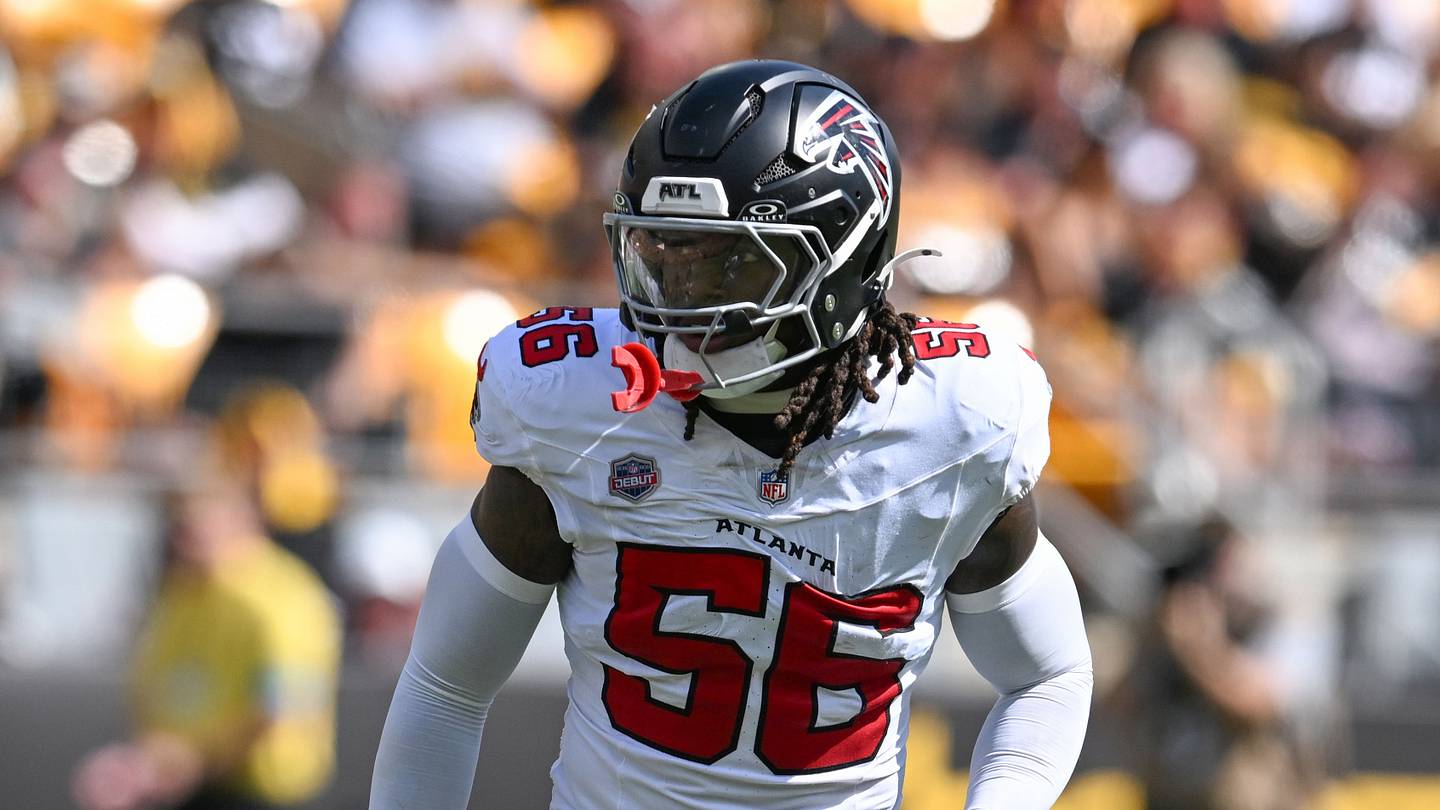
While high-profile veteran acquisitions often dominate off-season narratives, this defensive resurgence is fueled by cost-controlled rookie production. The operational anchor of this shift is linebacker Harold Perkins Jr., a sixth-round selection (No. 215 overall) whose draft-day slide now represents one of the league’s most glaring market inefficiencies. By securing Perkins—a player once viewed as a blue-chip collegiate prospect at LSU—Atlanta has effectively weaponized a Day 3 asset into a high-leverage defensive weapon.
Tactical Utilization: The Coverage Specialist
Coordinator Jeff Ulbrich has avoided the common pitfall of over-extending rookie specialists. Perkins has been deployed with surgical precision, logging 75 of his 93 total defensive snaps within coverage frameworks. This specialized volume mitigates his current physical disadvantages against interior climbing blockers while maximizing his elite lateral range and diagnostic speed in open space.
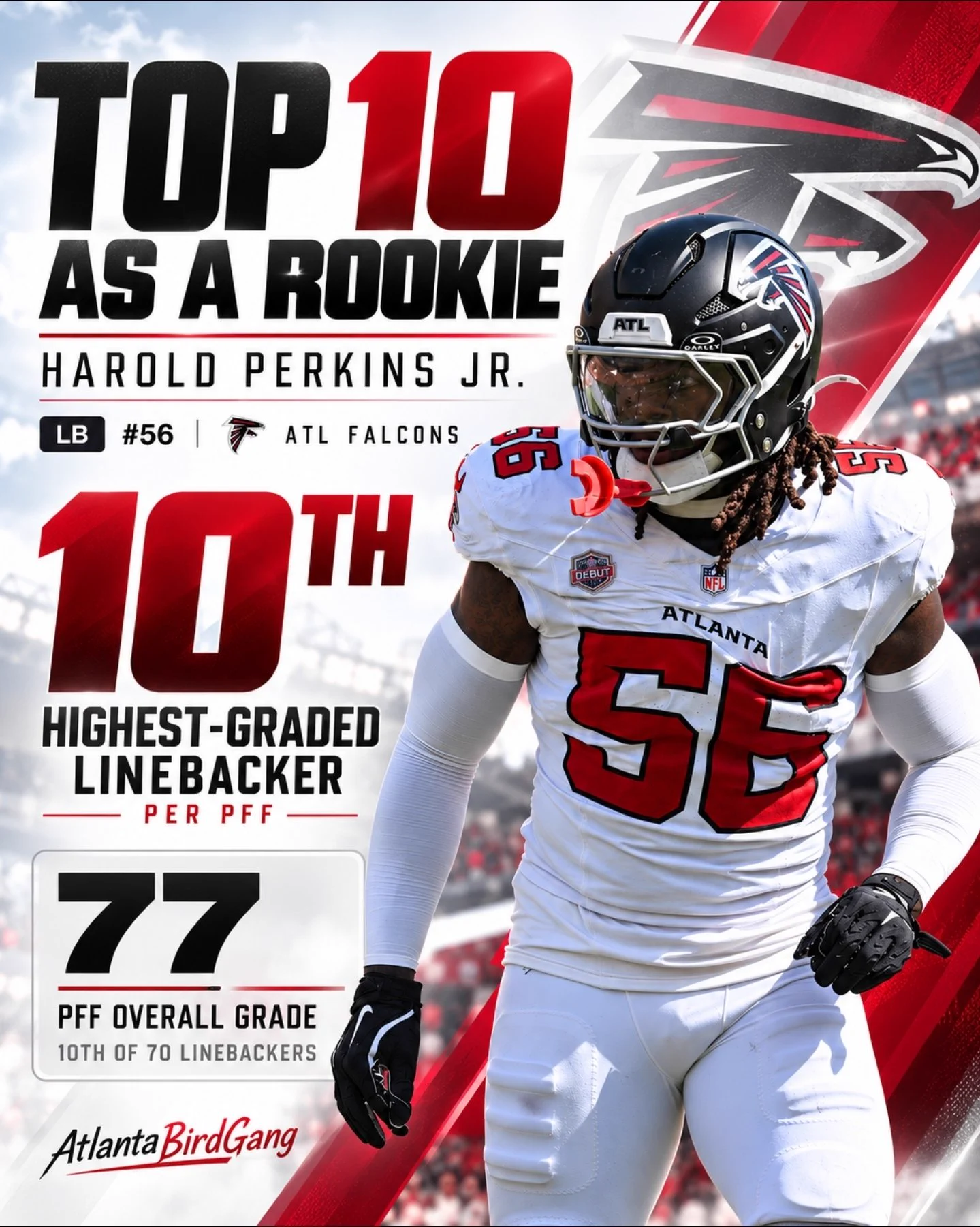
The quantitative output of this role-specific deployment is elite. Perkins has surrendered only 35 receiving yards on the season, maintaining an efficient 5.8 yards per reception allowed. These metrics are mirrored in his analytical profile; Pro Football Focus (PFF) currently ranks Perkins as the sixth-best qualifying rookie defender with a 77.0 overall grade. More impressively, his 80.4 coverage grade places him among the upper echelon of NFL linebackers, validating the Falcons’ decision to prioritize his athletic traits over concerns regarding his traditional positional fit.
Roster Construction and Long-Term Viability
The integration of Perkins, alongside fellow rookies Avieon Terrell and Kendall Daniels, signals a philosophical shift under the leadership of Terry Fontenot and Raheem Morris. By finding immediate starters in the late rounds, the front office has accelerated the unit’s collective speed and versatility without taxing the long-term salary cap. This ‘draft-and-develop’ success provides a blueprint for sustaining a top-tier defense in a hard-cap environment.
As the season progresses, the next developmental milestone for Perkins involves his transition into a three-down role. While his coverage floor is remarkably high, his path to becoming a franchise cornerstone requires improved block-shedding mechanics and downhill run-fit discipline. However, given the current dominance of Atlanta’s primary run-defense unit, the coaching staff possesses the tactical luxury of gradual exposure, ensuring Perkins remains a net-positive contributor as his professional frame matures.