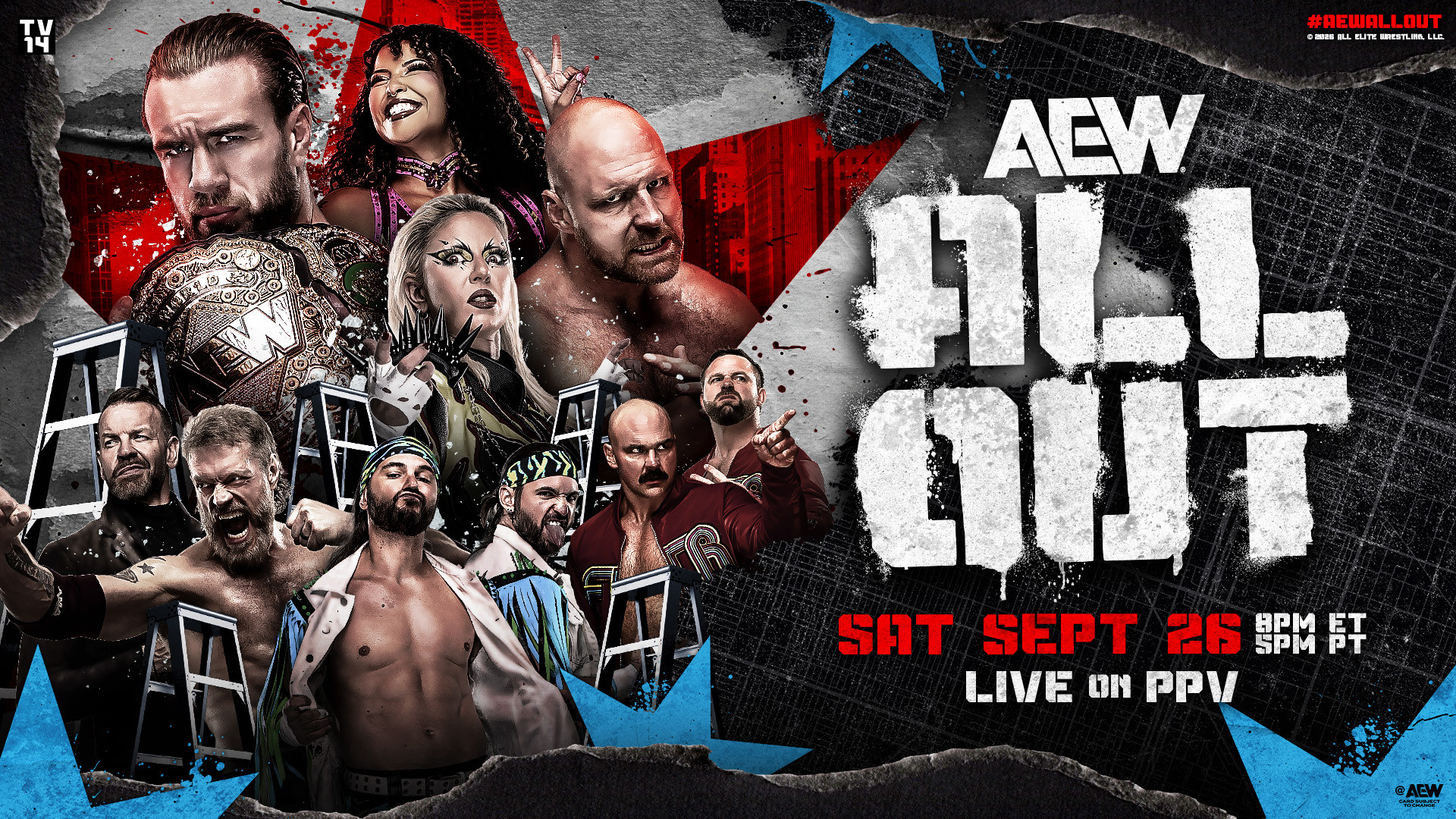
All Elite Wrestling strategically returned to its foundational territory, metropolitan Chicago, on September 26 for the fifth annual All Out. Hosted at the capacity NOW Arena in Hoffman Estates, Illinois, the event underscored the enduring commercial and historical significance of this market. The venue itself holds institutional resonance, having hosted the catalytic 2018 All In event—the precursor to AEW’s establishment—and the inaugural All Out in 2019, where Chris Jericho claimed the first AEW Men’s World Championship. After an international excursion to Toronto the prior year, the relocation of All Out back to its established domestic stronghold in Illinois, following three prior editions in Hoffman Estates between 2021 and 2024, affirms a deliberate strategy to leverage proven live gate success. The sold-out attendance unequivocally validated the sustained purchasing power and fan engagement of the regional demographic.
Media Distribution and Strategic Streaming
The distribution strategy for All Out 2026 critically leveraged digital ecosystems, primarily through HBO Max PPV. Broadcast live across prime-time zones (8 p.m. ET / 5 p.m. PT), this programmatic deployment strategically aligns with prevailing domestic media consumption trends favoring streaming-first pay-per-view models. Its integration within Warner Bros. Discovery platforms signifies a crucial evolution in sports entertainment media partnership logistics. This direct-to-consumer approach optimized access for existing HBO Max subscribers, streamlining the commercial pathway between content providers and high-intent buyers. The timing conventions were precisely chosen to maximize multi-zone viewership, ensuring robust engagement across North American time zones. Operationally, the event served as a critical test of streaming platform robustness, demonstrating AEW’s capacity to drive significant transactional digital volume and manage real-time traffic surges inherent to high-demand live events.
Card Portfolio and Championship Density
The event’s card structure showcased a high championship density, featuring nine primary bouts with seven carrying title implications. This strategic concentration elevated the competitive value proposition, optimizing divisional exposure and competitive narratives across the roster. Stipulation architecture was central to the mid-card, exemplified by a high-risk Ladder match for the AEW Men’s World Tag Team Championships. This marquee contest strategically positioned the veteran tandem of Cage and Cope against prominent teams like the Young Bucks and FTR, infusing high-impact action into the broadcast’s intermediate segments. Further demonstrating strategic diversity, the women’s division featured a Chicago Street Fight for the Women’s World Tag Team Championships between The Brawling Birds and Divine Dominion. This bout strategically integrated local thematic branding into its ruleset, catering to regional fan expectations for physically intense, un-sanctioned entertainment.
Contendership Pipelines and Narrative Continuity
Beyond active championship defenses, All Out critically established clear contendership pipelines, notably for the upcoming WrestleDream event. The singles match between Willow Nightingale and Thekla directly determined the immediate number-one contender for Mercedes Moné, strategically framing marquee outcomes as prerequisites for future pay-per-views, thereby enhancing cross-event narrative continuity and audience retention. Under-card development also advanced mid-tier roster storylines, exemplified by the Tailgate Brawl featuring “Jungle” Jack Perry against Katsuyori Shibata. This bout extended continuity from prior August broadcasts, specifically All In, where Perry participated in the Casino Gauntlet and Shibata competed in an eight-man tag. The Tailgate Brawl strategically maintained talent visibility and propelled evolving narratives under unique broadcast conditions, demonstrating how thematic bouts sustain momentum within the broader card structure.
Main Event: Tactical Mechanics and Championship Retention
The main event, a pivotal clash, featured reigning AEW Men’s World Champion Will Ospreay defending against AEW Continental Champion Jon Moxley. The core narrative revolved around Ospreay’s historical inability to defeat Moxley, his former mentor, making this initial world title defense a critical test of Ospreay’s capacity to overcome a long-standing psychological and physical obstacle. The encounter began with intense exchanges before Moxley leveraged the ringside environment, executing a DDT onto the turnbuckle and repeatedly driving Ospreay into the steel steps, resulting in a significant laceration on the champion’s forehead. Capitalizing on Ospreay’s visible physical deficit, Moxley deployed authoritative offense, including a piledriver, and strategically transitioned into targeted submission maneuvers like the Fujiwara armbar to incapacitate Ospreay’s upper extremity, demonstrating his tactical intent to dismantle the champion. The match pacing intensified with both competitors executing sophisticated counter-offensive sequences. Ospreay’s attempt to convert a triangle hold into a Styles Clash was expertly countered by Moxley, who transitioned it into a rear-naked choke, followed by a sleeper suplex and a Gotch-style piledriver, maintaining systemic pressure. Moxley’s subsequent attempt at a neck stomp to force a stoppage was thwarted by Ospreay’s remarkable resilience. Reclaiming technical momentum, Ospreay delivered a clean Styles Clash from a defensive powerbomb before setting up his signature Hidden Blade maneuver for the retention. However, the terminal sequence was momentarily obstructed by Marina Shafir’s ringside intervention, seizing Ospreay’s boot. This external interference immediately triggered a multi-person faction confrontation, exposing the volatile administrative control inherent in high-stakes championship environments.
Factional Dynamics and Main Event Chaos
The external interference prompted an immediate strategic response from the United Empire faction, with stablemates Mike Bailey and Francesco Akira directly engaging auxiliary members of Moxley’s Death Riders collective. This calculated intervention effectively preserved the competitive integrity of the championship match by neutralizing external disruption. A critical operational disruption then occurred when an inadvertent referee bump created a temporary vacuum of official oversight. With formal governance suspended, the auxiliary factions engaged in full-scale ringside brawling, escalating the unpredictability and directly influencing the tactical endgame. The chaos peaked with the sudden appearance of PAC, bearing the championship briefcase previously utilized by Moxley during his own title tenure. PAC’s enigmatic presence introduced an unresolved narrative vector into the main event structure, and the weaponized history of the briefcase injected immediate administrative friction into the Death Riders’ strategic execution. Despite this profound external chaos and faction combat around the perimeter, Ospreay maintained his tactical focus inside the ring. Neutralizing the final remnants of interference, the champion decisively closed the distance on Moxley to secure the pinfall victory, cementing his retention in this crucial initial defense of AEW’s premier championship.
Institutional Fallout and Strategic Horizon
Ospreay’s definitive victory establishes clear directional clarity at the apex of AEW’s men’s division. By overcoming his former mentor and the Continental Champion, Ospreay resolved a pivotal narrative arc that had defined his career trajectory, thereby solidifying the promotion’s flagship championship as it enters the final financial quarter. Conversely, Moxley’s defeat introduces significant strategic implications for the Death Riders hierarchy. The combination of Marina Shafir’s physical intervention, the United Empire’s counter-offensive, and PAC’s enigmatic interference with the former title briefcase strongly suggest intensified faction friction. How AEW matchmakers address the implications for Moxley’s Continental Championship will crucially shape forthcoming event cards. The strategic trajectory established from Hoffman Estates points directly toward WrestleDream, reinforced by the solidified women’s number-one contender match between Willow Nightingale and Mercedes Moné. This booking strategy exemplifies sophisticated long-term narrative planning, as AEW consistently leverages its marquee Chicago gatherings as critical launch platforms for consecutive pay-per-view narratives. In sum, All Out 2026 showcased AEW’s strategic synthesis of proven venue history with modern streaming dissemination via HBO Max PPV, balancing geographic tradition with digital platform scaling. The event’s blend of high-risk stipulations and a decisive World Championship retention underscored the enterprise’s commitment to both athletic spectacle and compelling narrative continuity, establishing significant operational momentum for subsequent broadcast engagements.