Japan Outmaneuvers Uruguay in Strategic Friendly Clash
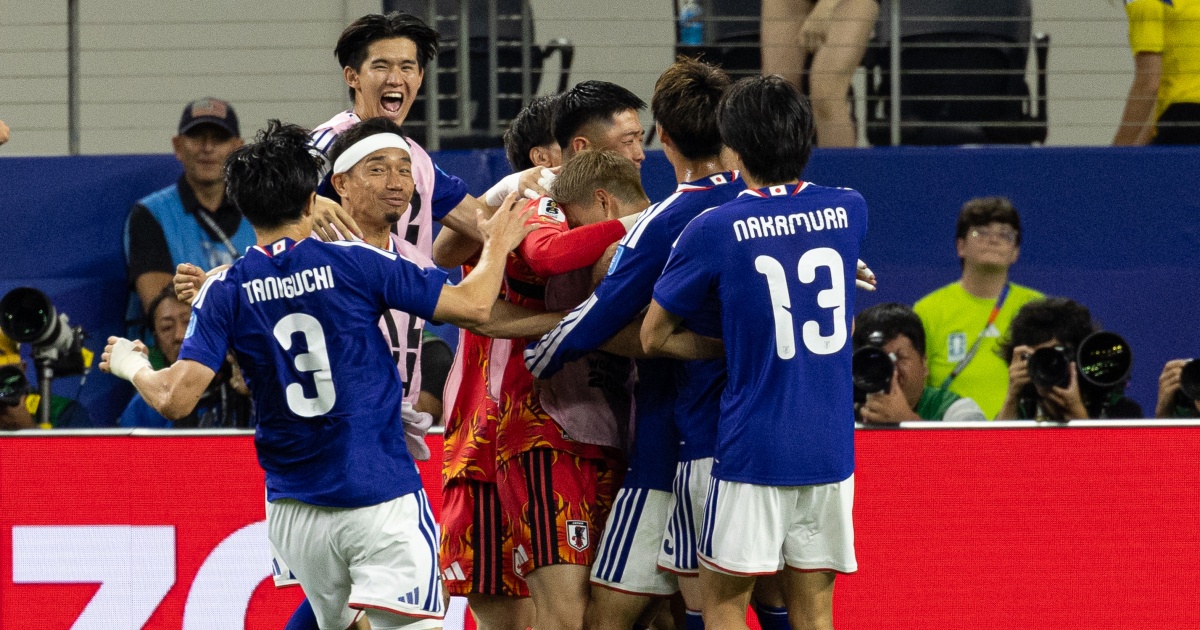
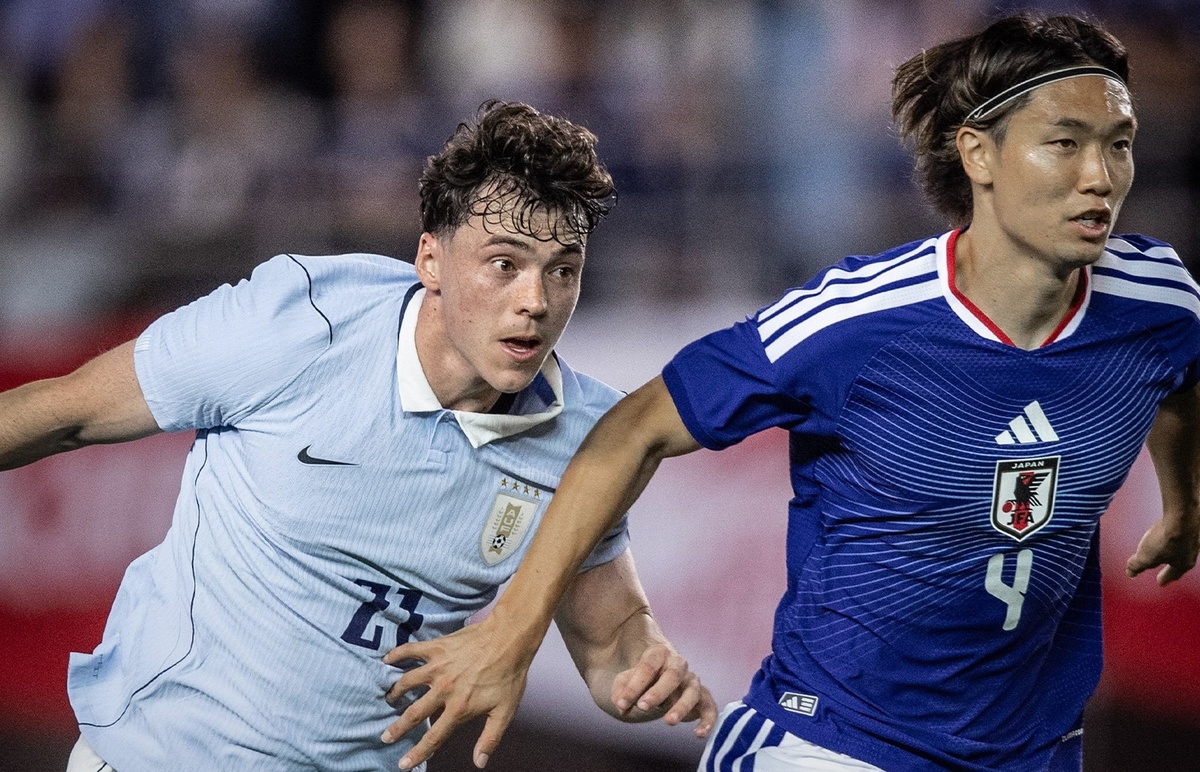
Japan secured a decisive 3-1 victory over Uruguay in a friendly match at Miyagi’s Q&A Stadium. This result is significant not just for the scoreline, but for what it represents: a clear indication of Japan’s evolving strategic approach and the successful integration of new tactical systems and player roles as the Samurai Blue prepare for upcoming international competitions.
Tactical Mastery and Performance Leverage
Japan’s tactical setup, a fluid 3-4-3 formation, contrasted sharply with Uruguay’s 4-4-2. This formation provided Japan with a significant numerical advantage in central midfield and on the wings, enabling sustained possession and continuous attacking pressure. The team demonstrated a proactive intent to control the game’s tempo and dictate play, moving beyond conventional tactical structures.
The opening goal in the 11th minute, a testament to Japan’s effective transition play, originated from a precise switch of play by Keito Nakamura to Kuryu Matsuki, who finished expertly with his left foot. This early lead allowed Japan to impose its game plan, forcing Uruguay into a reactive stance and showcasing the performance leverage gained from their adaptable formation. While Uruguay had moments, notably chances from Brian Rodríguez and a header from Maximiliano Araújo, Japan’s organized defense and midfield control limited their opportunities, highlighting the team’s ability to recover possession and sustain attacks.
Stakeholder Implications and Competitive Positioning
For the Japan Football Association, this victory validates their commitment to tactical innovation and a robust player development pipeline. It reinforces a progressive footballing philosophy aimed at consistently challenging top-tier international teams, thereby enhancing Japan’s competitive standing and global brand value.
Uruguay, under new head coach Diego Forlán, faces the immediate task of refining strategies and integrating new personnel amidst a technical staff transition. The match exposed vulnerabilities in midfield control and defensive organization, presenting areas for urgent attention as they prepare for future challenges.
The broadcast rights secured by Telemundo Deportes Ahora underscore the growing international appeal of Asian football. This exposure benefits broadcasters by offering diverse, high-quality content to a receptive Spanish-speaking audience and provides Japan a platform to showcase its developing talent and tactical acumen.
Strategic Context and Future Trajectory
Japan’s series of friendlies against South American opponents, including Uruguay, Venezuela, and Ecuador, reflects a strategic objective to test their tactical adaptability and physical resilience against diverse playing styles. This approach, particularly in the lead-up to events like the Copa Kirin Challenge 2026, indicates a long-term vision focused on comprehensive preparation and continuous performance enhancement.
Following their Round of 16 exit against Brazil in the recent World Cup, Japan is utilizing these friendlies against teams in transitional phases to refine their strategies and identify areas for improvement. This proactive scheduling aims to build upon their previous tournament performance and achieve greater success in future competitions.
These matches serve as critical diagnostic tools, offering insights into tactical trends, player readiness, and the competitive landscape. The outcomes will inform future strategic decisions for national federations, coaching staff, and player selections, shaping each team’s trajectory towards major tournaments.
Media Exposure and Commercial Viability
The broadcasting of these friendlies by Telemundo Deportes Ahora highlights the increasing commercial significance of non-tournament matches. This strategic placement offers substantial exposure for the Japanese national team, potentially attracting new sponsorship opportunities and bolstering its global commercial appeal.
For Telemundo, acquiring rights to these matches aligns with their strategy to be a premier provider of international soccer content for the U.S. Spanish-speaking market, complementing their existing portfolio of major European leagues and competitions.
The timing of these friendlies post-World Cup allows for a narrative of renewal and ambition for the Japanese team. Media coverage focusing on their evolution and potential drives fan engagement and commercial partner interest, solidifying Japan’s presence in the global footballing discourse.
Capital Flow and Performance Incentives
The financial investment by broadcasters like Telemundo in friendly match rights reflects a calculated assessment of audience demand and advertising revenue potential. This capital movement incentivizes national federations to organize high-quality fixtures that offer both sporting merit and commercial value.
For players, strong performances in these high-visibility matches can significantly impact their individual market value and prospects for lucrative club contracts. The opportunity to impress against established South American teams provides a powerful performance incentive, driving individual effort and team cohesion.
The strategic scheduling, integrated into broader tournament preparation like the Copa Kirin Challenge, suggests a coordinated effort to maximize return on investment for both sporting development and commercial partnerships, fostering a cycle of performance, exposure, and financial growth.
Regional Football Dynamics and Cross-Continental Influence
Japan’s proactive engagement with South American football federations through these friendlies fosters intercontinental collaboration and knowledge exchange, enriching the understanding of diverse playing styles and tactical approaches across continents.
The success of Japan’s tactical experiments and player integration serves as an aspirational model for other Asian Football Confederation (AFC) nations aiming to enhance their global standing, demonstrating the impact of strategic planning and execution.
For South American teams, facing a tactically astute Japanese side provides valuable preparation against varied international opposition, contributing to their own development cycles and maintaining their competitive edge in global rankings.
Institutional Strategy and Long-Term Development
The Japanese Football Association’s sustained investment in youth development and coaching education is foundational to their ability to field teams with evolving tactical profiles. This long-term institutional strategy is key to enduring success and adapting to modern football’s dynamic demands.
The decision to participate in challenging friendlies against diverse opponents indicates strategic foresight in proactively identifying and addressing potential weaknesses, prioritizing robust preparation for tangible results in major tournaments.
The integration of player performance data and analytical insights likely plays a crucial role in Japan’s tactical planning, enabling precise identification of strengths and weaknesses to inform coaching and player development initiatives for maximum impact.
Competitive Landscape and Market Positioning
Japan’s consistent participation and performance in friendlies against top nations like Uruguay solidify its position as a leading Asian football power and a respected global competitor, enhancing its market influence within the international football community.
The observed tactical innovations, such as the 3-4-3 formation, contribute to the broader evolution of football tactics globally. Japan’s experimental approaches influence the competitive landscape, prompting adaptation and innovation from other nations.
The success of these friendlies in attracting media attention and broadcast deals underscores the commercial value of international football. It demonstrates the viability of non-tournament matches as significant revenue-generating events, influencing federation resource allocation and competitive calendar planning.
Performance Leverage and Strategic Adaptation
Japan’s ability to adapt its formation and exploit Uruguay’s tactical setup exemplifies performance leverage in modern football. This adaptability is critical for maximizing strengths, exploiting opponent weaknesses, and achieving consistent results.
For Uruguay, the match highlights the necessity of strategic adaptation in response to evolving tactical trends. Their capacity to learn from this experience and implement adjustments will be vital for future competitive success.
The sustained pressure and control demonstrated by Japan indicate a team that has effectively translated training and preparation into a desired performance outcome, showcasing a hallmark of well-coached and highly motivated sides.
Stakeholder Risk and Reward Analysis
Risks for Japan in these friendlies include potential injuries or unexpected poor performances impacting team morale. However, the rewards—improved player development, tactical refinement, and enhanced international standing—significantly outweigh these risks.
For Uruguay, the primary risk is the exposure of tactical deficiencies and potential negative momentum early in a new coaching era. The reward, however, is invaluable learning experience and identification of critical improvement areas essential for long-term success.
Broadcasters and sponsors face risks related to viewership or engagement figures impacting revenue. Conversely, successful broadcasts and strong fan engagement offer substantial rewards, reinforcing their commitment to international football properties.
Systemic Impact on Global Football Development
Strategic engagement between teams from different confederations, such as Japan and Uruguay, fosters a more interconnected global football ecosystem, promoting dynamic and universally competitive sport through cross-continental collaboration and experience exchange.
Japan’s emphasis on tactical flexibility and player development offers an aspirational model for emerging footballing nations, demonstrating how consistent strategic investment can yield significant competitive advancements.
Ultimately, these matches contribute to the ongoing evolution of football strategy and performance standards worldwide, with teams like Japan pushing boundaries and testing new approaches to elevate the global game’s overall quality and complexity.