
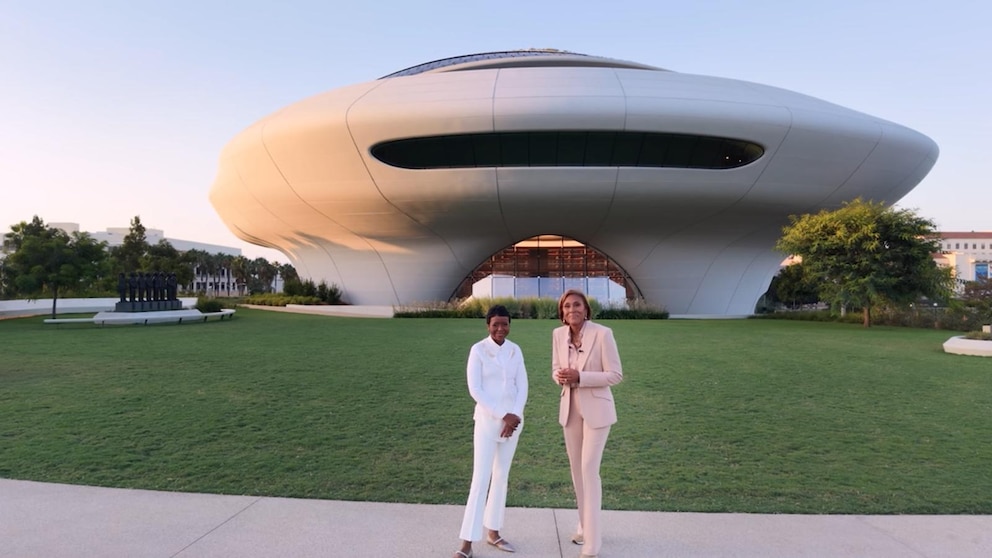
The Lucas Museum of Narrative Art: A Billion-Dollar Vision Redefining the Cultural Landscape
The Lucas Museum of Narrative Art, a monumental undertaking by co-founders George Lucas and Mellody Hobson, is poised to inaugurate a new epoch for cultural institutions. With its Los Angeles debut, publicly amplified by Mellody Hobson’s strategic interview on ‘GMA’ (September 22, 2026), the museum immediately signaled its intent to transcend traditional art world boundaries and cultivate a broad, popular engagement with art. This high-profile launch underscores a deliberate, multi-faceted strategy to establish the museum as a globally significant entity from its inception, targeting not just art aficionados but a mainstream audience through its accessible thematic focus.
Philanthropic Scale and Unprecedented Institutional Autonomy
The Lucas Museum’s designation as a ‘billion-dollar galaxy’ is more than a metaphor; it signifies an extraordinary deployment of private capital that redefines philanthropic benchmarks within the cultural sector. This colossal investment by George Lucas and Mellody Hobson grants the institution unparalleled autonomy in its developmental trajectory, curatorial vision, and programmatic innovation. Unlike museums reliant on public funding or complex endowment structures, the Lucas Museum operates with a founder-driven ethos, enabling audacious architectural statements and an unconstrained pursuit of its distinctive artistic and educational mandate. This model prioritizes singular vision over incremental growth, fostering an environment ripe for experimentation in exhibition design and audience engagement strategies.
Beyond its cultural mandate, this substantial capital infusion functions as a pivotal economic anchor for Los Angeles. It stimulates regional growth through sustained job creation, construction, and the anticipated surge in cultural tourism. This positioning transforms the museum from a mere exhibition venue into a significant urban economic engine, ensuring long-term contributions to the city’s vitality through its operational footprint and attraction of global visitors.
Redefining Art: The Primacy of Narrative
At the core of the Lucas Museum’s disruptive potential is its explicit dedication to ‘Narrative Art,’ a curatorial philosophy that deliberately challenges conventional art historical taxonomies. By championing storytelling across a spectrum of media—from film and illustration to digital art and traditional forms—the museum fundamentally broadens the definition of what constitutes museum-worthy art. This inclusive approach democratizes art appreciation, moving beyond purely aesthetic or historical veneration to emphasize thematic content and the communicative power of visual storytelling. This strategic pivot is designed to foster a more accessible and universally engaging visitor experience, leveraging humanity’s inherent connection to narrative to resonate with an exceptionally diverse demographic, thereby expanding the traditional audience for art.
Disrupting the Cultural Landscape and Art World Paradigms
The Lucas Museum emerges not merely as an addition to the art world, but as a potent disruptive force, compelling a re-evaluation of established institutional models, curatorial practices, and audience expectations. Its unprecedented scale and thematic specificity introduce a new competitive dynamic, particularly for existing cultural institutions in major art centers like Los Angeles. This pressure will likely necessitate an introspective re-assessment by traditional museums concerning their engagement strategies, collection development, and visitor experiences to remain relevant in a rapidly evolving cultural ecosystem.
Crucially, the museum’s elevation of narrative across diverse media inherently challenges long-standing hierarchies that have historically privileged certain art forms. This curatorial stance has the potential to reshape academic discourse, influence broader art market collecting trends, and redefine the very criteria for artistic display and preservation. The institutional implications are profound: a shift from static repositories of historical artifacts towards dynamic centers for contemporary cultural dialogue and immersive experience. This evolution is anticipated to catalyze innovation in programming and outreach across the museum sector, fostering a more vibrant and intellectually competitive environment.
Urban Integration and Strategic Leadership
The Lucas Museum significantly bolsters Los Angeles’s cultural infrastructure, solidifying its standing as a global nexus for arts and entertainment. Strategically situated, the museum is poised to attract a diverse international visitor base, substantially contributing to the city’s tourism economy and enhancing its cultural branding. Its integration with LA’s pervasive creative industries—spanning film, television, and digital media—promises synergistic opportunities, fostering cross-pollination of ideas and collaborations that benefit both the institution and the broader artistic community.
Mellody Hobson’s multifaceted role as co-founder and public advocate is instrumental in shaping the museum’s institutional identity and public perception. Her formidable background in finance and business leadership imbues the museum’s governance and operational framework with a strategic acumen vital for ensuring its long-term viability and profound cultural impact. This leadership, combined with targeted public engagement, legitimizes the museum within mainstream consciousness, effectively positioning it to redefine cultural participation for a broad, non-specialist audience.
Future Trajectories and Lasting Impact
The Lucas Museum of Narrative Art is more than a singular architectural achievement; it represents a profound blueprint for the future of cultural institutions. It exemplifies a potent convergence of visionary private philanthropy, a distinct thematic focus, and a steadfast commitment to broad public engagement. This influential model could inspire further high-net-worth investment in cultural projects that harmoniously blend personal artistic vision with public benefit.
The museum’s foundational emphasis on narrative underscores an escalating appreciation for storytelling as a quintessential human experience, transcending conventional artistic boundaries. This trajectory suggests an increased integration of interdisciplinary methodologies in cultural programming and education across the global museum landscape. The institution’s operational magnitude and strategic locale within Los Angeles cement its long-term commitment to cultural leadership.
Ultimately, the Lucas Museum’s enduring impact will be gauged not solely by its physical collections or visitor numbers, but by its transformative capacity to reshape cultural discourse, catalyze innovative artistic expressions, and fundamentally redefine public interaction with art in the 21st century. Its emergence signals a pivotal moment, demanding continuous critical scrutiny and adaptation within the dynamic cultural sector it aims to lead.
Photo by Peggy_Marco on Pixabay.