When a franchise cornerstone contextualizes an emerging talent within an organization’s historical lineage, the appraisal carries structural significance. Appearing on The Herd with Colin Cowherd, two-time Super Bowl MVP Eli Manning evaluated New York Giants running back Cam Skattebo, drawing a direct parallel between the rookie’s competitive disposition and that of former Pro Bowl tight end Jeremy Shockey. Manning’s breakdown highlights how specific high-intensity temperaments transcend statistical production to reshape team standards.
Selected in the fourth round of the 2025 NFL Draft, Skattebo entered the league projected primarily for situational interior depth and short-yardage efficiency. Despite being limited to eight appearances in his debut campaign, his violent running style established an outsized tactical and emotional presence. The strategic consideration for New York is not simply volume sustainability, but how Skattebo’s operational approach recalibrates the offensive backfield’s identity.
Practice Tempo and Internal Accountability
Manning’s core analytical observation focused on Skattebo’s non-game operational habits. Rather than reserving peak physical output exclusively for weekly stadium snaps, Skattebo executes midweek installation reps at maximum contact velocity. This approach replicates Shockey’s tenure in the early 2000s, where relentless practice speed systematically raised defensive engagement.
Manning noted that this practice standard creates functional accountability across the depth chart. Defenders operating at fractional intensity risk being physically overwhelmed or stiff-armed during mundane drill work. By enforcing collision thresholds during practice, Skattebo eliminates complacency throughout the unit, turning fundamental repetitions into live-contact preparation.
Tactical Attrition and Fourth-Quarter Margins
From a scheme perspective, Manning outlined how a downhill, contact-seeking runner alters defensive viability across four quarters. A continuous series of direct collisions degrades tackling leverage over sixty minutes. By the fourth quarter, second- and third-level defenders experience diminished closing speed and hesitation at the point of attack.
Manning highlighted that Skattebo maintains a linear, unyielding pad level deep into games, preventing defensive units from recovering physical parity. When defensive fronts fatigue under sustained exposure, late-down conversion rates shift in favor of the offense. This attrition-based dynamic grants play-callers situational confidence to lean on base running concepts to protect late leads and dictate clock management.
Managing Narrative Friction and High-Energy Archetypes
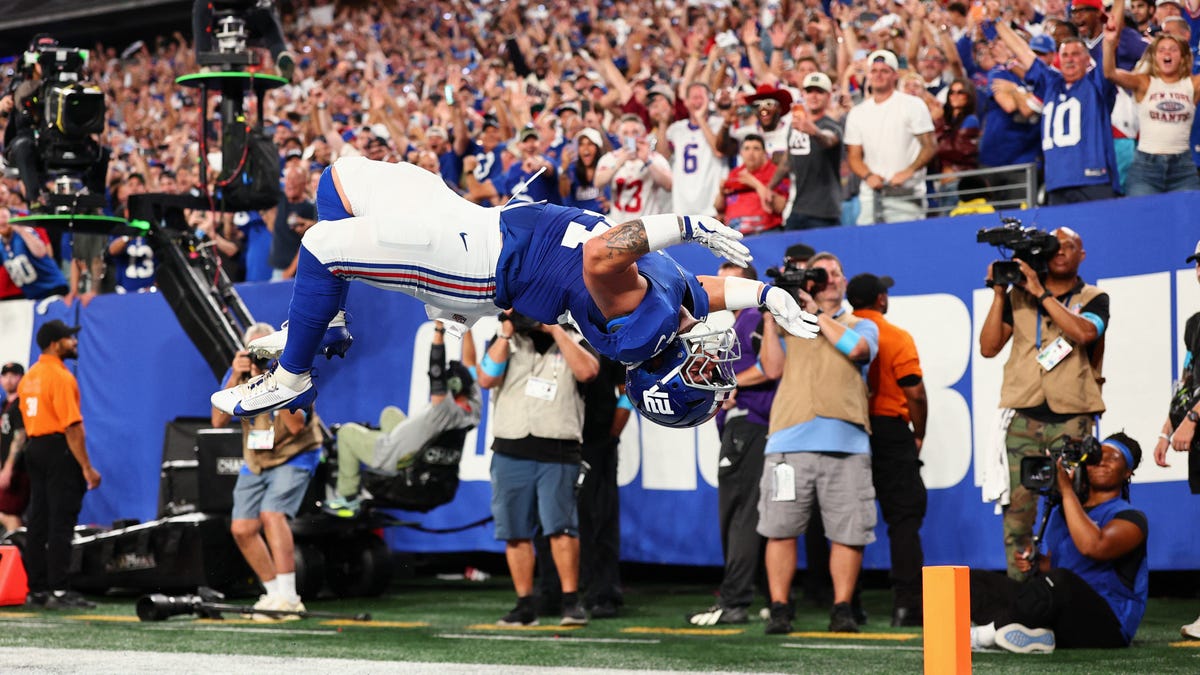
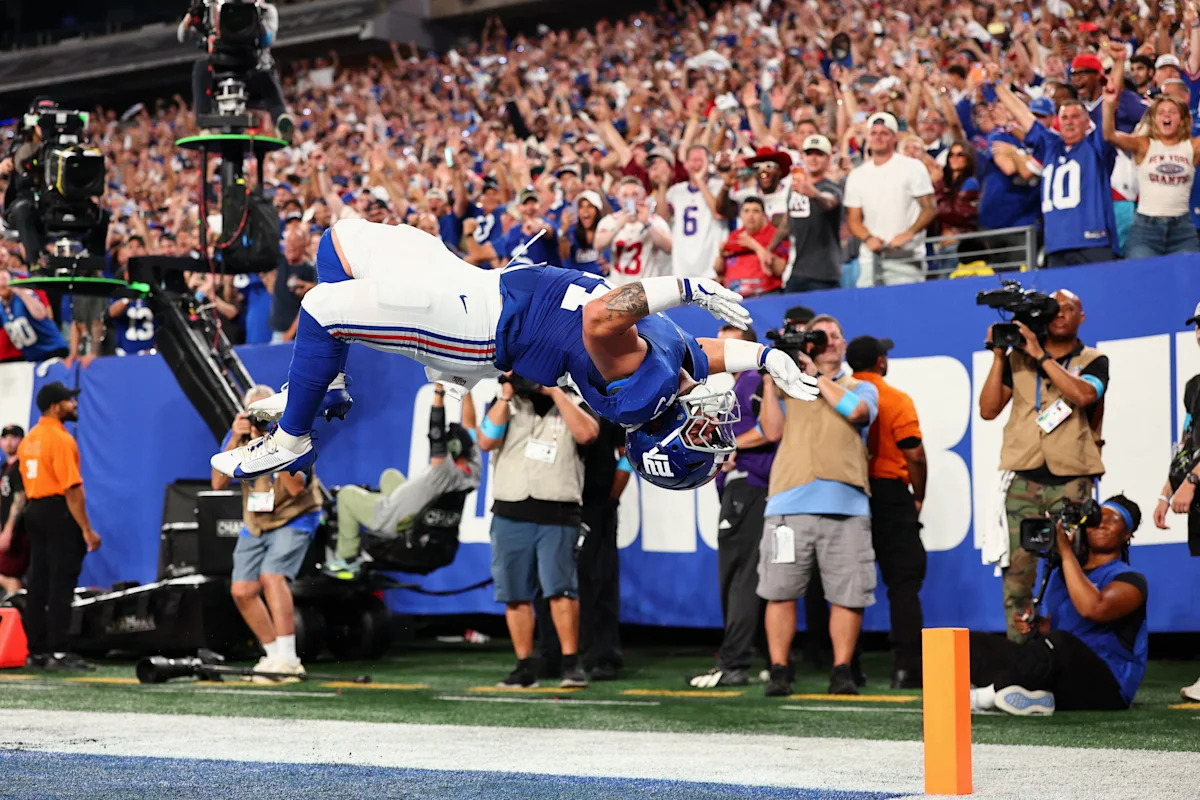
Skattebo’s on-field ascent has unfolded alongside external scrutiny. His celebratory routines and expressive actions—specifically executing a backflip shortly after recovering from a severe leg injury—generated concern among national analysts regarding risk management and maturity. This dynamic closely mirrors the media polarization that accompanied Shockey during his New York tenure, where high emotional output was often framed as an organizational liability.
Manning directly countered that perspective, clarifying that an athlete’s expressive profile cannot be cleanly decoupled from their functional edge. Inside the building, idiosyncratic behavior supported by an unyielding work ethic functions as a catalyst rather than a distraction. For veteran leadership and coaching staffs, eccentricities are thoroughly tolerated when validated by continuous preparation and physical sacrifice.
Institutional Value and Roster Construction
Day-three draft investments rarely alter a franchise’s internal culture, but Skattebo’s rapid integration underscores the utility of culture-setting archetypes. Manning’s public endorsement validates Skattebo’s standing within the organization, neutralizing media-driven narratives and anchoring his status within the team’s long-term offensive core.
As the Giants build out their structural identity, the central operational task involves balancing Skattebo’s physical exposure against sustained health. If the young back maintains his collision baseline while managing durability parameters, Manning’s comparison to Shockey will stand not merely as an evocative soundbite, but as the benchmark for how the Giants cultivate an aggressive programmatic baseline.