
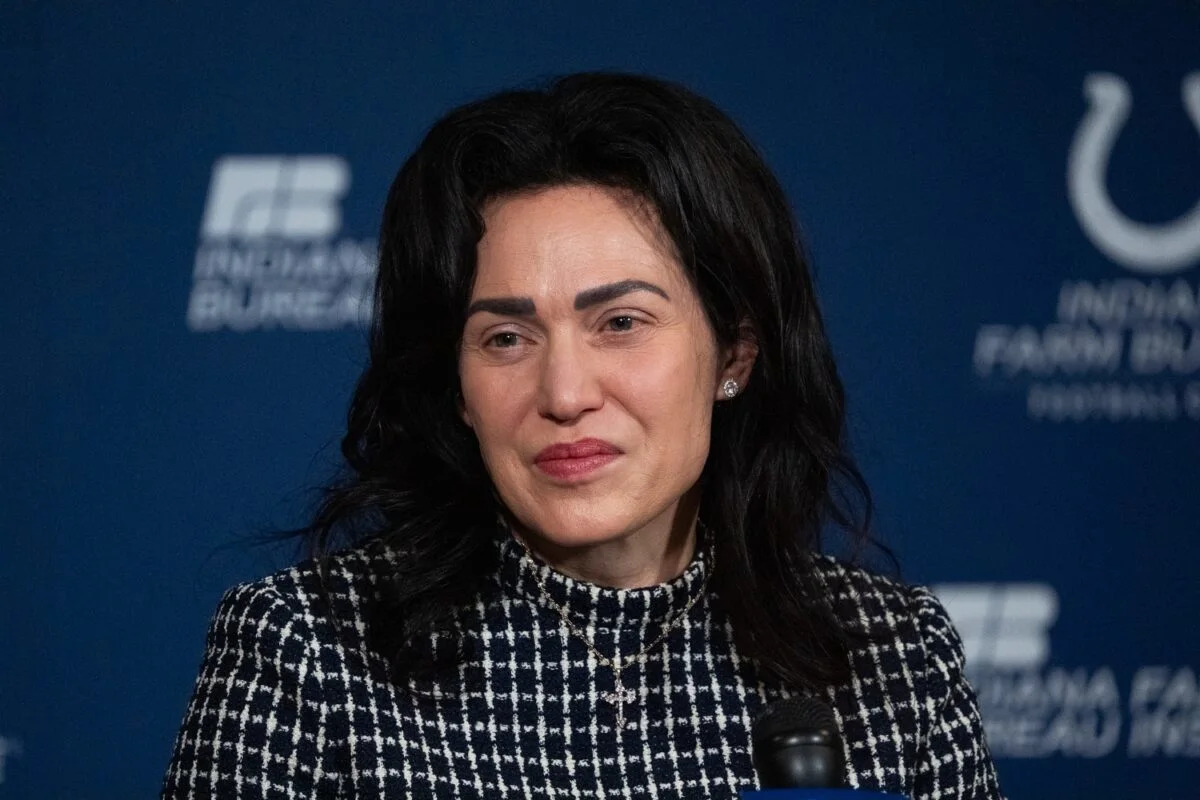
The 2026 NFL season signifies a paradigm shift in the executive methodology of the Indianapolis Colts. Since assuming the role of principal owner and CEO in May 2025, Carlie Irsay-Gordon has transitioned the franchise from a legacy ownership model toward a framework of technical immersion and operational transparency.
The Mechanics of Technical Immersion
During the Week 1 engagement against the Baltimore Ravens, Irsay-Gordon’s use of a headset and systematic notation signaled a move toward real-time operational auditing. This approach is not intended to disrupt tactical execution but to eliminate information asymmetry between the sideline and the executive suite. By monitoring live communications, the CEO gains unfiltered insight into the coaching staff’s logic and the team’s physiological responses under high-leverage conditions.
This commitment to raw data collection ensures that subsequent resource allocation and personnel evaluations are grounded in empirical observation rather than sanitized post-game reports. It represents a shift from passive investment to active institutional stewardship.
Succession and the New Governance Model
The May 2025 transition following Jim Irsay’s passing established a collective ownership structure involving Irsay-Gordon and her sisters, Casey Foyt and Kalen Jackson. While the hierarchy maintains clear executive authority, the leadership style has pivoted from the emotive public presence of the previous era to a process-oriented analytical framework. This structural stability is essential for a franchise managing the high capital exposure and brand volatility inherent in the modern NFL.
Irsay-Gordon’s methodology is rooted in a decade-long educational trajectory, citing the 2012 hiring of Chuck Pagano as a catalyst for her technical specialization. This historical context suggests that her 2026 sideline presence is the culmination of a deliberate strategy to become a technically literate executive capable of providing high-level oversight without compromising the autonomy of her coaching staff.
Operational Impacts on Culture and Accountability
Her presence in high-stakes environments—ranging from the weight room to strategic briefings—collapses the traditional silos between the front office and the locker room. This proximity serves two primary functions: it fosters a deeper understanding of the organization’s human capital and establishes a continuous mechanism for internal accountability.
The 23-41 loss to Baltimore provided an immediate test for this feedback loop. While a significant margin of defeat, the speed at which Irsay-Gordon can now identify specific failure points—due to her proximity to the technical flow—allows for more agile institutional responses. For the coaching staff, this creates an environment of professional discipline, knowing that executive decisions are informed by a direct understanding of the game’s complexities.
Strategic Market Perception
As a leading female executive in a historically male-dominated industry, Irsay-Gordon’s hands-on approach challenges prevailing stereotypes of the detached owner. This visibility enhances the franchise’s reputation among stakeholders and sponsors as a meticulously managed entity. The long-term efficacy of this model will be measured by its ability to convert technical oversight into on-field competitive advantages and sustainable market value growth.

Photo by shannonmatthew on Pixabay.