
Probing Quantum Coherence in High-Energy Regimes
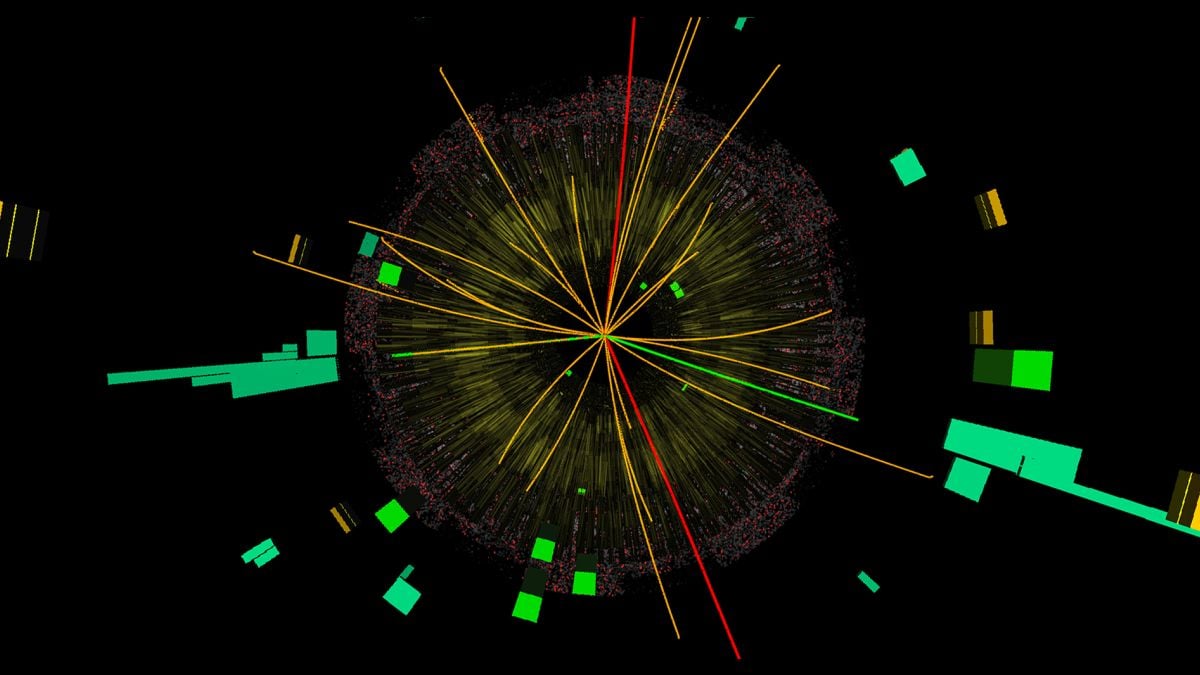
Researchers at the Large Hadron Collider (LHC) have experimentally confirmed that quantum entanglement—a phenomenon typically associated with low-energy systems—persists within the high-mass, short-lived states of Z bosons. This collaboration, featuring significant contributions from the University of Oxford, utilized 13 TeV proton-proton collisions to observe inextricably linked quantum states in boson pairs produced via Higgs boson decay.
Expanding the Frontiers of the Standard Model
While entanglement is well-documented in photons and stable atoms, this observation at the teraelectronvolt (TeV) scale marks a significant expansion of quantum mechanics into the domain of massive, unstable particles. The findings, published in Physical Review Letters, demonstrate that the spins of Z-boson pairs remain correlated despite their extremely brief lifetimes, validating theoretical predictions within the Standard Model under extreme physical conditions.
Methodology: Deciphering the ZH Production Channel
The discovery focused on the ZH production process, specifically where a Higgs boson decays into two charm quarks (cc̄) and a Z boson decays into muon pairs (μ+μ−). By analyzing the angular distributions of these decay products, scientists measured a degree of entanglement higher than that previously observed in top-quark pairs. This high-fidelity observation suggests that the LHC can function as a powerful laboratory for quantum information science, moving beyond traditional particle discovery.
Technological and Theoretical Implications
The confirmation of entanglement at high energies provides a robust empirical framework for testing the limits of quantum field theory. Beyond fundamental physics, these results offer critical data for the development of quantum computing architectures and secure communication protocols that must account for relativistic and high-energy effects. The research bridges the gap between subatomic particle interactions and the emerging field of quantum technologies.
International Collaboration and Validation
This achievement underscores the necessity of global scientific infrastructure. Integrating expertise from the University of Oxford and the Institute of Theoretical Physics (IFT) in Spain, the study processed massive datasets to extract subtle quantum signals from the background noise of hadronic collisions. Such peer-reviewed milestones reinforce the utility of the LHC in exploring the foundational architecture of physical reality.
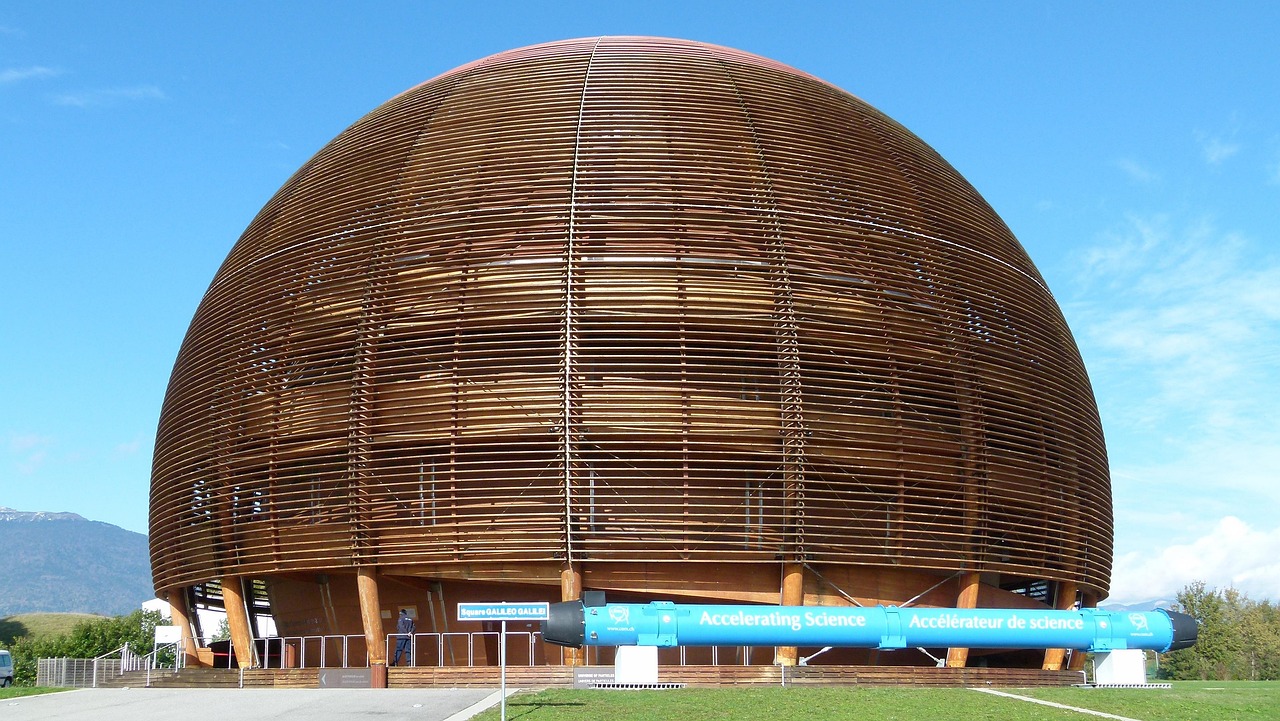
Photo by 12019 on Pixabay.