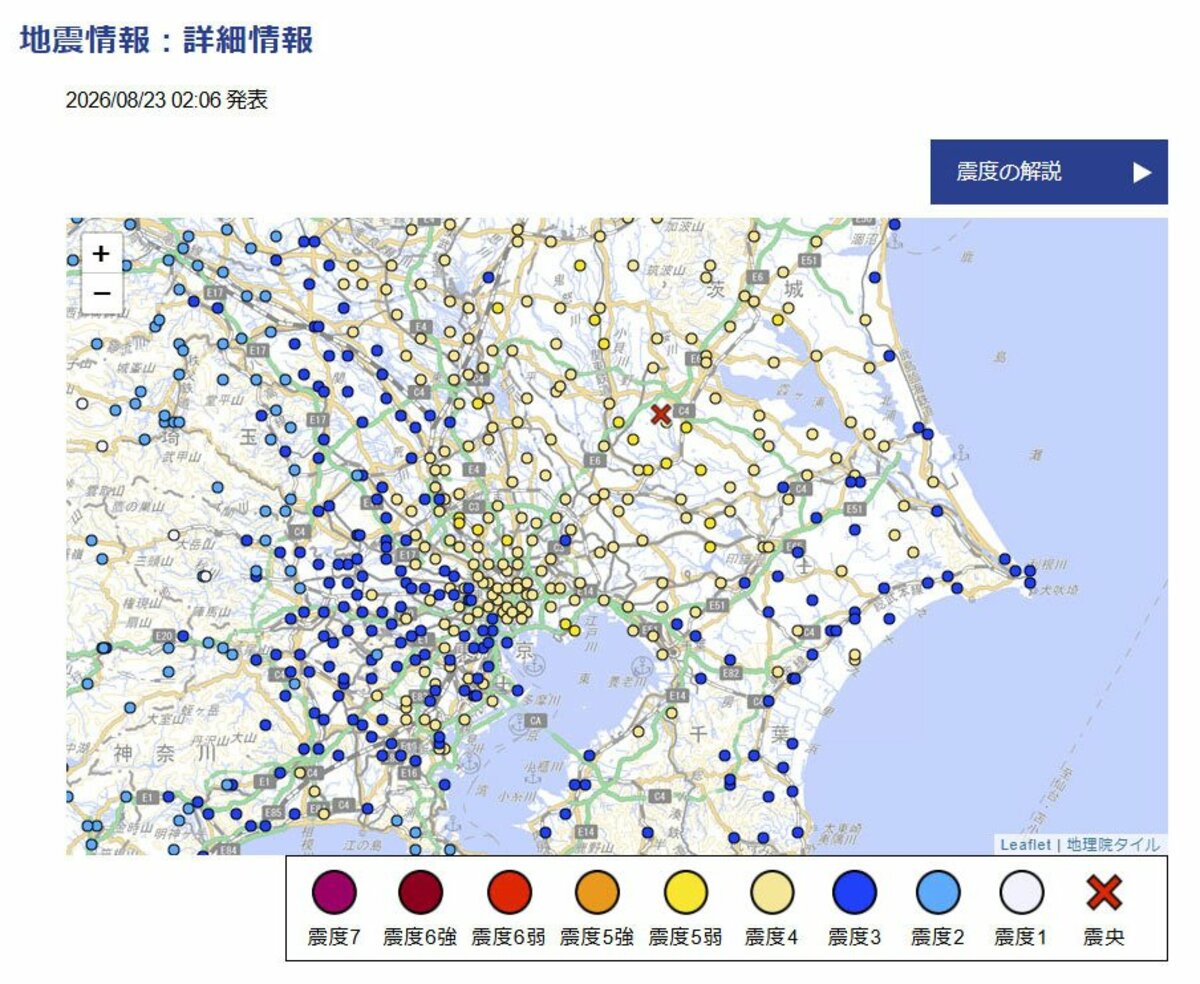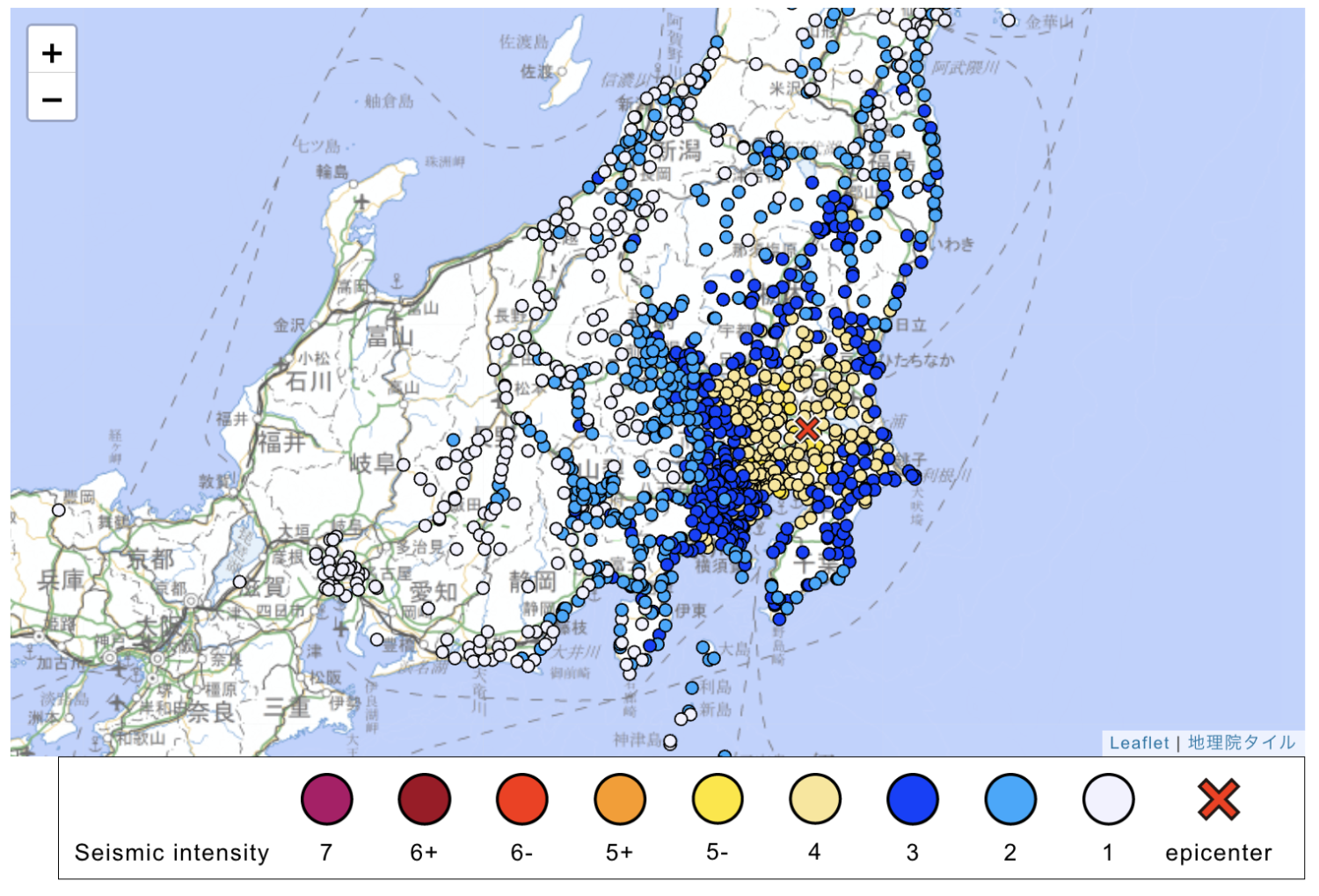
A preliminary magnitude 5.9 earthquake struck eastern Japan at approximately 2:00 a.m. Sunday, with its epicenter located in southern Ibaraki Prefecture at an intermediate focal depth of 68 kilometers. The seismic event triggered automatic emergency alerts across the Kanto plain, generating a maximum seismic intensity of lower 5 on the Japan Meteorological Agency (JMA) shindo scale within central Tokyo and adjacent prefectures. The JMA confirmed that no tsunami was generated, keeping emergency response priorities concentrated entirely on inland structural integrity and public safety.
Casualty Assessment and Structural Damage
Data released by the Fire and Disaster Management Agency confirmed at least 37 injuries distributed across Saitama, Chiba, Kanagawa, Ibaraki, and Tokyo prefectures. Most casualties resulted from secondary indoor hazards, such as falling objects and loss of footing caused by lower 5 ground motion, which sustained shaking for up to 60 seconds. One serious injury was confirmed in Kanagawa Prefecture, while the remaining individuals suffered minor contusions. Physical damage remained localized, characterized by non-structural failures including a partial ceiling collapse at an urban facility.
Transport Network Adjustments and Operational Resiliency
Automated Early Warning Systems (EEW) provided critical seconds of lead time prior to the arrival of primary seismic waves, activating preventative protocols across metropolitan transit systems:
- JR East: Applied mandatory speed restrictions and initiated fleetwide track inspections, resulting in widespread morning scheduling delays.
- Tobu Railway: Suspended specific express operations pending engineering clearances of structural right-of-ways.
- Keisei Electric Railway: Temporarily halted services along the line connecting Ueno to Narita Airport in Chiba Prefecture before restoring normal operations following post-inspection track verification.
Seismological Vigilance and Infrastructure Protocols
Seismologists and disaster management authorities have urged regional stakeholders to maintain elevated readiness over the subsequent week, citing the statistical probability of equivalent-intensity aftershocks. The event validated automated fail-safe thresholds embedded within Tokyo’s transit grid, which mandate immediate deceleration or service suspensions at specified ground-acceleration limits to prevent structural derailments during nocturnal tectonic displacements.