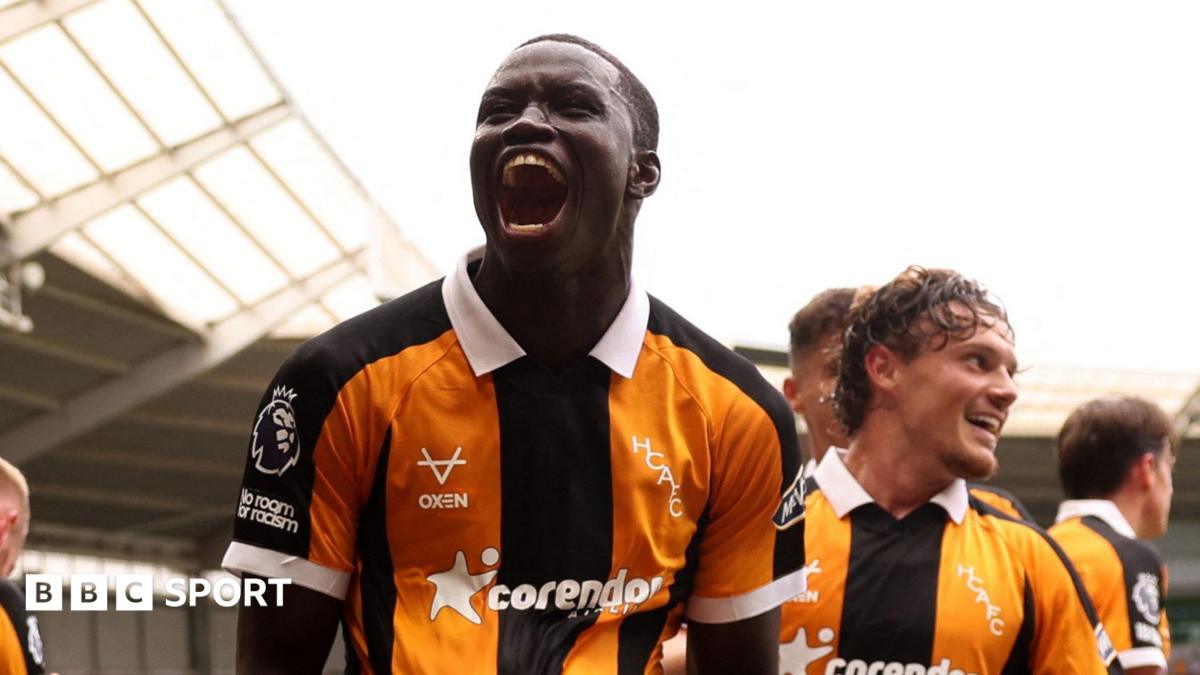
Strategic Context of the 2026–27 Premier League Opener
The 2026–27 Premier League season commences with a high-stakes encounter at the MKM Stadium, juxtaposing Manchester United’s institutional stabilization under Michael Carrick against Hull City’s tactical reorganization following a nine-year top-flight absence. This fixture serves as a critical validation point for two divergent trajectories: United’s re-entry into the Champions League elite and Hull’s attempt to transition from Championship volatility to Premier League sustainability.
Historical Imbalance and Psychological Leverage
Statistical precedents suggest a profound competitive disparity. Hull City remains winless in their previous ten Premier League encounters with Manchester United, yielding eight losses and two draws. This historical bottleneck is mirrored only by their record against Chelsea, marking United as a significant psychological hurdle. Conversely, Manchester United exhibits historical dominance over newly promoted sides on Matchday 1, maintaining an undefeated record of nine wins and three draws in such scenarios.
However, the Red Devils face a critical historical risk. Following a 1-0 opening-day loss to Arsenal last season, a defeat in East Yorkshire would mark the first time since the 1972-73 and 1973-74 campaigns that the club has lost consecutive seasonal openers—a sequence that historically preceded the club’s mid-70s relegation. This institutional memory adds a layer of existential pressure to Carrick’s tactical implementation.
Operational Readiness: Preseason Volatility vs. Tactical Integration
Despite the optimism of Champions League qualification, United’s preseason has been characterized by operational inconsistency. Recorded defeats to Wrexham and Ruben Amorim’s AC Milan, alongside draws with Leeds and PSG, suggest a team grappling with squad depth and tactical integration. While victories over Rosenborg and Atlético Madrid demonstrate elite-level potential, the lack of clinical consistency remains a vulnerability for Hull to exploit.
Under Sergej Jakirović, Hull City enters the fray as Championship playoff winners with a modernized defensive philosophy. The primary objective for the Tigers is to rectify the catastrophic defensive metrics of their 2016-17 campaign, where a league-high 80 goals conceded necessitated immediate relegation. Jakirović’s 60% win rate in Premier League openers—including the 2016 victory over Leicester—provides a statistical basis for a high-intensity start designed to capitalize on United’s potential lack of match sharpness.
Institutional and Financial Implications
The financial chasm between the clubs is underscored by their respective market positions. United’s return to European revenue streams has fortified their recruitment leverage, while Hull City relies on the promotion windfall to bridge the gap. The MKM Stadium factor, returning to the global stage after nearly a decade, represents a vital commercial and atmospheric asset. For Jakirović, the objective is to leverage this home advantage and a high-pressing physical approach to disrupt United’s midfield transition.
Conclusion
The outcome of this fixture hinges on the tension between Manchester United’s institutional weight and Hull City’s tactical hunger. While United’s 22 opening-day wins represent a Premier League record, their current ‘rust’ factor offers a narrow window for Hull to reset the historical narrative. For Carrick, anything less than three points will be scrutinized as a failure of his long-term project; for Jakirović, a competitive display serves as proof of Hull’s readiness for the elite level.