
The Strategic Mechanics of a Digital Sports Announcement
When Carlos Alcaraz utilized the digital footprint of soccer transfer reporter Fabrizio Romano to announce his return to professional tennis, the convergence of traditional athletic competition and modern sports media architecture was placed into sharp relief. By adopting Romano’s signature catchphrase to signal the end of a four-month hiatus caused by a wrist injury, the Spanish star bypassed conventional sports PR channels to execute a high-engagement digital reveal. This cross-pollination between tennis prestige and soccer transfer culture demonstrates how contemporary elite athletes manage brand equity and audience attention across fragmented media ecosystems.
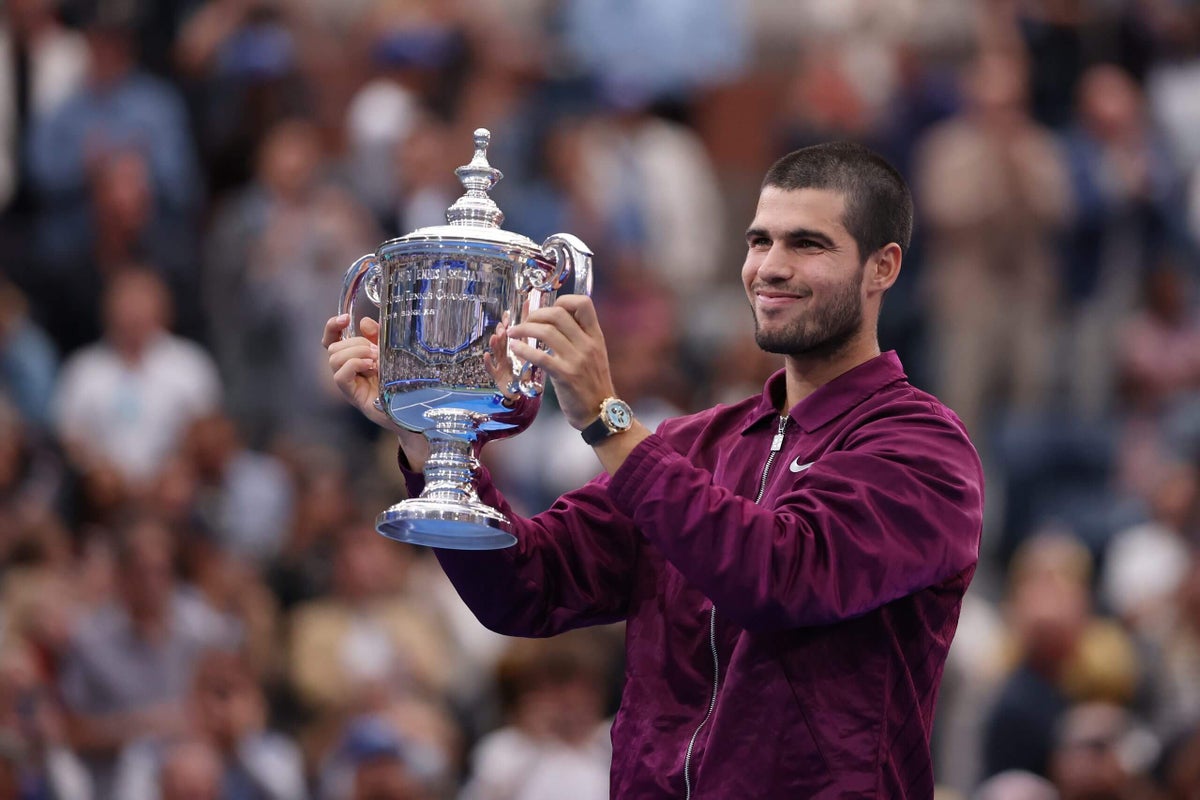
The four-month absence of a major champion introduces profound competitive realignment within the upper echelons of men’s professional tennis. Extended physical downtime alters match sharpness, tournament rhythms, and psychological momentum, forcing competitors to recalibrate tactical preparation during the critical lead-up to a major championship. Alcaraz’s status as the reigning champion in New York amplifies the operational pressure surrounding his reentry, transforming a standard tournament comeback into a high-stakes defense of elite market share.
Competitive Dynamics and Field Vulnerabilities
The return of the Spanish star directly intersects with physical vulnerabilities affecting the contemporary men’s draw, most notably the status of world number one Jannik Sinner. Sinner’s recent withdrawal from the Cincinnati Open due to a knee injury leaves the upper tier of tournament seeding and draw architecture in a state of operational uncertainty. The potential renewal of their rivalry depends heavily on Sinner’s recovery trajectory, creating an environment where tournament organizers and broadcasting partners must navigate fluid competitive hierarchies.
Beyond the primary singles draw, strategic decisions regarding physical management remain central to Alcaraz’s immediate competitive roadmap. While his participation in the defense of his singles crown is confirmed in principle, formal entry into specific competitive brackets remains subject to ongoing medical evaluations of wrist stability. The tournament administrative framework provides additional operational pathways, including potential wild cards for events scheduled ahead of the main singles competition.
Institutional and Tournament Ecosystem Implications
The logistical timeline leading up to the main draws introduces critical decision points for both player management teams and tournament administrators. Evaluating whether to absorb early competitive volume through preliminary events requires a delicate balancing act between acquiring match-play repetitions and mitigating structural reinjury risks. Every competitive appearance prior to the primary singles defense serves as a stress test for the recovering wrist under authentic tournament conditions.
For the broader tennis ecosystem, the confirmation of Alcaraz’s return provides essential stability for commercial valuations, ticket sales, and media rights monetization tied to the late-summer hard-court swing. Major Grand Slam tournaments operate within tight financial parameters where the presence of marquee defending champions directly influences broadcast viewership metrics and global sponsorship engagement. The intersection of player rehabilitation schedules and commercial imperatives highlights the continuous tension between individual athletic longevity and institutional revenue generation.
Strategic Outlook and Market Positioning
As the tennis circuit converges on New York, the structural implications of this comeback extend far beyond a single athlete’s competitive schedule. The episode underscores the growing reliance on direct-to-consumer digital channels and non-traditional media influencers by elite sports personalities seeking to maximize cultural resonance. Industry stakeholders will closely monitor the physical durability of the returning champion, recognizing that the outcome of this major tournament will permanently reshape the competitive hierarchy of men’s professional tennis.

Photo by Alexandra_Koch on Pixabay.