Strategic Evolution of QSR Licensing Architecture
McDonald’s has officially launched a limited-edition collaboration integrating Sanrio’s character portfolio with the Godzilla kaiju franchise. Available across participating domestic restaurants starting Tuesday, August 18, this co-branded Happy Meal campaign exemplifies how quick-service restaurant (QSR) operators deploy cross-industry intellectual property (IP) to stimulate point-of-sale traffic and consumer engagement.
The promotion highlights a structural shift in promotional marketing: legacy brand mascots have largely transitioned to secondary roles as global entertainment franchises anchor core conversion strategies. McDonald’s ongoing promotional pipeline has systematically leveraged major global properties—ranging from Stranger Things and Super Mario to high-profile K-pop partnerships and international sports events—to maximize cultural resonance.
Demographic Convergence and Multi-Generational IP Synergy
The collaboration pairs Sanrio’s 50-year-old character lineage with the classic cinematic history of Toho’s Godzilla universe. Synthesizing disparate visual identities creates an intersection between long-tail nostalgic affinity and contemporary youth collectibility, capturing both adult collectors and younger consumer cohorts.
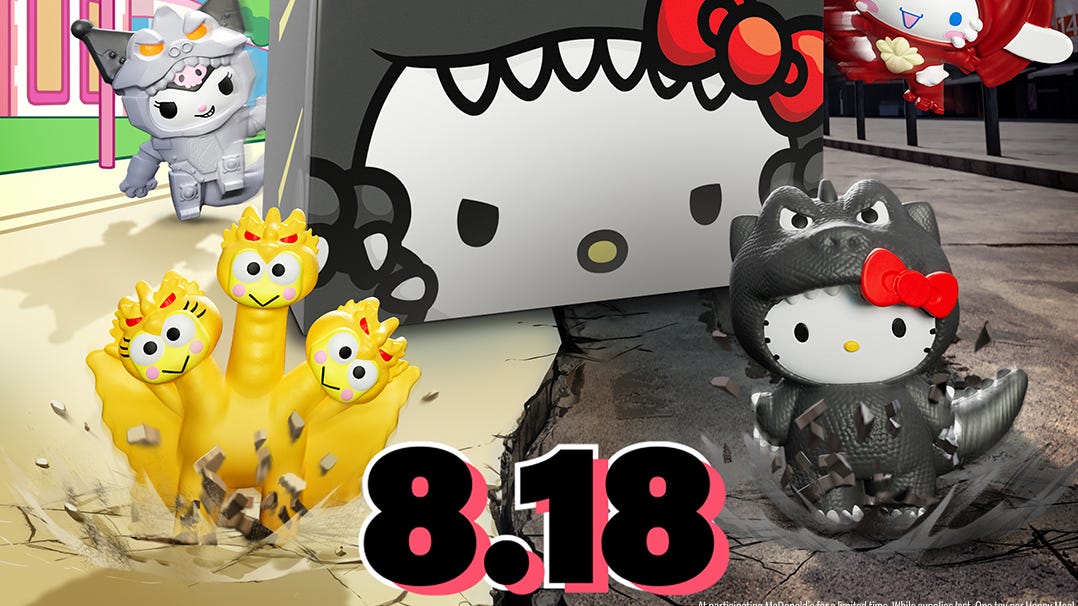
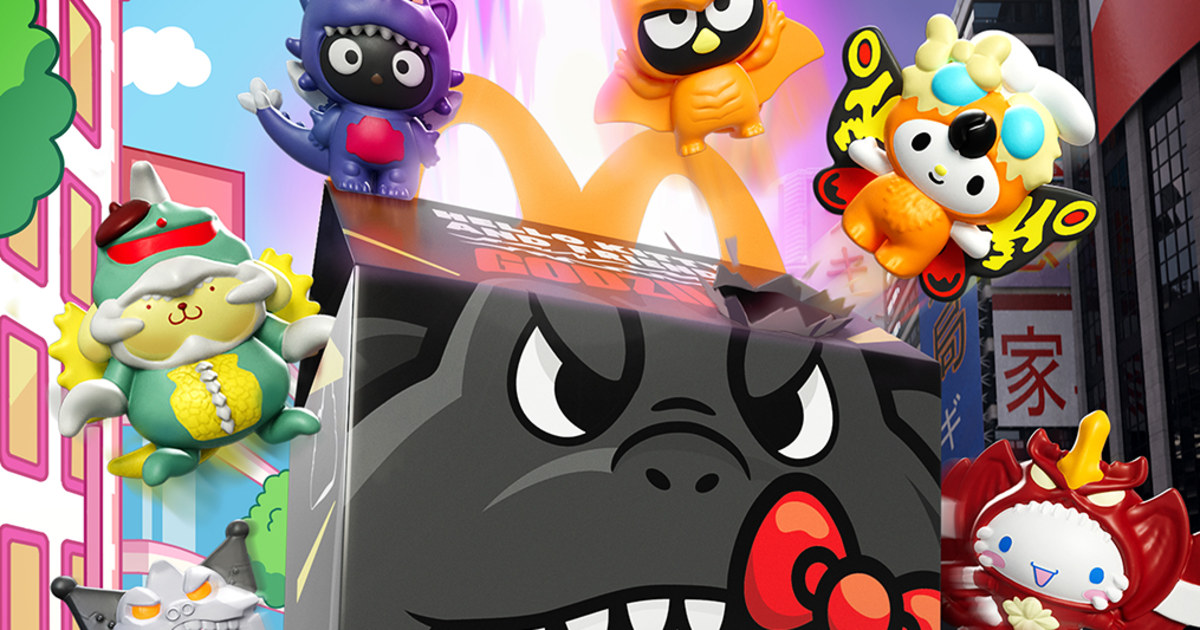
The campaign centers on an eight-piece dual-character collectible line. Each toy hybridizes a flagship Sanrio character with a specific kaiju counterpart from the Godzilla cinematic canon, converting standard promotional premiums into high-demand collectible items.
The Eight-Piece Hybrid Collectible Lineup
The hybrid roster executes detailed aesthetic adaptations that combine Sanrio’s signature silhouettes with prominent kaiju creature features:
- Hello Kitty × Godzilla: Features the iconic character in a textured monster suit complete with dorsal plates, a sculpted headpiece, and a tail.
- Kuromi × Mechagodzilla: Combines Kuromi’s aesthetic with the cybernetic and mechanical armor plates of Mechagodzilla.
- Keroppi × King Ghidorah: Adapts the three-headed dragon architecture to the amphibious character design.
- Pompompurin × Gigan: Blends character motifs with the cybernetic appendages and ocular visor of Gigan.
- Badtz-Maru × Rodan: Synthesizes avian features with the volcanic pterosaur silhouette.
- Chococat × SpaceGodzilla: Incorporates crystalline shoulder formations into the feline character mold.
- Cinnamoroll × Destoroyah: Recontextualizes the final-form kaiju crustacean wings and horn onto Cinnamoroll.
Operational Deployment and Scarcity Mechanics
The campaign operates on a strict limited-time offering (LTO) framework, distributing inventory across participating locations while supplies last. Constraining physical volume drives immediate purchase frequency and stimulates secondary market demand across the promotional window.
Digital channels anchored the promotional runway. McDonald’s initiated marketing on Instagram on August 10 with animated teasers showcasing Hello Kitty in kaiju attire alongside the tagline “cute meets kaiju.” An official asset showcase followed on August 12, outlining the full eight-figure lineup ahead of the nationwide August 18 launch.
Portfolio Modernization and Brand Momentum
High-tier promotional licensing coincides with the ongoing modernization of McDonald’s broader menu architecture, which extends beyond conventional core items into higher-margin beverages and specialized poultry offerings. Within this operational ecosystem, the Happy Meal serves as a reliable platform for brand heat and transactional velocity, proving the commercial efficacy of multi-brand licensing alliances in modern retail.