Post-Launch Equilibrium and Market Saturation
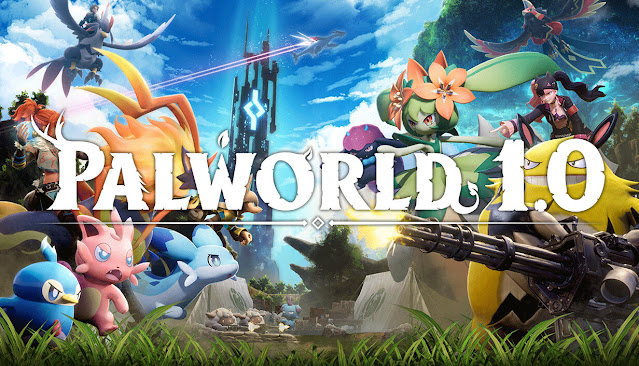
Palworld’s transition from a viral anomaly to a 1.0 release in July represents a significant institutional shift for Pocketpair. While the historic peak of concurrent players on Steam provided a massive capital influx, the current stabilization of user metrics indicates the game has reached market maturity. This plateau is a standard lifecycle phase, signifying the move from explosive acquisition to a high-retention baseline that continues to outperform genre competitors.
For Pocketpair, this phase necessitates a transition in operational philosophy: shifting from the chaos of rapid scaling toward sustainable infrastructure maintenance. The game’s ability to sustain significant activity months post-launch confirms that its core loop has successfully matured from a temporary trend into a structural staple of the survival-crafting genre.
Agile Methodology vs. Monolithic Content Cycles
John ‘Bucky’ Buckley, Pocketpair’s head of publishing, recently clarified the studio’s roadmap for version 1.1, signaling a rejection of the traditional ‘monolithic update’ model. By opting for iterative, agile releases over year-long development siloes, the studio aims to maintain a constant feedback loop with its community. This approach mitigates the risk of developmental burnout and prevents the ‘feature creep’ that often destabilizes independent studios following unexpected commercial scale.
This strategic transparency also serves as a defensive measure against player attrition. By managing the expectations surrounding the 1.1 update, Buckley has positioned the studio as a nimble entity capable of responding to technical debt and user needs without the risks associated with over-promising complex structural overhauls.
Technical Feasibility and Backend Scaling
The recent community brainstorming initiative, while successful in generating engagement, highlighted a significant gap between player desire and technical reality. Requests for features like cross-server PvP and limitless storage slots present substantial engineering hurdles, particularly regarding server synchronization and database integrity. Pocketpair’s current stance prioritizes ‘quality-of-life’ (QoL) refinements over high-risk architectural changes.
This prioritization is a pragmatic acknowledgment of the studio’s current resources. By focusing on manageable updates, Pocketpair ensures the stability of the 1.0 build remains uncompromised, shielding the studio’s reputation from the fallout of buggy or poorly optimized major patches.
UX Innovation: Frictionless Survival Onboarding
A primary catalyst for Palworld’s retention is its disruption of traditional survival mechanics through UX refinement. The 1.0 framework introduced a mission-driven onboarding system that effectively lowered the barrier to entry. By gamifying the learning curve—transforming opaque mechanics into clear, objective-based milestones like base construction and teleporter activation—Pocketpair captured a demographic previously deterred by the genre’s punishing reputation.
This design philosophy replaces the ‘punishing’ aspect of survival with a rewarding sense of progression. The transition from primitive resource gathering to automated base management is paced to sustain player agency without inducing cognitive overload, a structural evolution that has become a benchmark for the genre.
Narrative Juxtaposition and Brand Identity
Palworld’s market differentiator lies in the semiotic tension between its approachable aesthetic and its subversive, darker narrative themes. This ‘branding duality’ allows the game to function as a multi-layered experience: a vibrant creature-collector on the surface and a grim survivalist simulation beneath. This contrast creates a unique competitive moat, appealing to casual players and hardcore genre fans alike.
The game’s minimalist approach to storytelling—prioritizing world-building through lore and environmental cues over intrusive dialogue—ensures that narrative elements do not obstruct the gameplay loop. This allows players to engage with the ‘dark’ lore at their own pace, enhancing the world’s depth without compromising the efficiency of the XP-driven grind.
Institutional Evolution and Long-Term Viability
The rapid scaling of Palworld has forced Pocketpair to professionalize its internal frameworks. Moving from an independent ‘indie’ mindset to a major industry stakeholder involves significant operational overhead. Every communication regarding the 1.1 update is now a high-stakes balancing act between community sentiment and technical capacity.
Ultimately, the success of Palworld’s future updates will be a litmus test for the studio’s ability to balance its experimental roots with the requirements of professionalized game development. By focusing on sustainability and iterative growth, Pocketpair is positioning itself to lead the survival genre into its next evolutionary phase.