
The Mathematical Pursuit of Global Primacy
The 2026 Cincinnati Open serves as a decisive theater for the PIF WTA Rankings, where the institutional hierarchy of women’s tennis faces an imminent realignment. Defending champion Aryna Sabalenka enters the draw with a precarious lead over second-seeded Elena Rybakina. The integrity of this ranking cushion is inextricably linked to Rybakina’s preceding performance in Toronto; a title win in Canada would compress the deficit to a marginal four points, effectively transforming the Cincinnati bracket into a binary playoff for the world number one position.
This statistical proximity highlights the escalating volatility at the apex of the WTA. For Sabalenka, the burden of point defense is absolute. Failure to replicate her 2024 championship run would trigger a significant ranking point decay, potentially facilitating Rybakina’s ascension. Such shifts carry profound economic implications, influencing sponsorship valuations, tournament seeding distributions, and the commercial narrative heading into the final Major of the season.
Surface Neutrality and the Parity Index
Historical data indicates that the Cincinnati hard courts function as a tactical equalizer. The tournament’s record of 11 unique champions over the previous 11 years reflects a high degree of competitive parity, suggesting the conditions do not favor a specific archetype. This lack of a recurring dominant force allows lower-seeded disruptors to exploit the high-velocity North American summer conditions.
The 2026 field features a notable generational overlap. While domestic favorites Jessica Pegula and Coco Gauff (seeded third and fourth) anchor the commercial interest for North American broadcasters, fifth-seeded Mirra Andreeva represents a burgeoning threat. Andreeva’s multi-surface proficiency, demonstrated by her Roland Garros success, challenges the established veteran power-hitters, introducing a layer of unpredictability to the quarter-final projections.
Meteorological Risks and Logistical Saturation
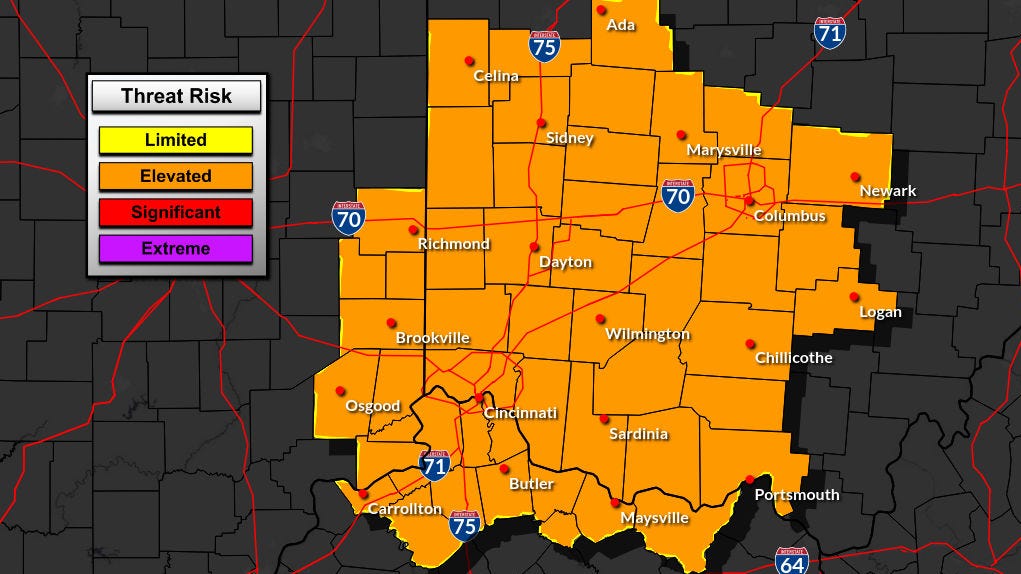
Operational continuity faces a significant threat from climatological volatility. National Weather Service data indicates a high probability of evening precipitation, precisely intersecting with the high-value broadcast windows starting at 7 p.m. Such disruptions create a cascading scheduling deficit, necessitating rapid court-drying cycles and potentially forcing high-stakes matches into congested daytime sessions.
These weather risks are compounded by regional logistical strain. The simultaneous scheduling of the Cincinnati Bengals’ preseason opener at Paycor Stadium creates a concentration of displaced spectators and saturates municipal transportation infrastructure. For the athletes, these delays are more than a logistical inconvenience; they disrupt physiological recovery cycles and mental pacing, favoring players with superior experience in managing professional downtime under environmental duress.
Economic and Infrastructure Resilience
The recurring vulnerability to rain delays highlights an urgent need for infrastructure investment in climate-resilient tennis venues. With a secondary cold front projected for Sunday, the tournament’s financial success hinges on the efficiency of its grounds crew and the flexibility of its scheduling officials. As the world number one ranking hangs in the balance, the 2026 Cincinnati Open will be remembered as a rigorous test of both athletic excellence and institutional resilience in the face of external variables.
Photo by moerschy on Pixabay.