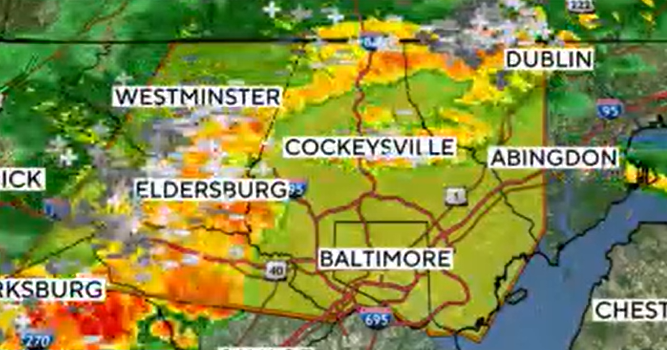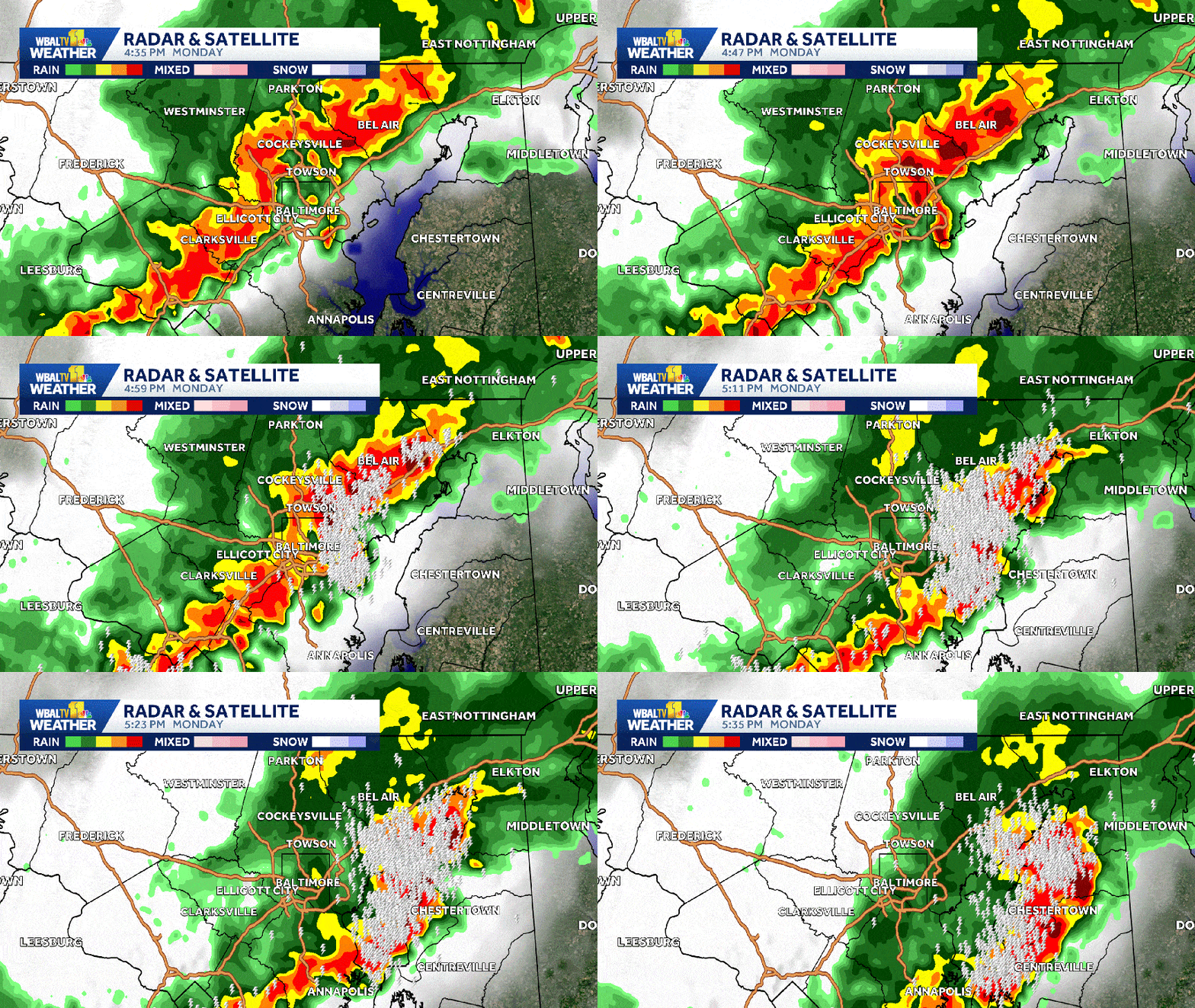
A complex meteorological event unfolding across Maryland has triggered multi-jurisdictional severe weather warnings, highlighting operational vulnerabilities in regional infrastructure management. With a Severe Thunderstorm Watch active across much of the state, emergency management systems face sustained pressure to coordinate responses across densely populated urban centers and outlying counties. High ambient temperatures, elevated humidity pushing heat indices near 100°F, and rapid atmospheric destabilization create a high-friction operating environment for municipal services.
Emergency protocols activated as severe thunderstorm warnings spanned Baltimore City alongside Baltimore, Carroll, Howard, Montgomery, Harford, Anne Arundel, Prince George’s, and Frederick counties. These advisories reflect heightened exposure to convective hazards, primarily destructive wind gusts capable of compromising electrical distribution grids and urban tree canopies. Severe weather alerts serve as a critical coordination mechanism for institutional stakeholders, transit authorities, and emergency response teams operating within compressed reaction windows.
Operational Pressures on Regional Infrastructure
Morning storm systems across northern and northeastern Maryland established a volatile thermodynamic baseline, driven by daytime heating into the upper 80s and lower 90s. This thermal energy fueled afternoon convective developments tracking directly into the Baltimore metropolitan corridor. Municipal infrastructure networks within this corridor remain acutely sensitive to concentrated precipitation rates and sudden wind loads, exposing bottlenecks in urban drainage and power transmission resilience.
Earlier tornado warnings issued for Garrett and Allegany counties in Western Maryland underscore the broader geographic scope of the system prior to its eastward translation. As these dynamics propagated eastward, meteorological forecasting centers maintained scattered risk classifications, demanding continuous adaptation from regional logistics networks balancing schedule integrity against environmental advisories.
Systemic Risk Management and Market Implications
Severe weather response relies on real-time data ingestion and public communication channels to mitigate human and economic exposure. Utility providers and municipal agencies face capital and logistical allocation challenges during multi-day severe weather sequences, particularly when consecutive alert days compound resource utilization. Projected storm continuations threaten to prolong operational strain, extending commercial and commuter disruptions.
Recurring severe weather events compel institutional stakeholders to re-evaluate risk mitigation strategies for built environments vulnerable to high-velocity winds and flash flooding. The structural reliance on timely warning dissemination highlights the intersection between advanced meteorological monitoring and public safety execution as mid-Atlantic atmospheric patterns remain active.