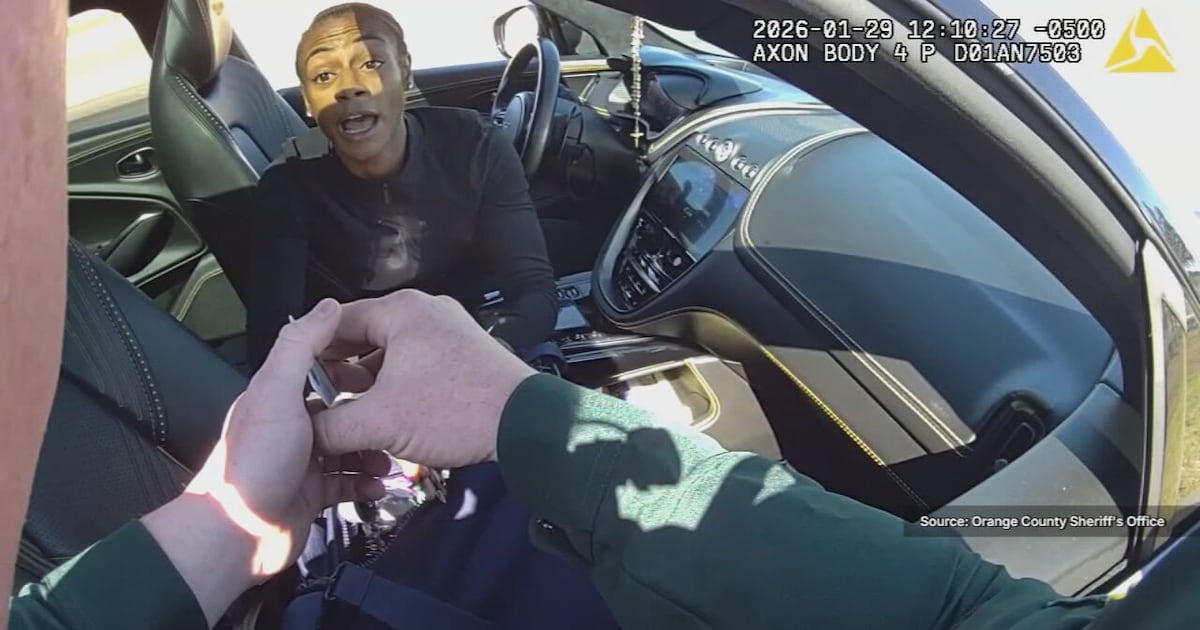
The legal resolution involving Sha’Carri Richardson in Orange County, Florida, represents a calculated strategic maneuver to reconcile professional athletic commitments with judicial accountability. By entering a plea of nolo contendere (no contest) to charges stemming from a January traffic stop, Richardson successfully mitigated the risk of incarceration inherent in Florida’s aggressive driving statutes.
The ‘Super Speeder’ Designation and Evidentiary Basis
The incident on State Road 429 near Winter Garden involved documented speeds of 104 mph, triggering Florida’s informal ‘super speeder’ classification. Law enforcement reports cited not only excessive velocity but also ‘dangerous tailgating’ and frequent, erratic lane changes. Such behavioral evidence allowed prosecutors to escalate the charge to a second-degree misdemeanor, reflecting a legislative priority to deter high-velocity maneuvers on congested corridors.
The transition from an initial ‘not guilty’ stance to a negotiated settlement underscores a pragmatism necessary for elite athletes. For a professional whose career is defined by rigorous training cycles and a global competition calendar, avoiding a protracted trial is an operational imperative. The resolution effectively clears her legal docket as she prepares for the upcoming international season.
Sentencing Structure and Restorative Justice
The court-mandated penalties include a $500 fine, 100 hours of community service, and an eight-hour aggressive driving rehabilitative course. The imposition of community service serves a dual purpose: it acts as a public-facing demonstration of equitable enforcement while integrating a restorative component into the sentence. For an athlete whose time is optimized for physical recovery, the 100-hour requirement represents a significant commitment of ‘time-capital’ that necessitates meticulous logistical coordination.
Sponsorship Implications and Brand Management
From a brand management perspective, the ‘no contest’ plea is a critical legal distinction. It allows for the resolution of the matter without a formal admission of guilt—a vital nuance when navigating morality or conduct clauses often found in high-value sponsorship contracts. By settling shortly after her 2026 USA Track and Field Championship win, Richardson minimizes the duration of negative media exposure, allowing the focus to shift back to her record-breaking performance.
Ultimately, the use of body camera footage and standardized sentencing protocols reinforces the transparency of the Florida judicial system. The case serves as a high-visibility deterrent, signaling that even high-profile figures are subject to the state’s stringent road safety regulations, while providing a pathway for the defendant to maintain her professional trajectory.