
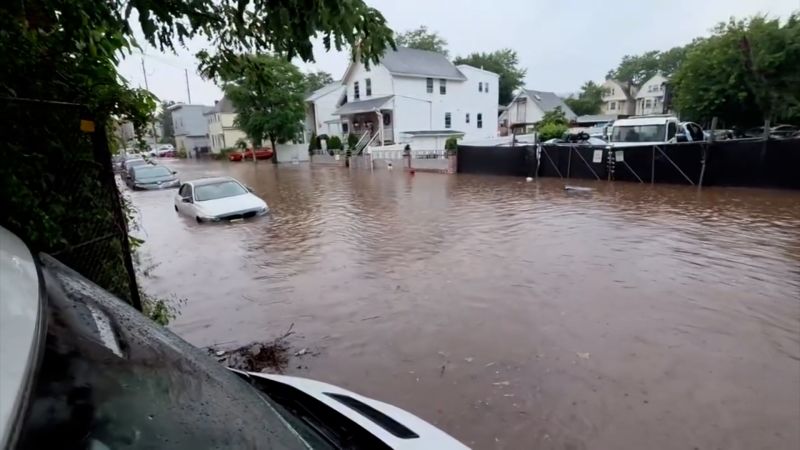
Historic Rainfall Engulfs Northeast US, Testing Infrastructure Resilience
Two days of intense, slow-moving downpours have saturated the Northeastern United States, setting new rainfall records and necessitating widespread water rescues. The deluge, which began by impacting New Jersey and Pennsylvania, subsequently overwhelmed drainage systems and prompted emergency declarations across numerous counties in eastern New York and New England. Rainfall totals exceeded seven inches in several eastern New York locations, leading to significant disruptions including extensive road closures and critical swiftwater rescue operations.
Human Toll and Urgent Searches Underscore Extreme Weather Dangers
The human cost of the flooding became tragically apparent in New Jersey with the recovery of a 10-year-old boy swept into the Passaic River. A search continues for a 10-year-old girl who was with him. These incidents highlight the life-threatening risks of flash flooding, particularly for vulnerable populations, and amplify the urgency for enhanced early warning systems and more robust emergency response protocols in flood-prone areas.
Record Precipitation Signals Shifting Climate Patterns
Albany, New York, recorded approximately 6.7 inches of rain, contributing to a pattern of historically high precipitation across eastern upstate New York. In Schodack, nearly 12 inches of rain fell by mid-afternoon, with intensity not seen locally since Tropical Storm Irene in 2011. Such extreme precipitation events, significantly exceeding historical averages, suggest a need to recalibrate climate models and forecasting strategies, with substantial economic and emotional tolls anticipated.
Infrastructure Integrity Compromised by Extreme Hydrological Events
The damage to transportation infrastructure is already significant, with numerous road closures in effect and authorities assessing the impact on vital networks. In Schodack, New York State Department of Transportation crews are evaluating extensive damage along key arteries like River Road, underscoring the immediate challenges posed by severe weather. Persistent flood warnings extending into Thursday morning necessitate a strategic re-evaluation of infrastructure design and maintenance to withstand more frequent and intense hydrological events.
Urban Preparedness and Shelter Provisions in New York City
In anticipation of potential flooding from Tuesday night’s storms, New York City activated over 50 “safe overnight locations.” Public School 230 in Kensington, Brooklyn, served as a secure haven for displaced residents. NYC Emergency Management Commissioner Christina Farrell emphasized the city’s focus on protecting residents in basement apartments, a demographic highly vulnerable to inundation. The proactive activation of these shelters demonstrates a strategic shift toward anticipating and mitigating the impacts of increasingly severe summer storms.
Elevated Flood Risk for Vulnerable Urban Dwellings
Mayor Zohran Mamdani highlighted the elevated risks for individuals in basement apartments or flood-prone areas. The city’s deployment of flood sensors and real-time monitoring systems facilitates rapid resource allocation to areas experiencing the most intense rainfall. This data-driven approach is critical for optimizing response times, especially given recurring events like the flooding in Flushing just ten days prior, which underscores the persistent challenge of urban flood risk management in a changing climate.
Strategic Imperatives for Regional Preparedness and Investment
The recurring severe weather events in the Northeast signal a critical juncture for regional planning and investment. The economic consequences, though unquantified, will likely necessitate substantial public and private sector expenditure on infrastructure upgrades and climate adaptation measures. This pattern compels a strategic re-evaluation of capital allocation towards resilient infrastructure, enhanced early warning systems, and community preparedness initiatives to ensure long-term economic stability and public safety.
Meteorological Vigilance and Sustained Flood Risk Outlook
As the storm system weakens, meteorologists remain vigilant, monitoring for potential weekend flooding. The ground saturation and possibility of further precipitation create a sustained risk of hydrological impacts. This ongoing meteorological watch is essential for timely updates and advisories to the public and emergency management agencies, emphasizing the need for continuous scientific observation and predictive modeling to mitigate future risks associated with amplified weather intensity.
Ecosystemic Impacts and Long-Term Environmental Resilience
Beyond immediate human and infrastructural concerns, extreme rainfall events have significant ecosystemic implications, including increased runoff and water pollution impacting aquatic life and downstream communities. Building long-term ecosystem resilience requires a holistic approach integrating land-use policies, watershed management, and green infrastructure solutions to address both climate change symptoms and their underlying drivers.
Institutional Coordination and Policy Recalibration in Disaster Response
Declarations of states of emergency by multiple counties in eastern New York underscore the strain on local and state resources. The deployment of state swiftwater rescue teams signifies coordinated institutional response but also highlights the limitations of localized services facing widespread, severe events. This recurring need for state intervention suggests a need for policy recalibration in disaster preparedness funding, inter-agency coordination, and standardized protocols for extreme weather response, considering the long-term sustainability of current fiscal models for emergency management.
Urban Planning and Zoning Reforms for Flood Mitigation
New York City’s strategy of designating safe overnight locations reflects adaptive urban planning. However, persistent basement apartment flooding points to systemic challenges in zoning, building codes, and development in flood-prone areas. Comprehensive flood mitigation requires long-term urban planning reforms, including stricter code enforcement, incentives for flood-proofing, and a critical review of development in high-risk zones to prevent exacerbation of flood vulnerability.
Economic Ramifications and Insurance Market Strain
Financial losses for businesses and homeowners in affected areas will ripple through the regional economy. The insurance market faces escalating exposure to extreme weather claims, potentially increasing premiums or reducing coverage in vulnerable regions. This necessitates a broader societal conversation on risk sharing, government-backed insurance programs, and the economic viability of operating in climate-vulnerable areas to ensure community recovery and financial stability.
Technological Integration in Weather Monitoring and Emergency Response
NYC Emergency Management’s use of flood sensors and real-time data analysis exemplifies the growing reliance on technology for disaster preparedness. This integration enables precise identification of at-risk areas and facilitates targeted resource deployment, optimizing emergency response efficiency. Advancements in meteorological forecasting, sensor technology, and data analytics are crucial for enhancing predictive capabilities and improving the speed and effectiveness of disaster response in the face of unpredictable weather patterns.
Community Resilience and Public Awareness Imperatives
Educating residents about flood risks, particularly those in basement apartments, is vital for building community resilience. Empowering individuals with knowledge about hazards and preparedness measures, supported by effective communication strategies and accessible resources, can significantly reduce the impact of extreme weather events. Success is measured by tangible improvements in community preparedness and reduced vulnerability during crises.
Long-Term Strategic Outlook: Adaptation and Mitigation Investments
The recurring nature of these severe weather events demands a fundamental shift from reactive disaster management to proactive adaptation and mitigation strategies. This includes investing in physical infrastructure and fostering policy frameworks that encourage sustainable land use and reduce greenhouse gas emissions. The long-term strategic outlook for the Northeast must incorporate a comprehensive understanding of climate change impacts, driving investments in resilient infrastructure, innovative urban planning, and robust public safety nets for future prosperity and security.

Photo by KELLEPICS on Pixabay.