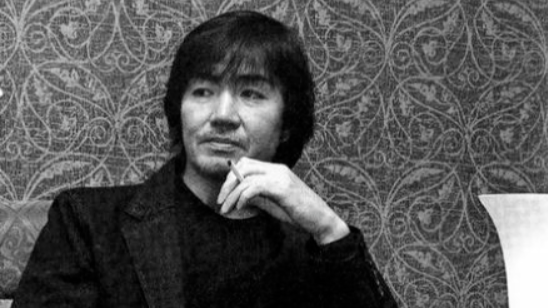
Keigo Higashino’s Enduring Legacy: Analyzing His Impact on Global Mystery and Publishing
Acclaimed Japanese author Keigo Higashino, a titan of global mystery fiction, passed away on July 23rd at 68 from colon cancer, as reported by Asahi Shimbun and later confirmed by publisher Kodansha on July 27th. His death marks a pivotal moment for the publishing industry, necessitating a critical analysis of its immediate market implications and the enduring influence of his intellectual property.
Kodansha’s announcement detailed private funeral arrangements, emphasizing family privacy and requesting media discretion. This operational standard highlights the delicate balance between public interest in celebrated literary figures and the personal grieving process, a common practice for high-profile estates.
Immediate Market & Operational Shifts in Publishing
Higashino’s passing generates an immediate, tangible impact across the publishing ecosystem. For Kodansha, his primary publisher, the cessation of new original works from such a prolific and commercially successful author demands an urgent strategic re-evaluation of publication schedules, intellectual property (IP) management, and future revenue projections.
The forthcoming Galileo series novel, ‘Eternal Memory,’ slated for August 5th, now transitions to a posthumous release. While such events often trigger an initial sales surge driven by fan anticipation and commemorative value, they definitively halt future original content development, profoundly impacting long-term intellectual property monetization strategies.
The commercial valuation of Higashino’s literary estate is substantial, underscored by his cumulative domestic circulation exceeding 100 million copies in Japan by 2023. This monumental figure positions his entire body of work as a perpetual economic asset, ensuring consistent revenue generation through sustained backlist sales, robust licensing agreements, and diverse media adaptations, now centrally managed by his estate and publishing collaborators.
Higashino’s Strategic Influence on Global Publishing & Literary Awards
Higashino’s distinguished career, commencing with his 1985 debut ‘After School,’ consistently showcased a rare duality: captivating critical acclaim alongside immense mass-market appeal. Early recognition, such as the prestigious Edogawa Ranpo Prize for new mystery writers, immediately validated his genre mastery and heralded his emergence as a formidable, long-term literary force.
Subsequent accolades, including the Mystery Writers of Japan Award for ‘The Secret’ and the coveted Naoki Prize for ‘The Devotion of Suspect X,’ cemented his status as a literary titan who seamlessly transcended genre boundaries. These distinctions significantly amplified sales, but crucially, also endowed his works with profound cultural capital, profoundly shaping reader perception and critical discourse.
The iconic ‘Galileo’ series, centered on physicist Manabu Yukawa, stands as a prime example of Higashino’s strategic genius in cultivating enduring literary franchises. Its extensive and highly successful adaptation into film and television, notably starring Masaharu Fukuyama, starkly illustrates the immense cross-media appeal and intrinsic financial value of his IP, effectively extending its market penetration far beyond conventional print sales.
This multi-platform triumph underscores a fundamental tenet of contemporary publishing: the strategic imperative to develop IP with robust transmedia potential. Higashino’s oeuvre thus served as a definitive blueprint for sustained cultural relevance and revenue maximization across diverse entertainment formats.
Institutional Influence, Cultural Resonance, & Distinctive Style
Beyond his prolific output, Higashino exerted substantial institutional influence within the Japanese literary sphere. His leadership roles, including Director of the Mystery Writers of Japan (2009-2013) and a selection committee member for the esteemed Naoki Prize (2014-2019), profoundly shaped the genre’s trajectory and the recognition mechanisms for emerging talent.
These capacities cemented his role as a pivotal gatekeeper and influential tastemaker, establishing benchmarks for literary excellence and profoundly impacting the careers of countless aspiring authors. His deep engagement ensured his singular perspective on narrative craft and thematic complexity permeated the institutional fabric of Japanese literature.
Higashino’s unparalleled ‘national popularity’ stemmed from his profound cultural resonance, rendering his works universally accessible and cherished across Japan’s diverse demographics. This widespread appeal attests to his mastery in fusing intricate mystery plots with universal themes of love, sacrifice, and human nature, effectively transcending conventional genre limitations.
His distinctive background—an electrical engineering degree followed by a career as an engineer—ineluctably informed his meticulous approach to plotting and the construction of logically airtight puzzles. This analytical rigor, seamlessly interwoven with profound emotional depth, became a signature of his unparalleled style, uniquely distinguishing him in a highly competitive literary landscape.
Downstream Effects: Media Adaptations and Intellectual Property Maximization
The sustained demand for Higashino’s adaptations, both domestically and globally, emphatically underscores the perennial value of his narratives for film and television producers. Seminal titles such as ‘The Devotion of Suspect X’ and ‘Under the Flag of Night’ (《白夜行》) have garnered multiple adaptations, unequivocally demonstrating their formidable translatability and commercial viability across diverse cultural and media landscapes.
The robust commercial and critical performance of these adaptations, particularly the ‘Galileo’ series, established a crucial precedent for maximizing literary IP’s revenue potential and cultural footprint within the entertainment sector. This proven track record will undoubtedly stimulate intensified exploration of his extensive back catalog for prospective projects, thus guaranteeing his narratives’ continued resonance with new global audiences.
Nevertheless, the definitive absence of new original material from Higashino will inevitably redirect creative focus towards the re-imagining of existing works or the strategic development of spin-offs within his established narrative universes. This dynamic presents both considerable opportunities and intricate challenges for studios, demanding a nuanced navigation of his profound legacy while simultaneously fostering fresh creative interpretations.
The Future of Mystery Fiction & Posthumous Literary Management
Higashino’s passing creates a profound void within the Japanese mystery genre, a realm he significantly defined and propelled to international prominence. His innovative capacity to seamlessly blend ‘honkaku’ (orthodox) mystery elements with profound psychological depth and incisive social commentary irrevocably expanded the artistic and thematic frontiers of the genre.
The immediate imperative for the Japanese literary landscape involves assiduously identifying and nurturing successor voices capable of navigating this void, concurrently upholding Higashino’s monumental contributions. This critical succession planning will likely necessitate a renewed emphasis on fostering emerging authors through prestigious literary prizes and robust institutional support, cultivating the next generation of genre-defining talents.
Higashino’s indelible influence on narrative architecture, character dimensionality, and thematic sophistication will remain an enduring benchmark for both aspiring and established authors. The sustained appeal of his vast oeuvre guarantees that his distinctive literary techniques and unparalleled storytelling prowess will be meticulously studied and emulated for decades, thus fundamentally shaping the future trajectory of global mystery fiction.
The strategic management of Higashino’s literary estate now becomes a critical, multifaceted operational and financial undertaking. This encompasses the meticulous oversight of global translation rights, complex licensing agreements for film, television, and theatrical adaptations, and the judicious, strategic re-release of his extensive back catalog to maximize market penetration.
The intrinsic value of his IP extends far beyond immediate sales, residing in its immense potential for long-term, multi-platform monetization across diverse global markets. Consequently, publishers and the estate must deftly navigate intricate international rights agreements and nuanced cultural sensitivities to optimize both the expansive reach and profound financial returns of his profound body of work.
Moreover, decisions concerning potential posthumous publications—such as unearthed unfinished manuscripts or curated collections of essays—will necessitate scrupulous consideration. While such releases often generate immense public interest and significant revenue, they bear the profound responsibility of meticulously preserving the author’s artistic integrity and upholding his established quality standards.
Global Impact & Cross-Cultural Literary Exchange
Higashino’s extensive international acclaim, manifest in global adaptations and widespread novel translations, firmly established his role as a powerful cultural ambassador for Japanese literature. His singular talent for weaving universal narratives within a distinctly Japanese cultural context profoundly facilitated cross-cultural literary exchange, significantly broadening the global readership for Asian fiction.
His passing will invariably precipitate a renewed global appreciation for his monumental contributions to world literature, likely triggering a discernible surge in sales of his translated works across international markets. This well-documented phenomenon, typical upon the demise of globally venerated authors, reflects readers’ heightened impulse to engage with and re-evaluate their complete oeuvre.
In conclusion, Keigo Higashino’s passing unequivocally marks the end of a pivotal era for Japanese and global mystery fiction. His formidable legacy, forged through a bedrock of relentless critical acclaim, unprecedented commercial success, and profound institutional influence, will indelibly continue to shape literary trends, inspire emergent generations of writers, and captivate millions of readers worldwide, thus cementing his indelible position as one of the most profoundly significant authors of his epoch.