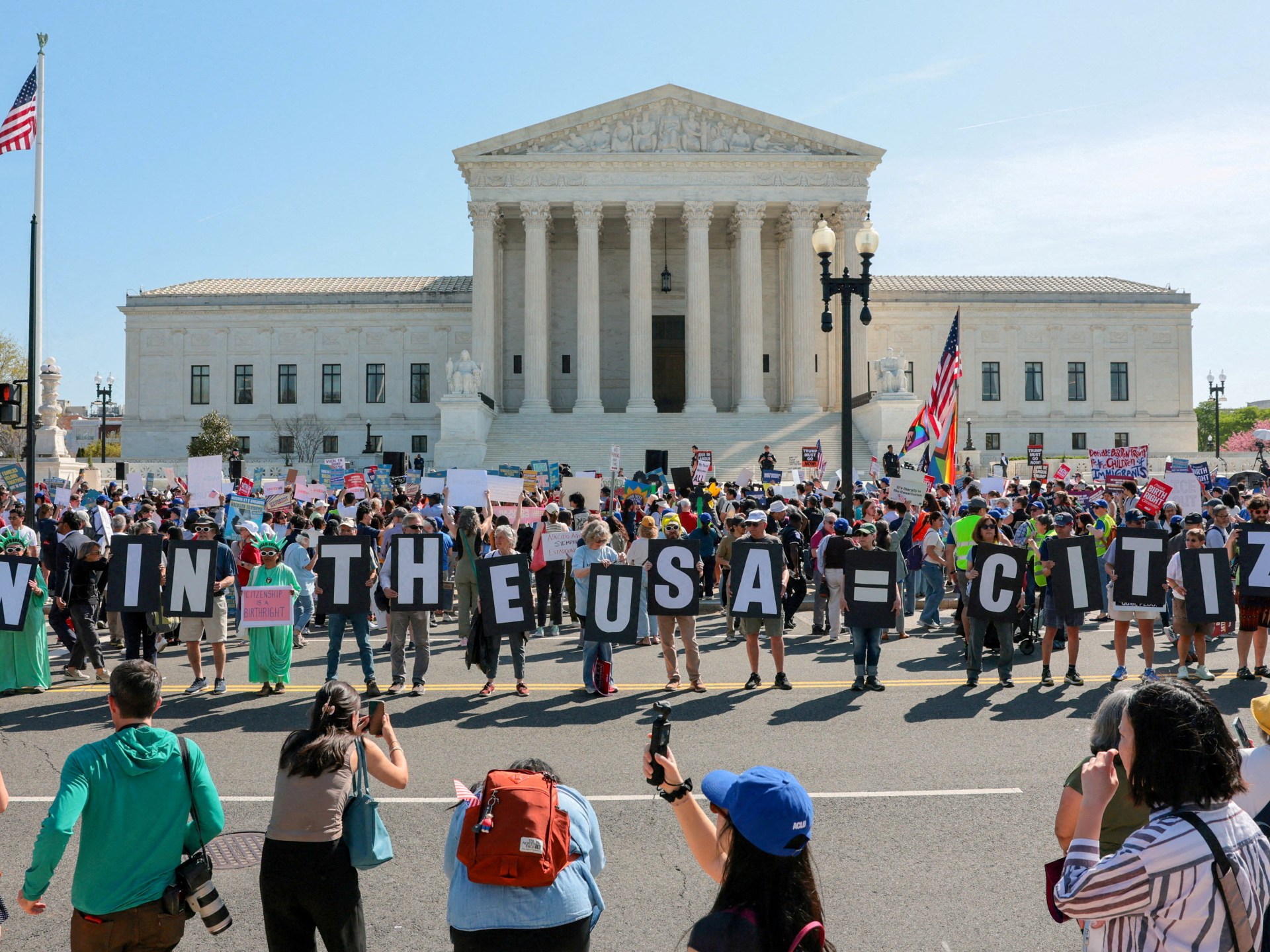
Executive Challenge to Judicial Finality: The Birthright Citizenship Rehearing
President Donald Trump has formally initiated a request for the U.S. Supreme Court to rehear a pivotal case regarding birthright citizenship. This move follows the Court’s June 30 decision (6-3), authored by Chief Justice John Roberts, which reaffirmed that the 14th Amendment guarantees citizenship to individuals born on U.S. soil. The administration’s petition represents a significant attempt to bypass judicial finality and reshape the legal interpretation of national identity.
Procedural Obstacles and Historical Rarity
The petition faces extreme procedural headwinds. While Supreme Court rules allow a 25-day window for rehearing requests, the Court rarely grants them. Historical data indicates the full Court has not reheard a decided case in approximately six decades. Success requires the concurrence of at least five justices, a difficult threshold given the decisive 6-3 majority that initially rejected the executive order aimed at restricting jus soli citizenship.
Strategic Signaling and Institutional Pressure
Beyond the legal merits, the petition serves as a vehicle for political and institutional signaling. By characterizing the ruling as a “miscarriage of justice,” the administration leverages populist rhetoric to frame the judiciary as an obstacle to national sovereignty. This strategy targets several key objectives:
- Executive Assertiveness: Testing the limits of presidential authority over immigration enforcement.
- Base Mobilization: Aligning with voter concerns regarding “birth tourism” and border integrity.
- Judicial Scrutiny: Placing the Court at the center of public discourse to influence future conservative jurisprudence.
Socio-Economic and Legal Implications
The persistence of this legal challenge introduces volatility into the U.S. regulatory environment. For civil rights stakeholders, the initial ruling is a safeguard for demographic stability; for the administration, it is a loophole ripe for exploitation. This ongoing friction impacts long-term economic planning and social cohesion, as the potential modification of a 150-year-old policy creates uncertainty regarding the future legal status of millions.
Conclusion: The Arbitration of National Identity
The Supreme Court now stands as the final arbiter between a rigid constitutional mandate and an executive branch seeking to redefine it. Regardless of the petition’s likely denial, the move underscores a shift toward using the judiciary as a primary battleground for immigration reform, signaling that the debate over birthright citizenship remains a core pillar of the current political agenda.