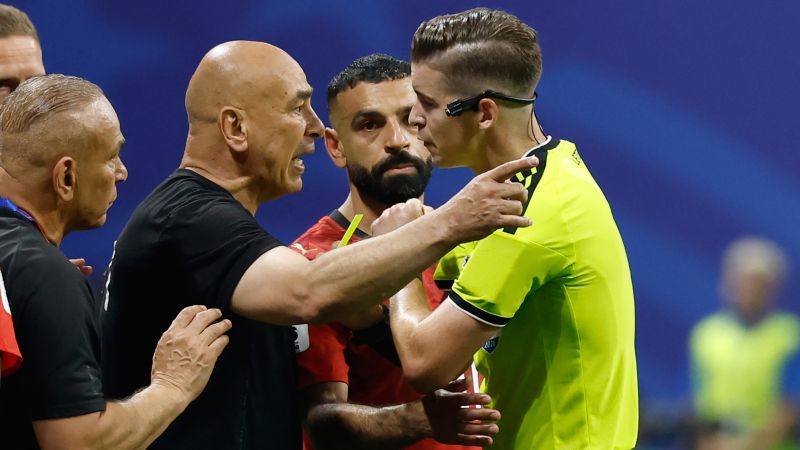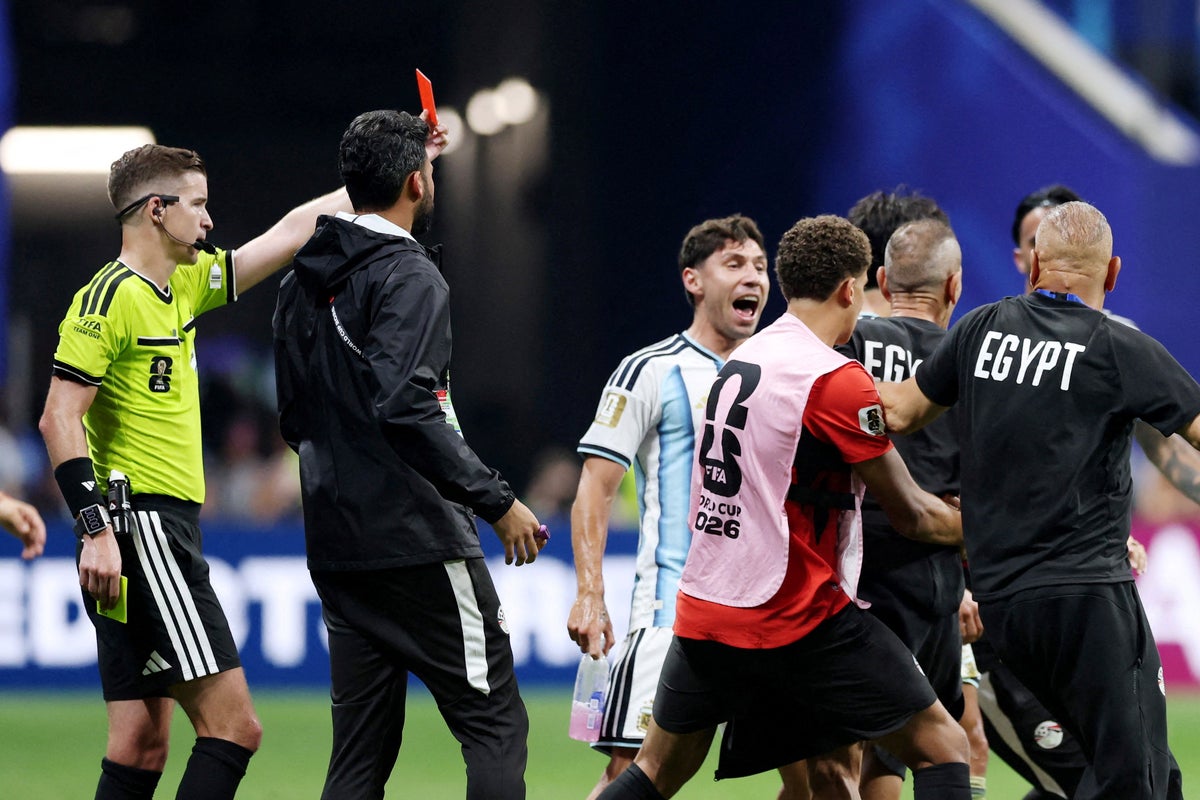
The elimination of the Egyptian national team from the World Cup Round of 16 has transcended the boundaries of a sporting result, evolving into a significant institutional challenge for FIFA. Following a 3-2 defeat to Argentina at Mercedes-Benz Stadium, prominent Egyptian figures have publicly questioned the integrity of the tournament’s officiating and governance structures.
Reputational Jeopardy: Ziko’s Accusations and FIFA’s Integrity Under Siege
Mostafa Ziko, a central figure in the Egyptian squad, explicitly characterized the tournament as “fixed” in post-match statements to international media outlets like TSN, a claim that immediately introduces substantial reputational risk for FIFA. Such accusations, voiced by high-profile athletes on a global stage, force a critical shift in focus from mere tactical performance to the transparency and impartiality of regulatory oversight. This situation is particularly sensitive for FIFA, occurring amidst existing scrutiny over its administrative decisions and the perceived influence of geopolitical factors within sporting governance. The core challenge for FIFA now lies in decoupling the widely celebrated narrative of a “Messi-inspired miracle” from the pervasive accusations of systemic favoritism that now cloud Argentina’s contentious victory. The institutional response to these claims will critically determine the perceived legitimacy of the tournament’s remaining fixtures and the efficacy of its internal dispute resolution mechanisms, ultimately safeguarding the World Cup’s credibility as a premier global event.
Forensic Scrutiny: The Three Pivotal Officiating Decisions
The controversy is precisely rooted in three pivotal officiating decisions during the match: a disallowed goal for Ziko when Egypt held a 1-0 lead, a denied penalty claim for Mohamed Salah, and a perceived foul in the build-up to Argentina’s winning goal. These incidents are not merely being framed as errors in judgment by the Egyptian delegation but as compelling evidence of a coordinated effort to strategically influence the match outcome. Manager Hossam Hassan’s unequivocal description of these decisions as “unfair” critically highlights a fundamental breakdown in the perceived neutrality of the officiating crew, an absolute prerequisite for the operational success and competitive integrity of a global tournament. When officiating is viewed as a tool for narrative construction or preferential treatment rather than a neutral regulatory function, the competitive balance of the event is fundamentally compromised. The strategic implications of these decisions are profound, directly facilitating Argentina’s late-game comeback and the subsequent elimination of one of Africa’s primary competitive representatives. This shift in momentum not only drastically altered the tournament bracket but also undeniably impacted the commercial and broadcast value associated with the continued progression of high-profile global stars like Lionel Messi.
Economic & Commercial Ramifications: Unequal Stakes in a Controversial Outcome
The Egyptian Football Association (EFA) and its myriad stakeholders face a significant, quantifiable loss of competitive capital and potential revenue following an exit they assert was unfairly engineered. The financial stakes of progressing to the quarterfinals are immense, encompassing substantial prize money, performance-based sponsorship bonuses, and a critical increase in the market valuation for participating players. Conversely, Argentina’s controversial progression ensures the continued involvement of one of the tournament’s most marketable assets, a factor that inherently complicates the optics of the disputed officiating decisions. This creates a discernible tension between the commercial interests often prioritized by tournament organizers and the non-negotiable necessity for objective competitive integrity. The emotional and political fallout in Egypt, acutely evidenced by Ziko’s public apology to the Egyptian populace, underscores that the consequences of this defeat extend far beyond the pitch, leading to long-term friction between national associations and FIFA, potentially influencing future voting blocs and policy decisions within the governing body.
Technological & Regulatory Failures: VAR’s Inconsistent Application
The apparent failure of existing technological interventions, specifically the Video Assistant Referee (VAR) system, to conclusively mitigate these high-stakes controversies strongly suggests an urgent need for a comprehensive re-evaluation of how high-leverage decisions are reviewed and applied. If VAR technology is perceived to be applied inconsistently or selectively, it demonstrably ceases to be a tool for accuracy and instead becomes a source of further institutional suspicion and distrust. The Egyptian claims imply that the current regulatory framework is fundamentally insufficient to prevent what they perceive as systemic bias operating in favor of traditional footballing powers. This deeply entrenched perception, whether validated by a formal investigation or not, necessitates a transparent and independent audit of the decision-making processes employed during the contentious match. The absence of immediate and transparent clarity regarding the disallowed goal and the denied penalty has critically allowed the narrative of a “fix” to gain significant traction within the global media landscape, undermining the authority of match officials and placing the onus squarely on FIFA to unequivocally demonstrate the impartiality of its processes.
Narrative Warfare: ‘Miracle Comeback’ vs. ‘Calculated Injustice’
The stark contrast between the Egyptian perspective of “profound injustice” and dominant media’s framing of a “miraculous comeback” powerfully illustrates the divergent ways in which high-stakes sporting events are consumed, interpreted, and ultimately inscribed into collective memory. While some influential observers, including supervising editors at major networks, described Argentina’s late rally as “divine intervention,” the Egyptian camp vehemently views it as a calculated administrative failure and a deliberate manipulation of competitive outcomes. This profound dichotomy highlights the immense power of narrative in shaping a tournament’s legacy, where the brilliance of a late-game winner can often regrettably obscure the procedural irregularities and perceived biases that preceded it. For the Egyptian stakeholders, the singular focus on the “miracle” serves to systematically delegitimize their legitimate grievances and intentionally disregard the structural flaws they have rigorously identified. The pivotal role of international broadcasters in amplifying these conflicting narratives is critical, as they provide the unparalleled platform for both the celebration of the victors and the vociferous accusations of the defeated, ensuring that the allegations of a “fix” will remain a persistent, challenging element of the tournament’s historical record.
Geopolitical Undercurrents: External Influence on Sporting Governance
The specific mention of external political interventions, such as the widely discussed ‘red card intervention’ attributed to high-level political figures, introduces a complex and concerning layer to FIFA’s perennial governance challenges. These documented external pressures fundamentally suggest that the autonomy and perceived neutrality of international sports organizations are increasingly under direct threat from powerful political actors seeking to influence global narratives and strategic outcomes. In this volatile context, the accusations emanating from Egypt are not occurring in an isolated vacuum but are rather part of a broader, established pattern of scrutiny regarding how FIFA manages its intricate relationships with influential member nations and potent political entities. The organization’s precarious ability to maintain its institutional independence while astutely navigating these multifaceted pressures is a critical determinant of its long-term stability and global credibility. The intricate intersection of sports, politics, and law in this instance unequivocally underscores the urgent need for a more robust, independent, and transparent system of oversight for all international competitions. Without such a rigorously enforced system, the escalating risk of severe reputational damage from allegations of favoritism, bias, or outright corruption will continue to metastasize.
Pathways for Recourse: Legal Challenges and Future Accountability
While the immediate result of the contentious match is highly unlikely to be overturned, the Egyptian Football Association may strategically seek formal recourse through FIFA’s internal judicial bodies or, potentially, the Court of Arbitration for Sport (CAS). Such a demanding legal move would necessitate the presentation of concrete, irrefutable evidence to rigorously support the claims of a “fix,” representing an exceptionally high legal threshold to meet, particularly in the subjective context of officiating decisions. The process of filing a formal complaint, irrespective of its ultimate legal outcome, serves as a strategic maneuver to exert sustained pressure on FIFA and to emphatically demand a demonstrably higher standard of accountability and impartiality for all future matches. Even if a direct legal victory is not achieved, a procedural challenge can critically instigate crucial reforms in how match officials are rigorously selected, trained, and evaluated, and how advanced technology like VAR is meticulously utilized in high-stakes knockout stages. The initial statements made by Ziko and Hassan provide the foundational testimonial evidence for any potential comprehensive investigation, highlighting specific instances where they firmly believe the rules were demonstrably misapplied. The meticulous documentation of these grievances in the immediate aftermath of the match is a critical initial step in preserving the integrity and veracity of their profound claims.
Conclusion: The Enduring Shadow of Allegations
The grave accusations explicitly leveled by Egypt have undeniably cast a profound and enduring shadow over the remainder of the World Cup, ensuring that every subsequent refereeing decision will inevitably be viewed through the critical, skeptical lens of this controversy. The narrative of a “fixed” tournament is an incredibly difficult one to effectively dismantle once it has gained significant momentum and pervasive traction within the global public consciousness. For the Egyptian players and their impassioned fans, the sense of betrayal is agonizingly profound, powerfully reflecting the deep emotional, cultural, and national investment in the team’s success. The traumatic transition from a commanding 2-0 lead to a devastating 3-2 defeat under such intensely controversial circumstances represents an institutional trauma that will likely define this generation of Egyptian football. Ultimately, the tumultuous events at Mercedes-Benz Stadium critically highlight the intrinsically fragile nature of sporting integrity and the immense, unwavering responsibility of those entrusted with its meticulous protection. As the tournament fiercely proceeds, the paramount focus will steadfastly remain on whether FIFA can genuinely restore trust in its fundamental processes or if the long, lingering shadow of the “Pharaohs’ Rage” will continue to loom ominously over the entirety of the competition, potentially compromising its historical legacy.