The convergence of elite sporting triumph and public space utilization poses a systemic operational challenge for municipal administrations worldwide. When the Mexican national football team secured its advancement to the FIFA World Cup Round of 16 with a 2-0 victory over Ecuador at Estadio Azteca, it triggered immediate, large-scale public assemblies across international borders. This event—marking the nation’s eighth qualification to this stage and its first advancement beyond the Round of 32 since 2018—serves as an illustrative case study of the structural demands spontaneous mass mobilizations impose on urban infrastructure.
Municipal Emergency Response and the Tragedy at El Ángel
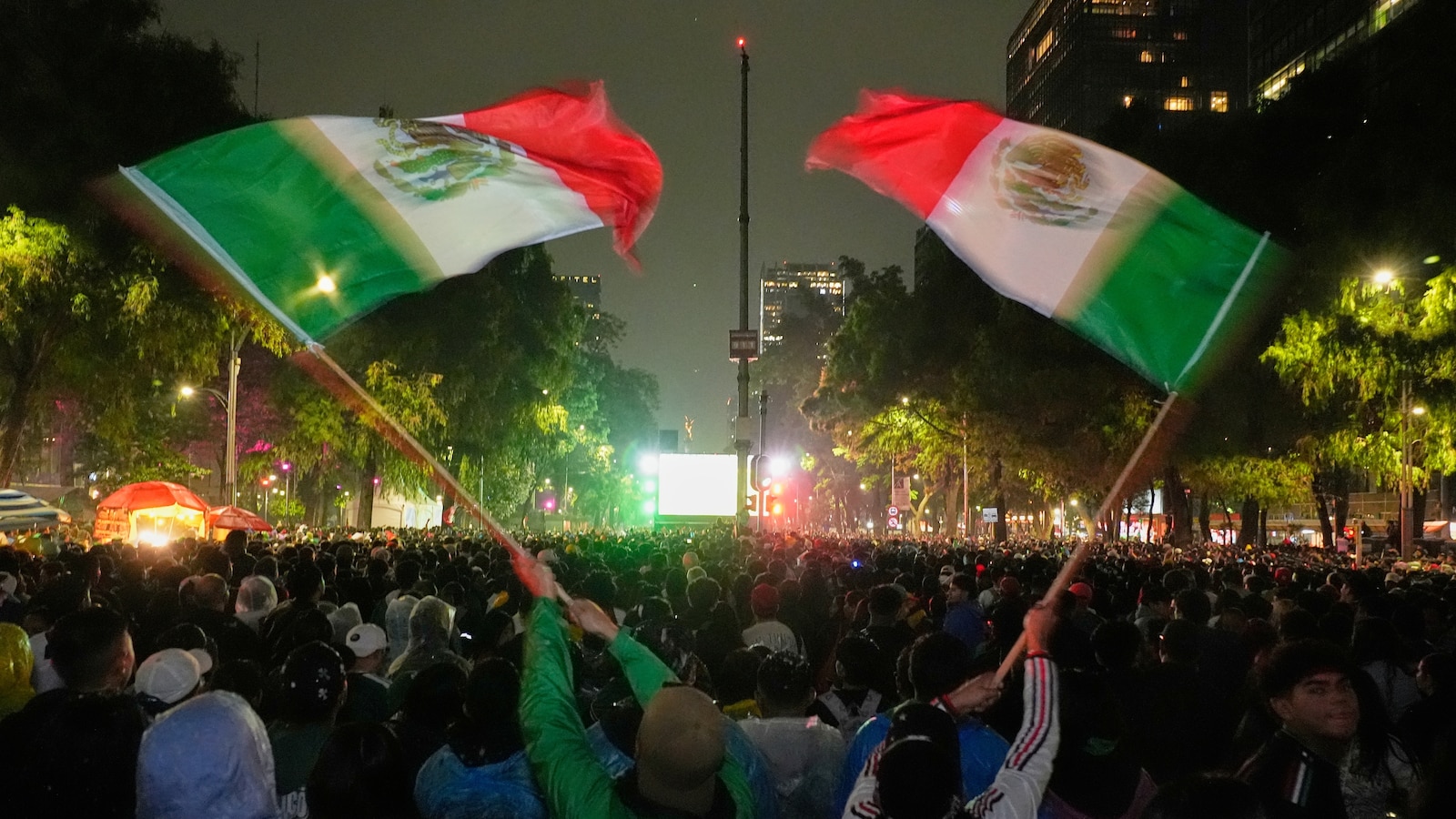
In Mexico City, the immediate focal point of post-match celebration was the iconic Angel of Independence monument (El Ángel). While historically serving as a default civic arena for national celebrations, the monument’s architectural layout and surrounding urban density present severe logistical hazards during rapid, unregulated crowd accumulation. The gathering quickly surpassed safe density thresholds, overwhelming the spatial capacity of the surrounding arterial roads and resulting in a critical public safety failure.
According to official reports from the Mexico City Health Secretariat published on social platform X, three individuals died of compressional asphyxia during the event. The victims—a 48-year-old woman, a 44-year-old woman, and a 19-year-old man—were discovered unresponsive on streets adjacent to the monument. Fatal asphyxiation in open-air environments typically indicates severe crowd compression, where localized lateral pressures restrict respiratory function and impede immediate extraction by emergency medical services (EMS).
Logistical Bottlenecks in Spontaneous Urban Mobilization
The rapid convergence of thousands of individuals into a centralized municipal corridor severely compromises emergency response times. Mexico City Mayor Clara Brugada confirmed via social media that emergency units responded to reports of unconscious individuals, but personnel arrived only to find the victims had already succumbed. This operational latency underscores the physical barriers that high-density crowds present to first responders navigating congested traffic arteries.
The lack of specific situational metrics from municipal authorities regarding the exact mechanism of the crowd crush highlights the difficulty of monitoring decentralized public spaces in real time. While celebratory pyrotechnics illuminated the sky, the environmental conditions within the crowd core remained highly volatile. Mayor Brugada subsequently issued public directives urging citizens to celebrate with responsibility and empathy, indicating an administrative reliance on behavioral self-regulation in the absence of physical access controls.
Administrative Communication and Reactive Safety Protocols
The reliance on post-incident social media broadcasts by municipal officials emphasizes the limitations of reactive public safety strategies. Unlike managed sports venues, spontaneous street celebrations lack pre-established ticketing, access control, and security screening infrastructures. Consequently, the operational burden shifts entirely to municipal police and emergency services, which must dynamically adapt to fluid crowd boundaries and unpredictable human behavior.
Cross-Border Crowd Dynamics and Tactical Policing in Southern California
The geopolitical footprint of the national team’s victory extended directly into Southern California, home to dense diaspora populations. In Los Angeles and Orange County, municipal law enforcement agencies deployed proactive containment strategies, utilizing operational intelligence from previous post-match gatherings to mitigate traffic disruptions and unauthorized street takeovers.
In Huntington Park, the Los Angeles County Sheriff’s Department and local police established a visible tactical presence at key intersections, notably Pacific Boulevard and Florence Avenue. By pre-positioning patrol units at this historical assembly point prior to the match’s conclusion, law enforcement successfully disrupted the primary gathering zone. This tactical preemption redirected the crowd flow, demonstrating how early visible policing can manage mass gatherings without direct physical confrontation.
Spatial Displacement and Tactical Adaptability
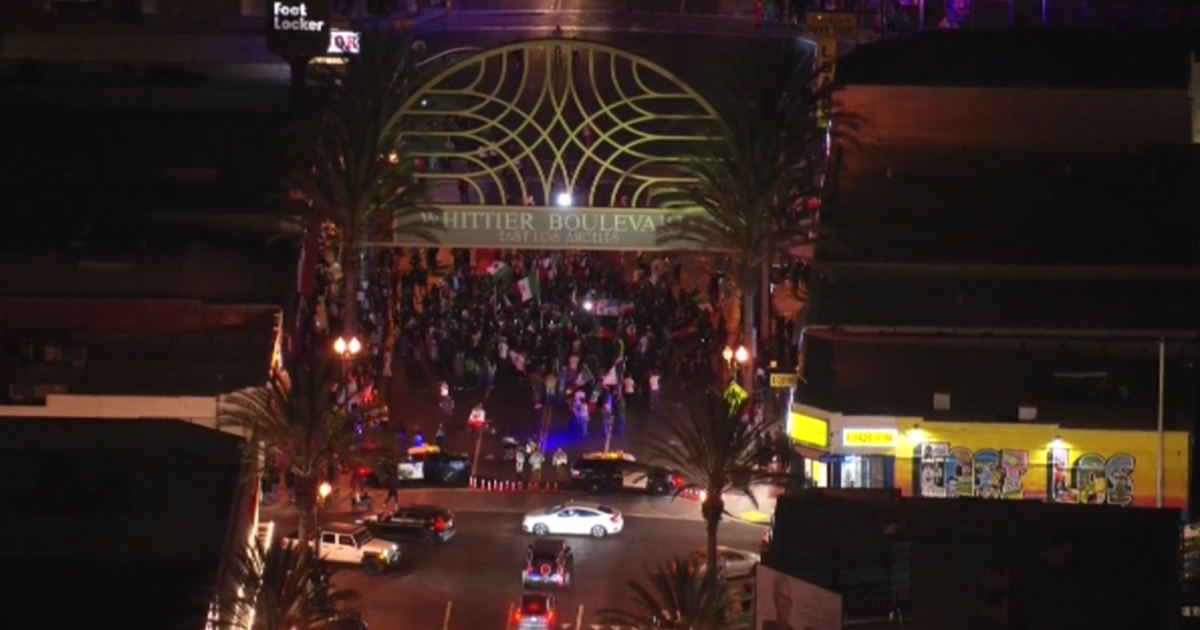
Faced with the law enforcement barrier at Florence Avenue, the crowd adapted, relocating northernward to the intersection of Pacific Boulevard and Gage Avenue. This spatial shift illustrates the fluid nature of spontaneous assemblies, which resist static containment. At this secondary location, the crowd engaged in flag-waving, street dancing, and the unauthorized use of pyrotechnics, monitored closely by aerial surveillance.
Aerial footage from the SkyCal broadcast helicopter provided real-time situational awareness, documenting numerous fireworks exploding over commercial and residential sectors of Los Angeles. These observations show that while tactical policing can keep critical intersections clear, it struggles to suppress decentralized hazards like unlicensed pyrotechnics in dense residential areas. The persistent use of fireworks across jurisdictions highlights an ongoing regulatory challenge regarding the sale and possession of explosives during major sporting events.
Structured vs. Unstructured Public Spaces: Casa México
In contrast to the volatile street celebrations in Huntington Park and downtown Mexico City, the organized activation at Casa Mexico demonstrated the efficacy of structured public space management. Hosted at the LA Plaza de Cultura y Artes campus in downtown Los Angeles, the event provided a controlled environment for thousands of fans. By incorporating live entertainment, defined ingress/egress points, and perimeter security, organizers channeled public enthusiasm into a safe, manageable cultural space.
The operational success of Casa Mexico suggests that municipal authorities can reduce pressure on public infrastructure by partnering with cultural institutions to host sanctioned viewing and celebration zones. These designated venues allow for the pre-positioning of private security, medical personnel, and crowd-control barriers, significantly reducing the risks of crowd compression. Furthermore, structured events offer a predictable spatial footprint, allowing transit agencies to plan detours and service adjustments proactively.
Institutional Frameworks for Mass Gathering Management
The contrasting outcomes in Mexico City and Southern California emphasize the need for robust institutional frameworks to manage mass gatherings. Municipalities must recognize that major sporting victories function as predictable catalysts for spontaneous assembly. Consequently, public safety planning must extend beyond stadium perimeters to encompass traditional civic gathering spaces across the metropolitan area.
Effective crowd management requires a multi-agency approach integrating municipal transit, public health, law enforcement, and emergency medical services. In high-density urban centers like Mexico City, this includes implementing real-time crowd density monitoring systems to alert authorities to critical compression levels before they result in fatal casualties. Additionally, the strategic use of physical barriers and pedestrian routing can prevent dangerous bottlenecks around historic monuments and transit hubs.
Systemic Implications for Future Tournament Planning
As international football tournaments expand in scale and viewership, the administrative burden on host and non-host cities will continue to grow. These events demonstrate that a national team’s success carries immediate operational and financial liabilities for municipal governments, including increased policing costs, emergency deployments, property damage, and potential loss of life due to crowd management failures.
To mitigate these risks, future urban planning must integrate crowd safety principles directly into the design of public plazas and monument surrounds. This includes ensuring adequate evacuation routes, establishing clear sightlines for security personnel, and installing integrated public address systems for emergency communications. Ultimately, preserving public safety during collective celebrations depends on the ability of municipal institutions to anticipate human behavior and adapt operational strategies to dynamic urban landscapes.