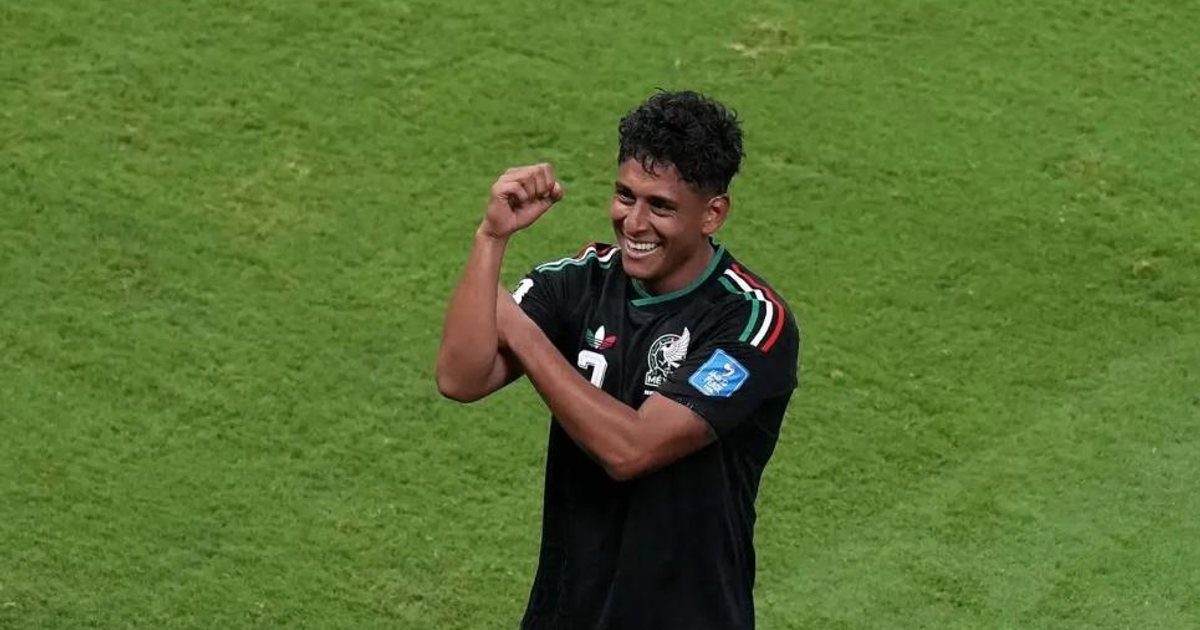
Luis Romo’s World Cup 2026: A Statistical Anomaly in Midfield Dominance
Mexican midfielder Luis Romo has established himself as a pivotal performer at the World Cup 2026, demonstrably leading a critical defensive metric among the tournament’s central midfielders. This statistical preeminence, rigorously documented by data analytics firms Impect and the CIES Football Observatory, underscores a significant operational contribution foundational to Mexico’s campaign.
Specifically, Romo’s exceptional performance in ground duels won per 90 minutes places him at the vanguard of the World Cup’s deep-lying midfielders. His average of 7.65 successful ground duels per game not only sets him apart but also significantly surpasses established international figures such as Pedro Vite, Bruno Guimarães, Tyler Adams, and Mohanad Lasheen, signaling a consistent and dominant presence in key midfield contests.
This metric transcends a mere individual statistic; it serves as a direct, quantifiable indicator of a player’s indispensable capacity for proactive ball recovery, relentless defensive pressure, and the nuanced ability to maintain midfield equilibrium. For a national team like Mexico, navigating the high-stakes, intense competitive landscape of a World Cup, such consistent, high-volume output from a defensive midfielder provides an unparalleled tactical advantage, directly impacting game control and defensive solidity.
Strategic Imperatives: Romo’s Impact on Mexico’s Tactical Framework
The consistent demonstration of Romo’s defensive and transitional capabilities has proven instrumental in sculpting Mexico’s tactical blueprint throughout the World Cup group stage. His proficiency in winning ground duels directly translates into effective disruption of opposition build-up play and the rapid initiation of offensive transitions, thereby strategically mitigating the defensive load on his teammates.
This heightened operational efficacy has empowered the Mexican national team to engage opponents with superior structural cohesion and intensity, particularly when facing teams with extensive international experience. By consistently regaining possession and adeptly closing down critical spaces, Romo functions as the indispensable tactical fulcrum, enabling Mexico to deploy a more aggressive high-pressing strategy while simultaneously maintaining robust defensive solidity across their formation.
His central role was unequivocally underscored by his Player of the Match recognition in a pivotal group stage victory, a testament that transcends mere statistical output. Such individual accolades, earned in high-pressure tournament fixtures, validate a player whose on-field performance is directly, tangibly influencing match outcomes at a profound strategic echelon, beyond just individual metrics.
Mexico’s Flawless Group Stage: Romo’s Integral Role in Knockout Trajectory
Mexico’s successful progression to the World Cup 2026 knockout phase, marked by a pristine group stage record, is a profound testament to their collective discipline and precise tactical execution. Achieving three consecutive victories without conceding a single goal unequivocally highlights a robust and cohesive defensive framework, within which Luis Romo’s dominant midfield presence has been explicitly identified as an indispensable, fundamental component.
This unblemished advancement not only generates significant team momentum but also strategically optimizes Mexico’s positioning within the demanding tournament bracket. Such a perfect group stage performance invariably signifies a meticulously drilled unit, capable of executing intricate tactical schemes under immense pressure, thereby significantly elevating their competitive standing and psychological advantage against prospective opponents.
The eagerly anticipated Round of 16 clash against Ecuador, slated for June 30th at the Estadio Ciudad de México, serves as a direct operational consequence of this stellar group stage performance. This fixture is imbued with additional historical significance, marking only the second World Cup encounter between these two nations; their previous meeting in Korea-Japan 2002 saw Mexico secure a narrow 2-1 victory, adding a layer of historical context to Romo’s ongoing tournament narrative.
Market Dynamics: Romo’s Performance Reshaping Player Valuation
Luis Romo’s statistical outperformance, particularly against globally celebrated midfielders such as Casemiro and Bruno Guimarães in a premier tournament, injects a compelling new dynamic into the intricate competitive landscape of international football. While individual metrics alone do not encapsulate a player’s holistic value, his leadership in a critical defensive statistic at the World Cup unequivocally elevates his professional standing and market appeal.
This sustained level of elite performance on the World Cup stage possesses the catalytic potential to induce substantial recalibrations in player market valuations and intensify transfer interest. For his club, Chivas, Romo’s augmented international renown translates directly into a tangible increase in asset value, making him a prime target for larger, more affluent international clubs actively scouting for proven talent capable of excelling under the immense pressure of global competition.
The robust data supplied by specialized analytics firms Impect and CIES Football Observatory offers objective, quantifiable validation of Romo’s profound impact. This provides an indispensable, empirically-grounded framework for modern scouting departments and strategic talent planners, underscoring how advanced performance analytics are increasingly central to sophisticated talent identification and acquisition protocols, profoundly shaping investment decisions throughout the global football ecosystem.
Beyond the Pitch: Romo’s Institutional and Regional Legacy
Luis Romo’s impactful participation in the World Cup 2026 extends beyond his immediate on-field contributions, embodying significant institutional and regional resonance within Mexican football. His impending start against Ecuador will notably mark his third World Cup appearance, a distinction that equals a historic record previously held by Omar Bravo for players hailing from the talent hotbed of Los Mochis, Sinaloa.
This specific achievement vividly illustrates a compelling cultural and developmental narrative within the broader Mexican football landscape, meticulously connecting the national team’s current successes to robust, often underappreciated, regional talent pipelines. Such milestones are profoundly impactful, resonating deeply within local communities, serving as powerful catalysts that foster immense pride and inspire nascent generations of athletes from specific geographical locales to pursue elite football aspirations.
The demonstrable continuity of high-caliber talent emerging from regions such as Los Mochis is indicative of underlying, effective institutional structures – encompassing both formalized academies and organic, informal development pathways – that consistently cultivate and produce players capable of ascending to the sport’s zenith. This localized pride seamlessly integrates into the broader fabric of the national team’s identity, thereby reinforcing a vital sense of shared heritage and collective national aspiration.
The Analytical Edge: Romo’s Case as a Data-Driven Paradigm
The pronounced prominence of Luis Romo’s performance statistics, meticulously gathered and analyzed by specialized firms, emphatically underscores football’s accelerating reliance on advanced data-driven analysis. These sophisticated, empirically-derived metrics furnish an objective, quantifiable lens through which to rigorously evaluate player contributions, transitioning beyond mere subjective observations to precise, measurable impact on the pitch.
For national team coaches, technical directors, and scouting departments, this wealth of data provides unparalleled critical insights essential for nuanced tactical adjustments, optimized player selection, and comprehensive opponent analysis. It facilitates a granular understanding of individual player strengths, weaknesses, and tendencies, thereby enabling the formulation of highly informed strategic decisions that directly influence tournament outcomes and competitive advantage.
Furthermore, the public dissemination of these detailed statistics, exemplified vividly by Romo’s case, actively shapes contemporary media narratives and refines fan perceptions. This transparency contributes significantly to a more analytically rigorous and informed discourse surrounding player performance and team strategy, reflecting a broader, irreversible trend towards deep analytical rigor in both sports journalism and professional football management globally, spearheaded by organizations like CIES.
Future Trajectories: Anticipating Romo’s Lasting Impact
Luis Romo’s consistently high-level performance in a pivotal defensive role during the World Cup is poised to generate multifarious, cascading effects across several domains. Operationally, his impact unequivocally solidifies his indispensable standing as a core tactical component for the national team, a factor that will profoundly influence future squad selections, tactical formations, and strategic planning extending well beyond the immediate conclusion of the current tournament cycle.
Financially, his significantly elevated international profile is highly likely to unlock a spectrum of increased commercial opportunities, encompassing lucrative endorsements and heightened transfer interest from elite clubs operating in more prominent global leagues. This represents a direct, quantifiable economic dividend stemming directly from on-field excellence demonstrated on the most globally televised and scrutinized sporting stage.
Strategically, Mexico’s astute ability to leverage Romo’s specialized skill set to achieve an unblemished group stage record may prompt other national teams and tactical analysts to critically re-evaluate their own midfield compositions and defensive strategems. His success offers a compelling, real-world case study in the profound value of specialized defensive midfield play within the paradigm of modern international football, potentially acting as a catalyst for wider, systemic tactical recalibrations across the global sport.
Synthesizing Impact: Romo’s Enduring Legacy in Team Dynamics
Luis Romo’s superlative performance at the World Cup 2026 serves as an exemplary paradigm of how specialized individual excellence can profoundly catalyze and elevate collective team success. His unwavering capacity to dominate ground duels confers a tangible, irrefutable competitive advantage, furnishing Mexico with the foundational control necessary to execute its intricate tactical game plan with superior efficacy, resilience, and strategic depth.
This evolving narrative extends far beyond the confines of raw statistics, vividly illustrating the profound strategic importance of a player who consistently executes fundamental operational tasks at the apex of the sport. His multifaceted contributions are not merely propelling Mexico’s current tournament trajectory but are simultaneously recalibrating perceptions of his intrinsic value and the crucial strategic function of defensive midfielders within the evolving landscape of contemporary football.
The compelling confluence of his statistical leadership, his undeniable critical impact on team performance, and his distinct regional historical significance firmly establishes Luis Romo as an indelible, central figure in Mexico’s compelling World Cup story. His continued exceptional performance will undoubtedly remain a focal point for exhaustive analysis, reflecting the intricate, symbiotic interplay between individual mastery, sophisticated team strategy, and the broader institutional and cultural narratives that define global sports.