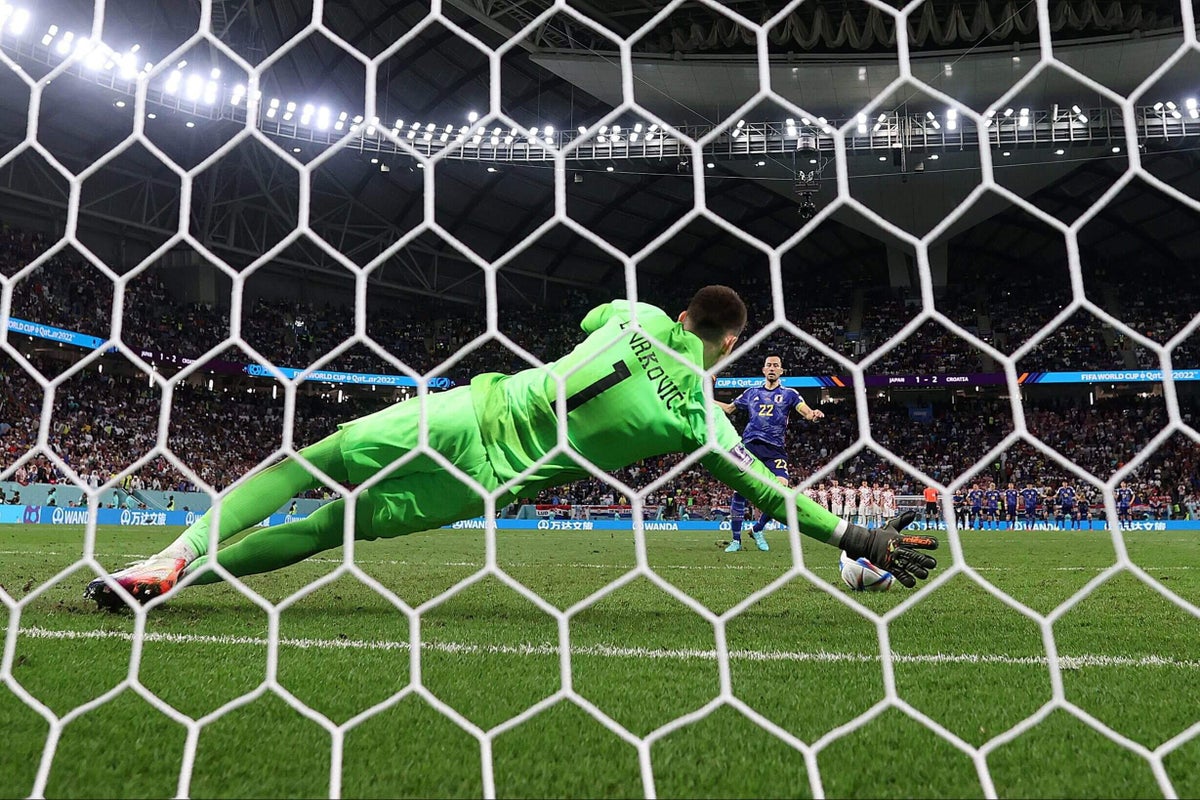
The Institutionalization of the Penalty Shootout: From Lottery to Game Theory
In the knockout stages of the 2026 World Cup, the absolute elimination of draws after 120 minutes of play establishes the penalty shootout as a primary strategic crucible rather than a mere post-match tie-breaker. Historically dismissed as a high-variance lottery, modern high-performance departments treat the shootout as a highly structured game-theoretic scenario with a predictable distribution of outcomes. The marginal gains realized in these sequences dictate not only sporting legacy but also substantial macroeconomic outcomes for national federations.
As illustrated by the razor-thin margins of the 2022 World Cup final between Argentina and France, elite execution under extreme cognitive load requires a systematic mitigation of stochastic variables. Federations have responded by shifting from subjective coaching heuristics to rigorous, data-driven frameworks that analyze the psychological, biomechanical, and statistical parameters governing the spot kick.
The Goalkeeper as an Analytical Disruptor
Historically, the goalkeeper has been modeled as a passive actor with a severe structural disadvantage during a penalty kick. However, empirical analysis of 145 goalkeepers associated with World Cup rosters establishes a baseline penalty-stopping efficiency of 17.2% across a sample size of approximately 5,000 historical spot kicks. This baseline serves as the control metric for identifying positive performance outliers who can actively alter a match’s expected win probability.
Goalkeepers who systematically exceed this 17.2% threshold act as defensive force multipliers. By elevating the statistical difficulty of scoring, they shift the opponent’s expected utility, forcing penalty takers to target high-risk zones near the posts, which naturally increases the probability of off-target execution.
Performance Leverage and the USMNT Advantage
In the context of the 2026 tournament, the United States Men’s National Team (USMNT) possesses a quantifiable strategic asset in Matt Turner. Turner’s historical penalty-saving rate of 28.9% represents an 11.7 percentage point positive deviation from the global baseline. This delta yields a profound competitive leverage that influences tactical decision-making during both regulation and extra time.
A manager backed by a high-probability penalty specialist like Turner or Canada’s Dayne St. Clair can optimize in-game risk management, adopting a lower block or conserving substitute equity in the dying minutes of extra time, secure in the knowledge of a latent statistical advantage in the shootout. Conversely, opposing kickers facing an elite stopper experience elevated cognitive pressure, leading to disrupted pre-shot routines and mechanical degradation during the run-up.
The Cognitive Psychology of Elite Spot Kicks
Professor Geir Jordet of the Norwegian School of Sport Sciences has demonstrated that the penalty shootout is fundamentally a test of psychological infrastructure rather than technical capability. Jordet’s research indicates that performance under acute stress is dictated by the systemic behavioral protocols designed to buffer players against the paralyzing effects of performance anxiety.
The transition from domestic league play to the existential pressure of a World Cup knockout match exponentially increases a player’s cognitive load. Developing coping mechanisms—such as regulating the time between the referee’s whistle and initiating the run-up—proves crucial in preventing rushed, avoidance-motivated execution.
The Strategic Optimization of the Coin Toss
The strategic maneuvering of a shootout commences prior to the physical kicks, specifically during the coin-toss sequence. Historical data analyzing major international tournaments between 1970 and 2003 reveals that teams kicking first won 60.5% of shootouts, highlighting a profound psychological bias associated with chasing a trailing scoreline.
However, modern rule adjustments allowing the coin-toss winner to choose the order of play have added a new layer of optionality. Recent empirical tracking indicates that winning the coin toss itself is the primary driver of success, yielding a 60% win rate for toss-winners regardless of whether they choose to shoot first or second, compared to a baseline of 51% for teams that simply kick first. This discrepancy emphasizes the value of tactical flexibility and psychological preparedness at the managerial level.
Biomechanical Consistency and Fatigue Mitigation
Large-scale kinematic studies confirm that a kicker’s run-up biomechanics serve as an observable indicator of psychological state. Under intense cognitive and physical fatigue, players frequently deviate from their standardized approach mechanics, which correlates with a steep decline in shot accuracy.
High-performance coaching staffs must prioritize the virtualization and physical rehearsal of these run-up protocols under simulated fatigue. Standardizing the approach velocity, body deceleration, and final foot placement mitigates the intrusive effects of environmental stressors, providing a resilient, automated motor program when the athlete’s cognitive resources are severely depleted.
Market Valuation and Elite Specialization
The identification of penalty stopping as a highly quantifiable, specialized skill has transformed the global football transfer market and squad-selection methodologies. Goalkeepers with demonstrated efficacy in shootout scenarios command premium valuations, as sporting directors recognize that knockout tournament success is intrinsically tied to these micro-events.
This paradigm shift influences roster selection, where a backup goalkeeper’s spot-kick saving percentage can justify their inclusion over a more rounded but statistically average peer. The strategic utility of specialized profiles—such as Turner or St. Clair—demonstrates how granular data models are now seamlessly integrated into macro-level squad construction and technical planning.Systemic Institutional Responses
National associations are increasingly establishing dedicated penalty-shootout task forces, incorporating specialists in sports psychology, game theory, and biomechanics. The integration of experts like Geir Jordet into elite technical setups highlights the industry’s acknowledgement that shootouts are a highly trainable discipline requiring rigorous preparation.
This professionalization aims to systematically strip away the illusion of ‘chance.’ From optimizing the sequence of the five primary takers to implementing non-verbal goalkeeper distraction protocols, every single variable within the shootout sequence is subject to pre-determined, institutionalized scripting.
Media Narrative and Commercial Engagement
The evolution of shootout analytics has also reshaped the media landscape and spectator engagement. Modern broadcasts leverage real-time expected-goals (xG) metrics and historical goalkeeper saving probabilities to contextualize the drama, educating the public on the underlying mathematics of the moment.
For commercial stakeholders and tournament organizers, the shootout remains the absolute peak of narrative tension and global viewership. The reality that a multi-million dollar campaign or national sporting identity can hinge on a fraction of a second ensures that the shootout remains the most compelling, high-stakes drama in sports broadcasting.
The Tactical Evolution of the Knockout Phase
As the 2026 World Cup approaches, the structural realities of the expanded knockout bracket necessitate an absolute mastery of the penalty shootout. The historical insights derived from previous tournaments, specifically the high-stress environments of the 2022 World Cup, provide a clear operational blueprint for national teams.
The era of treating shootouts as an unpredictable lottery is over. Future champions will be decided by the narrowest margins of psychological resilience, game-theoretic preparation, and statistical analysis. Those who fail to treat the shootout with the same technical rigor as open-play structures will inevitably find themselves on the wrong side of historical probability.