
2026 World Cup: Analytical Frameworks for the Expanded Knockout Stage
The transition to a 48-team format for the 2026 FIFA World Cup introduces the Round of 32, a structural shift that fundamentally alters competitive strategy. Stakeholders must now navigate an extended tournament bracket where group-stage momentum faces immediate testing against high-variance knockout pressures.
Market Sophistication: The ‘To Advance’ Betting Pivot
The evolution of sports wagering for 2026 reflects a move toward risk-mitigation products. Traditional three-way moneyline bets (regulation time) are being supplanted in volume by “To Advance” or “To Qualify” markets. These products account for the statistical volatility of extra time and penalty shootouts, forcing a deeper analytical focus on squad depth, psychological resilience, and historical performance in extended play. For operators, this necessitates complex risk assessment models; for bettors, it rewards the analysis of tactical adaptability under fatigue.
Qualification Mechanics and the Third-Place Variable
The 2026 format prioritizes the performance of third-placed teams, creating a complex web of interdependency. Unlike previous 32-team iterations, advancement often hinges on goal differentials and points accrued across disparate groups. This ‘bubble’ dynamic incentivizes aggressive play in final group matches to secure a favorable seed in the Round of 32. This systemic pressure exposes teams with conservative tactical frameworks, as a single goal in a parallel fixture can fundamentally shift qualification probabilities.
Early Round of 32 Matchup Analysis
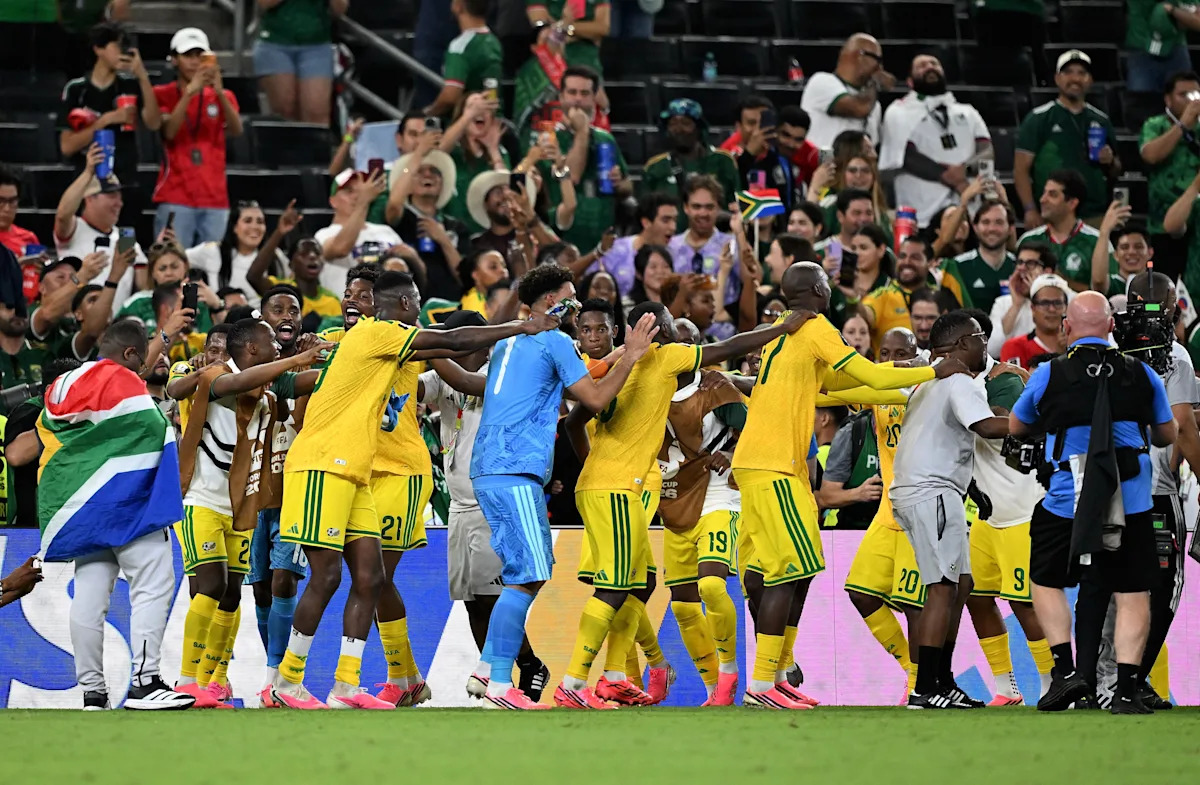
Initial projections for potential matchups, such as South Africa vs. Canada, illustrate the weighting of recent form over historical prestige. Analytical models now emphasize high-press efficiency and transition speeds—factors that determined outcomes in fixtures like South Africa/South Korea and Canada/Switzerland. This data-driven approach highlights that in a single-elimination format, group-stage dominance is a trailing indicator; the primary lever for success is the ability to exploit specific tactical vulnerabilities in a one-off scenario.
Macro-Economic and Institutional Logistics
The expanded footprint of the 2026 tournament creates significant economic and logistical challenges for FIFA and host nations. The increased match volume amplifies broadcast rights valuation and sponsorship reach but demands a robust infrastructure capable of managing a diverse global fan base across multiple time zones. Institutionally, this expansion serves as a developmental catalyst for emerging football nations, providing unprecedented exposure and financial incentives that could disrupt traditional continental power structures.
Conclusion: Performance Leverage in High-Stakes Environments
Ultimately, the 2026 World Cup knockout stage rewards institutional and tactical discipline. Teams that execute under extreme pressure, supported by meticulous preparation and deep bench rotations, possess the greatest performance leverage. Those failing to adapt to the expanded format’s demands risk early elimination and the subsequent loss of commercial and developmental momentum.

Photo by jorono on Pixabay.