
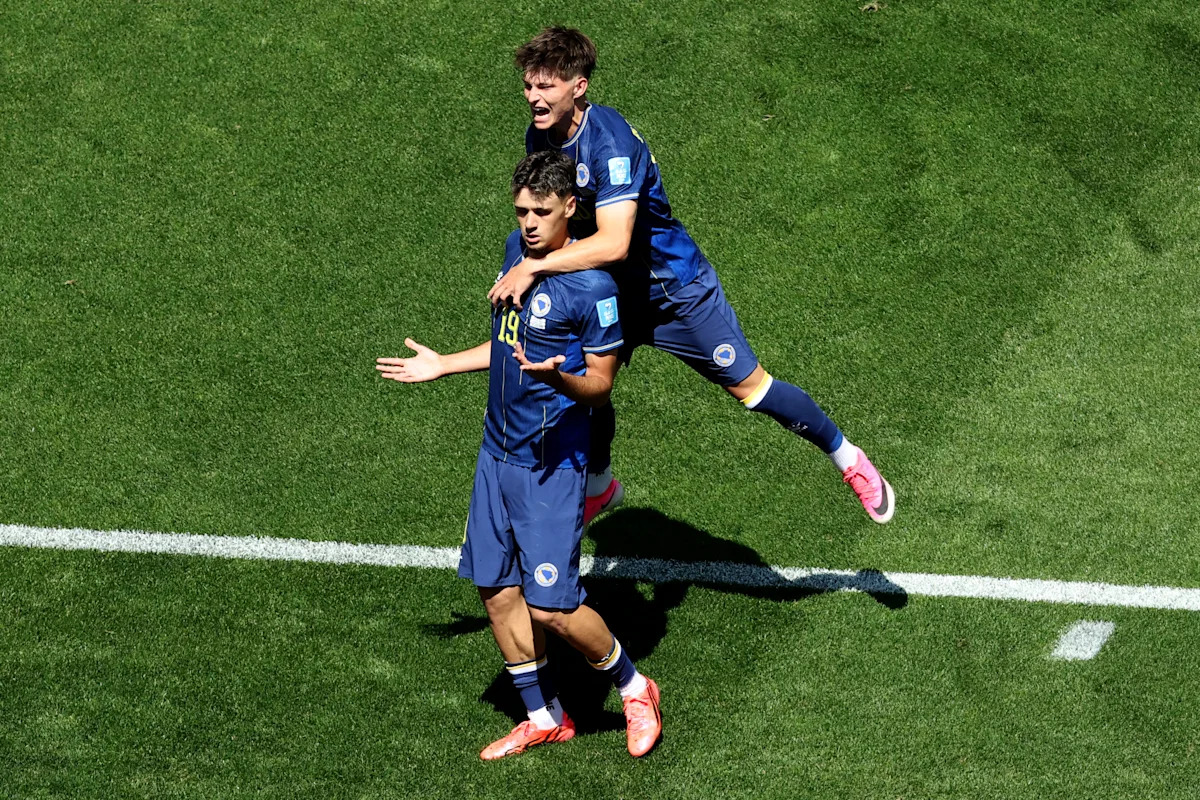
Bosnia and Herzegovina Secures Knockout Berth, Setting Stage for USMNT Clash
Bosnia and Herzegovina has advanced to the knockout stages of the 2026 World Cup, securing a spot in the Round of 32. This advancement positions them as the United States Men’s National Team’s (USMNT) likeliest opponent in a significant Bay Area match, influencing the early competitive landscape for the host nation.
The team’s progression, achieved by finishing third in Group B with four points from three games and a minus-1 goal differential, highlights the strategic shifts introduced by the expanded tournament format. This qualification pathway illustrates the evolving dynamics for national federations navigating the group stage under new rules.
Strategic Implications of the Expanded World Cup Format
The 2026 World Cup’s expansion to 48 teams, allowing 32 to advance to the knockout rounds, fundamentally alters group stage dynamics. This format broadens the competitive window for teams traditionally facing challenges in securing a top-two finish.
Under the revised system, eight of the twelve third-place teams advance, with qualification criteria prioritizing points, then goal differential, goals scored, and fair play. This encourages teams to maximize points in every group match, even when advancing directly seems unlikely.
The assurance that teams earning at least four points are largely secure from elimination creates a distinct strategic imperative. National teams can prioritize securing draws or narrow victories, potentially influencing match intensity and risk assessment, rather than solely focusing on overwhelming goal differentials.
FIFA’s structural change aims to enhance global participation and provide more opportunities for diverse footballing nations. However, it introduces strategic complexity for coaches, requiring optimization for both group dominance and securing a strong third-place standing.
Operational and Competitive Dynamics for Advancing Teams
Bosnia and Herzegovina’s advancement with four points and a negative goal differential exemplifies the operational realities of the new qualification criteria. Consistent point accumulation, even without a dominant scoring record, can be sufficient to progress.
The pre-determined knockout-round bracket dictates that third-place teams will face group winners. This structural decision aims to maintain competitive balance and provide a clear tournament progression pathway.
For group winners, this means preparing for an opponent whose group stage performance might have been less dominant but demonstrated resilience and tactical acumen. This ensures no team can strategically underperform for an easier draw, as their opponent is determined by the broader tournament structure.
Operational logistics for teams like Bosnia and Herzegovina involve rapid adaptation to new opponents and travel schedules, demanding robust planning and player management to maintain peak performance.
The USMNT’s Strategic Path and Host Nation Implications
The USMNT’s likely encounter with Bosnia and Herzegovina in the Round of 32 carries significant strategic implications. Facing a third-place qualifier presents unique challenges, despite potentially being perceived as more manageable than a group winner.
Host nations face high expectations and the pressure of performing on home soil, making every knockout match high-stakes. The specific matchup in the Bay Area will draw immense media scrutiny and fan engagement.
For the USMNT, preparation involves analyzing Bosnia and Herzegovina’s tactical patterns, focusing on how they secured points. Understanding their defensive solidity and counter-attacking capabilities becomes paramount over just their goal differential.
This early knockout fixture serves as a critical test of the USMNT’s tournament readiness and tactical flexibility. A strong performance would propel them deeper into the competition and solidify national confidence.

Photo by grafmex on Pixabay.