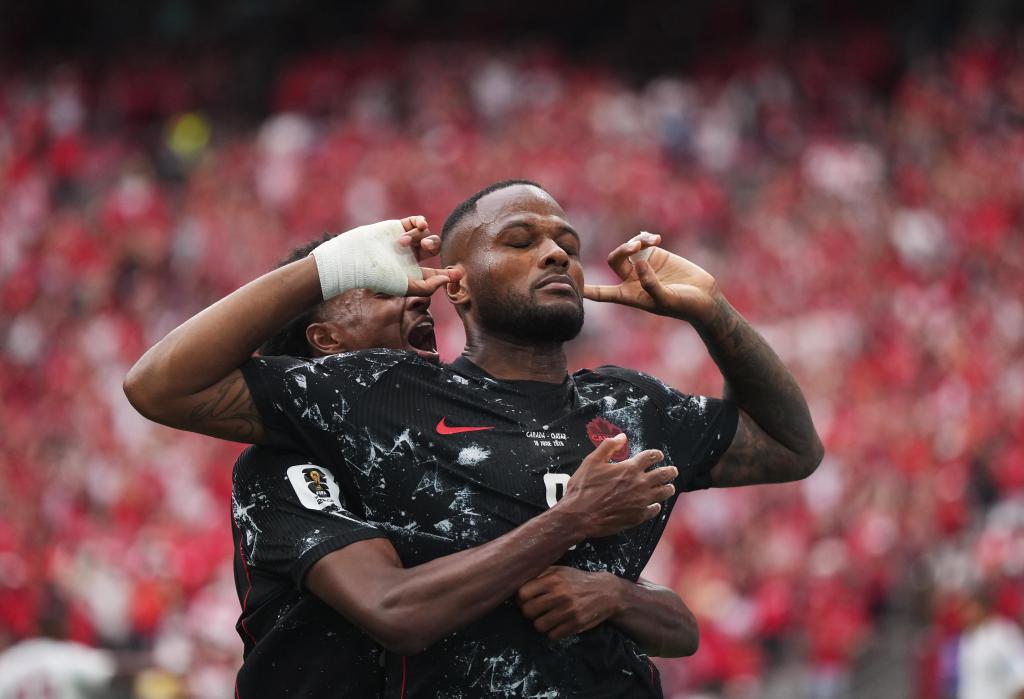
A Watershed Moment for Canadian Football
Canada’s 6-0 victory over Qatar in Vancouver serves as a transformative milestone, marking the nation’s first win in a FIFA World Cup tournament. After years of incremental growth, this performance validates the long-term tactical investment and institutional development of the Canadian program, effectively leveraging home-field advantage to secure a critical three points.
The match drew significant national attention, highlighted by the presence of Prime Minister Mark Carney and FIFA President Gianni Infantino, emphasizing the tournament’s role in elevating Canada’s sporting profile on the global stage.
Tactical Dominance and Offensive Precision
Manager Jesse Marsch’s high-press system dismantled the Qatari defensive structure early. Cyle Larin opened the scoring in the 17th minute, capitalizing on a technical error by goalkeeper Mahmoud Abunada. This set the tempo for a match defined by sustained vertical pressure.
Jonathan David’s hat-trick provided the offensive engine, demonstrating clinical finishing in high-stakes scenarios. His efficiency allowed Canada to dictate the match tempo, forcing Qatar into reactive defensive adjustments that ultimately collapsed under the weight of sustained pressure.
Disciplinary Volatility and Personnel Challenges
Qatar’s tactical collapse was exacerbated by internal disciplinary failures, resulting in two red cards. The first-half expulsion of Homan Ahmed for a reckless challenge on Tajon Buchanan fundamentally handicapped Qatar’s defensive coverage. A subsequent red card for Assim Madibo, following a severe tackle on Ismaël Koné, proved costly for both sides.
While the result propels Canada toward the knockout stages, the injury to Koné represents a critical personnel loss. The team now faces the challenge of maintaining tactical continuity while managing squad depth during the transition to the tournament’s high-intensity knockout phase.
Structural and Institutional Growth
The success in Vancouver highlights the operational capacity of Canadian infrastructure to host elite international football. This performance will likely accelerate institutional investment in domestic soccer development and influence future bidding strategies for global sporting events.
As the group stage concludes, Canada must pivot toward managing the heightened expectations and physical toll inherent in tournament football. The structural integrity of the squad, tested by both injury and the pressure of the 6-0 scoreline, will remain the primary variable as the team pursues a deep run in the 2026 tournament.