
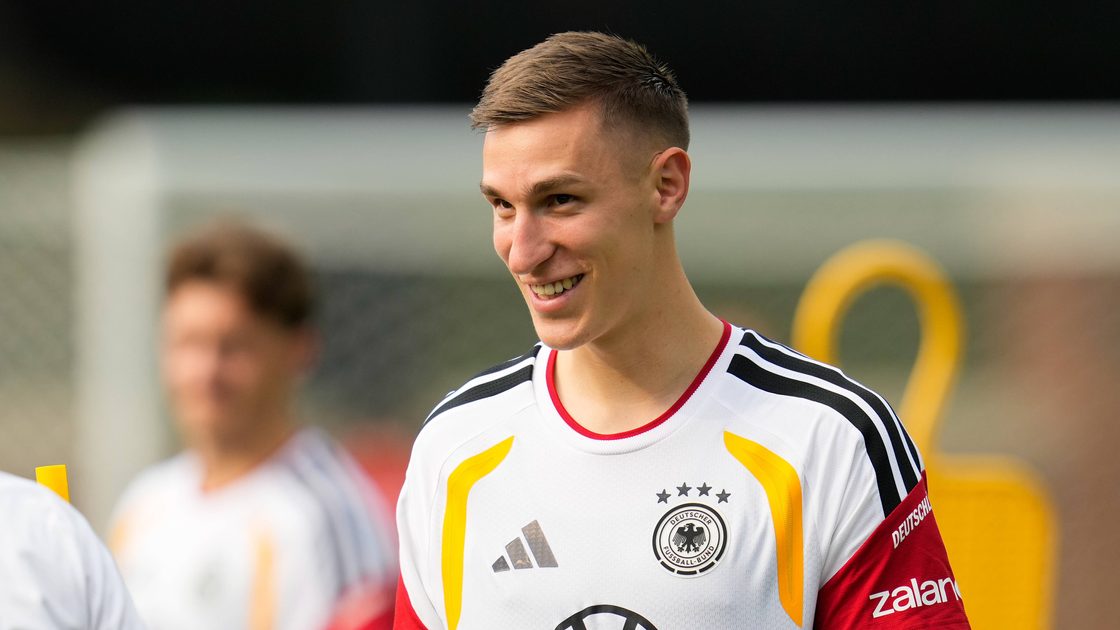
The 2026 FIFA World Cup opener in Houston serves as a high-stakes litmus test for the Deutscher Fußball-Bund’s (DFB) institutional overhaul. Following consecutive group-stage exits in 2018 and 2022, Julian Nagelsmann has pivoted away from static, possession-heavy structures toward a framework built on the operational synergy of Borussia Dortmund’s defensive and midfield anchors. The fixture against Curacao represents the first live-fire application of this verticality-focused model.
Midfield Dynamism: Transition Suppression and Verticality
Felix Nmecha’s integration into the starting XI marks a definitive break from the redundant sideways passing of previous cycles. At 25, Nmecha provides the ‘box-to-box’ profile required to dismantle low-block defenses. His statistical output from the 2025-26 Bundesliga season—highlighted by 108 recoveries and a 63% aerial win rate—identifies him as a premier asset for Nagelsmann’s high-pressing system. These metrics reflect a dual-purpose capability: disrupting opposition transitions while securing second-ball scenarios in the attacking third.
Strategically, Nmecha’s physical frame functions as a tactical shield, mitigating counter-attack exposure for the center-backs. By prioritizing direct line-breaking movements over conservative ball circulation, Germany aims to increase build-up tempo, exploiting the spatial gaps debutant sides often concede under elite international pressure.
Defensive Architecture: Schlotterbeck’s Role in Ball Progression
Nico Schlotterbeck enters the tournament as the cornerstone of a defensive unit tasked with balancing high-line aggression with technical precision. His 6ft 3in stature is essential for Nagelsmann’s preferred 1v1 defensive engagements in expansive spaces. Averaging 4.5 clearances per game during the domestic season, Schlotterbeck’s proactive reading of the game serves as the primary risk-mitigation tool for the backline.
However, his value extends beyond traditional defending; his expansive passing range is a central offensive component. By executing rapid switches of play, Schlotterbeck can bypass congested midfields to isolate fullbacks, a critical tactic against deep-seated defensive blocks. This ability to initiate the attack from deep ensures that Germany’s offensive transitions remain unpredictable and fast-paced.
Synergy and Institutional Recalibration
The internal culture of Die Mannschaft has undergone a psychological recalibration. Schlotterbeck’s observation of the “best team energy” since his debut suggests a shift toward a cohesive, club-style chemistry. By leveraging existing Dortmund partnerships, Nagelsmann is betting on established movement patterns and defensive triggers to provide stability during the volatile opening phases of the tournament.
For the DFB, this campaign is a matter of commercial and reputational survival. Success in Group E—navigating the technical transitions of Ecuador and the physical directness of Ivory Coast—would validate the transition toward younger, physically imposing profiles. Ultimately, centering the squad around the technical attributes of Nmecha and Schlotterbeck represents a shift from theoretical control to dynamic execution.
Photo by stux on Pixabay.