Tactical Asymmetry and Perimeter Attrition
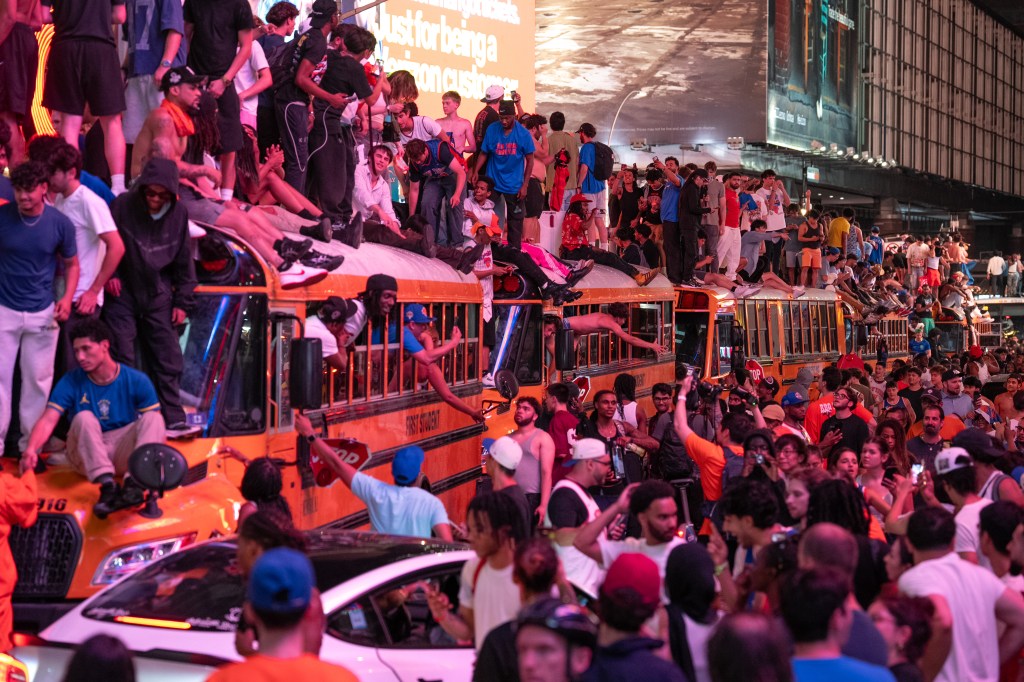
The New York Knicks’ inaugural NBA championship in over five decades acted as a catalyst for a systemic tactical overextension within the NYPD’s Midtown South command. While the victory represents a historic sports milestone, the subsequent escalation at 42nd Street and Ninth Avenue revealed a profound deficit in crowd-density management. Approximately 100 officers faced a thousand-strong assembly, resulting in operational paralysis. This 10:1 ratio forced law enforcement into a defensive posture, prioritizing the preservation of physical assets over the execution of deterrent arrests.
The NYPD’s engagement was characterized by cyclical retreats to nearby intersections, a maneuver necessitated by manpower shortages. This lack of a hard perimeter emboldened the most volatile elements of the crowd, transforming a celebratory gathering into a sustained tactical friction point. The inability to establish a clear deterrent suggests that the department lacked the immediate reserve capacity required to secure the Midtown corridor during high-stakes spontaneous assemblies.
Asset Exposure and Logistics Oversight
The targeting of eight yellow school buses underscores a critical failure in municipal logistics and traffic mitigation. These vehicles, trapped in 42nd Street’s gridlock, became focal points of property destruction, suffering mechanical sabotage and structural damage, including the removal of engine hoods and shattered glass. The 2:00 a.m. attempt to overturn an occupied bus represented a transition from civil disorder to a potential mass-casualty event, only narrowly averted by a late-stage charge.
The presence of these assets within a known flashpoint suggests a failure to reroute municipal transit prior to the game’s conclusion. Furthermore, the use of interior vehicle equipment—specifically a metal first-aid kit—as a projectile against officers indicates a total loss of interior control. This multi-dimensional threat, with fans occupying elevated positions on and within buses, complicated the police response and increased the risk profile for frontline personnel.
The Strategic Failure of Decentralized Containment
Mayor Zohran Mamdani’s administration attempted to mitigate density through decentralized watch parties at Plaza 33, Radio City Music Hall, and Wollman Rink. While theoretically sound for population distribution, this strategy effectively diluted police resources. The geographic spread, compounded by 10 LinkNYC kiosks acting as digital anchors for spontaneous crowds, inadvertently created unmanageable flashpoints across the urban core.
Mamdani’s reliance on rhetorical appeals for civic responsibility proved insufficient against the psychological accelerant of a 50-year championship drought. The transition from a 29-point deficit to a 3-1 series lead created a state of collective euphoria that rapidly devolved into destructive behavior. For municipal authorities, the brand value of the Knicks’ success is now offset by significant insurance liabilities and the urgent need to re-evaluate security protocols before Game 5 in San Antonio.
Institutional and Legal Precedents
The absence of mass arrests at the height of the skirmishes establishes a concerning precedent regarding the immunity of large-scale crowds. As the NYPD and Department of Transportation conduct internal reviews, the focus must shift toward real-time intelligence integration and more aggressive asset protection. The reputational fallout from the 42nd Street melee necessitates a shift from decentralized management toward a more concentrated, high-visibility security model to prevent further volatility as the series concludes.