Tornado Events Expose Critical Gaps in Emergency Warning Systems
Recent tornado activity in Kansas, specifically impacting Shawnee, Jefferson, and Riley counties, has highlighted significant concerns regarding the effectiveness of outdoor warning sirens. Residents in affected areas reported an inability to hear crucial alerts during tornado events, directly compromising timely evacuation and sheltering efforts. This lapse in audibility points to a potential systemic failure with severe implications for public safety during future severe weather.
The National Weather Service issued a tornado warning for southeast Shawnee and southern Jefferson counties on June 9, 2026, citing a severe thunderstorm capable of producing a tornado moving northeast at 45 mph. The warning detailed immediate dangers, including flying debris posing a significant threat to those without shelter, and the potential for catastrophic damage to mobile homes, roofs, windows, and vehicles, alongside widespread tree damage. The failure of warning systems to reach their intended audience directly amplifies these life-threatening risks.
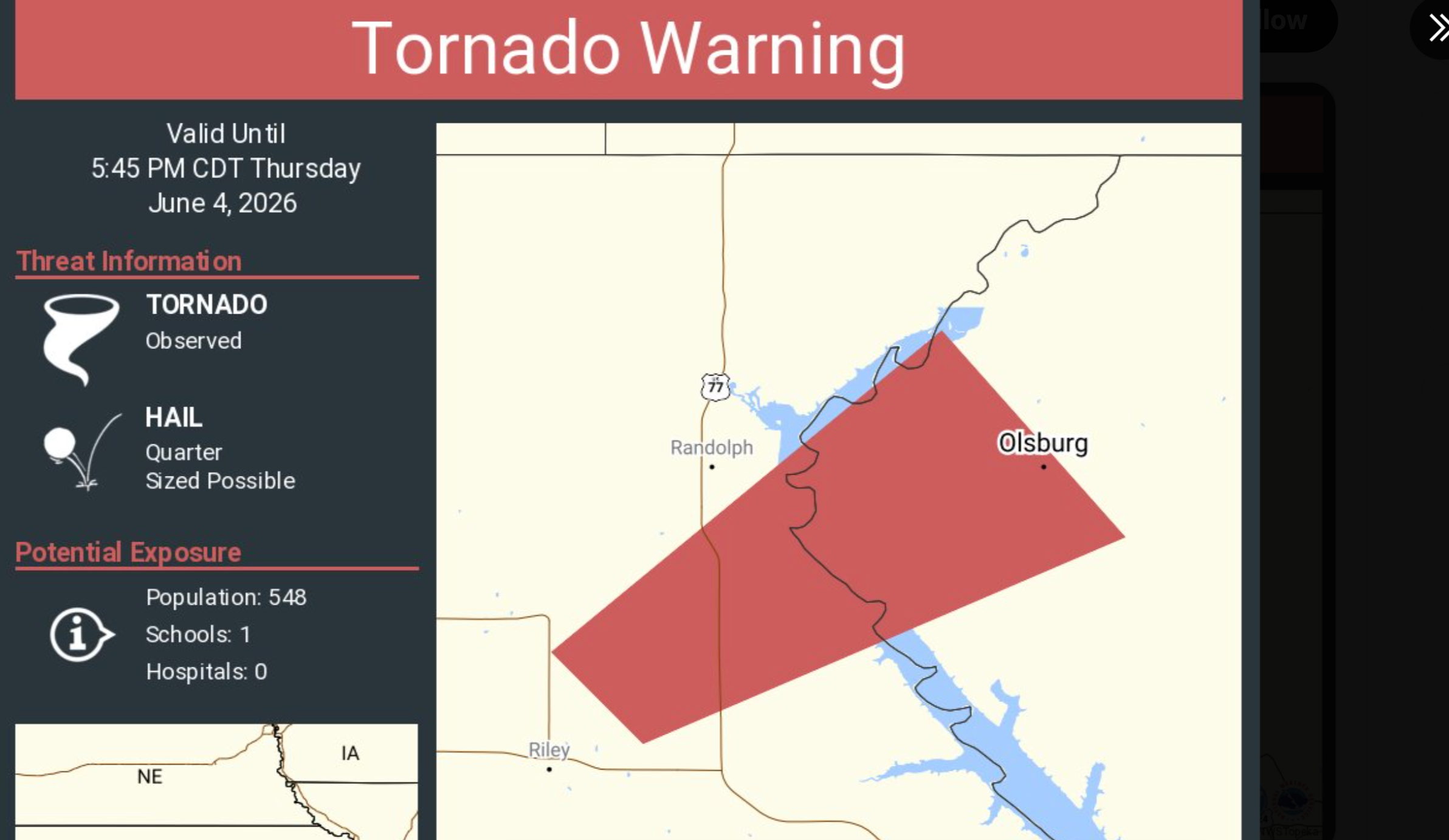
In Riley County, a separate incident on June 4 involved reports of a potential tornado east of the City of Riley. Although outdoor warning sirens were activated in Riley, Leonardville, Randolph, and University Park, subsequent damage to five structures and substantial tree damage, as reported by Riley County Fire District #1, indicates that siren activation alone does not guarantee sufficient preparedness or mitigation of impact.
Infrastructure Strain Amplifies Tornado Risks
Beyond high winds and debris, accompanying rainfall caused substantial flooding across Riley County. This combined threat of severe weather and inundation led to the closure of critical roadways, including Falcon Road and U.S. Highway 77, until floodwaters receded and debris was cleared. The confluence of these hazards—tornadoes, high winds, and flash flooding—strains emergency response capacity and emphasizes the urgent need for integrated infrastructure resilience planning.
The closure of major transportation arteries, such as the segment of U.S. Highway 77 from Indian Hill Road to the Marshall County line, severely impacts regional connectivity and the movement of essential goods and emergency services. Such disruptions can isolate communities, impede disaster relief operations, and destabilize local economies, illustrating how weather-induced infrastructure failures trigger cascading operational and logistical challenges.
The National Weather Service’s planned damage assessment in Riley County is a formal process to quantify the impact of the tornado and associated weather phenomena. This assessment is vital for informing future mitigation strategies, resource allocation for recovery, and potential revisions to building codes and land-use policies in vulnerable zones. The findings will provide critical data on the actual performance of existing infrastructure against extreme weather conditions.
Stakeholder Exposure and Erosion of Public Trust
Residents in tornado-affected areas, particularly those in mobile homes or lacking robust shelter, face the highest exposure to direct harm and property loss when warning systems fail to be heard. The reliance on sirens as a primary alert mechanism means that any failure in their audibility or reach directly compromises public safety protocols and erodes public trust in emergency management institutions.
The dual impacts of potential tornado damage and widespread flooding present a complex challenge for local emergency management agencies. They must coordinate immediate life-safety responses, manage traffic disruptions, and plan for long-term recovery, all while anticipating potentially recurring severe weather. The efficacy of these agencies is directly correlated with their ability to communicate warnings clearly and ensure the functionality or rapid restoration of critical infrastructure, including roadways.
Economic repercussions extend to local businesses and agricultural operations, which are susceptible to damage from high winds, flooding, and transportation network disruptions. Repair costs, lost productivity, and potential supply chain interruptions can exert a lasting impact on regional economic stability, highlighting the necessity for robust disaster recovery funding and support systems.
Strategic Imperatives for Modernizing Public Safety Systems
The documented issues with siren audibility and the cascading effects of flooding underscore a strategic imperative for public safety agencies to re-evaluate and modernize emergency alert systems. This necessitates not only diligent maintenance and testing of existing siren infrastructure but also the active exploration and integration of redundant alert technologies, such as mobile alerts, reverse 911 systems, and targeted social media campaigns.
Furthermore, these incidents highlight the critical need for comprehensive infrastructure resilience planning that anticipates the combined impacts of extreme weather events. Investments in flood control measures, reinforcement of critical transportation corridors, and the promotion of building standards capable of withstanding high winds and other severe weather phenomena are essential for minimizing damage and ensuring rapid recovery.
The performance of emergency management during these events will undergo public and policymaker scrutiny, influencing future budget allocations and regulatory frameworks. Demonstrating a clear understanding of exposed vulnerabilities and implementing effective, forward-looking solutions is crucial for maintaining public confidence and ensuring the long-term safety and security of communities facing escalating weather-related risks.
Broader Implications for National Disaster Preparedness
The Kansas events serve as a critical case study, mirroring broader challenges faced by communities nationwide in preparing for and responding to increasingly severe weather. The reliance on aging infrastructure, coupled with escalating intensity and frequency of extreme weather, necessitates a fundamental paradigm shift in disaster preparedness strategies.
This shift must encompass technological upgrades to warning systems and a more holistic approach to community resilience. Key components include public education on personal preparedness, the development of robust evacuation plans adaptable to various scenarios, and the establishment of strong community networks to support vulnerable populations during and after disasters.
The financial implications for municipalities and state governments are substantial, demanding significant investment in infrastructure upgrades and disaster relief funds. The long-term economic viability of affected regions is contingent upon the effectiveness of these investments and the capacity for swift recovery from disruptive events, positioning preparedness as a critical element of fiscal responsibility.
Ultimately, the effectiveness of emergency management is measured by its ability to protect lives and mitigate disaster impacts. The Kansas experiences offer a vital learning opportunity, underscoring the need for continuous evaluation, adaptation, and investment in systems and infrastructure designed to withstand the evolving challenges of a changing climate.