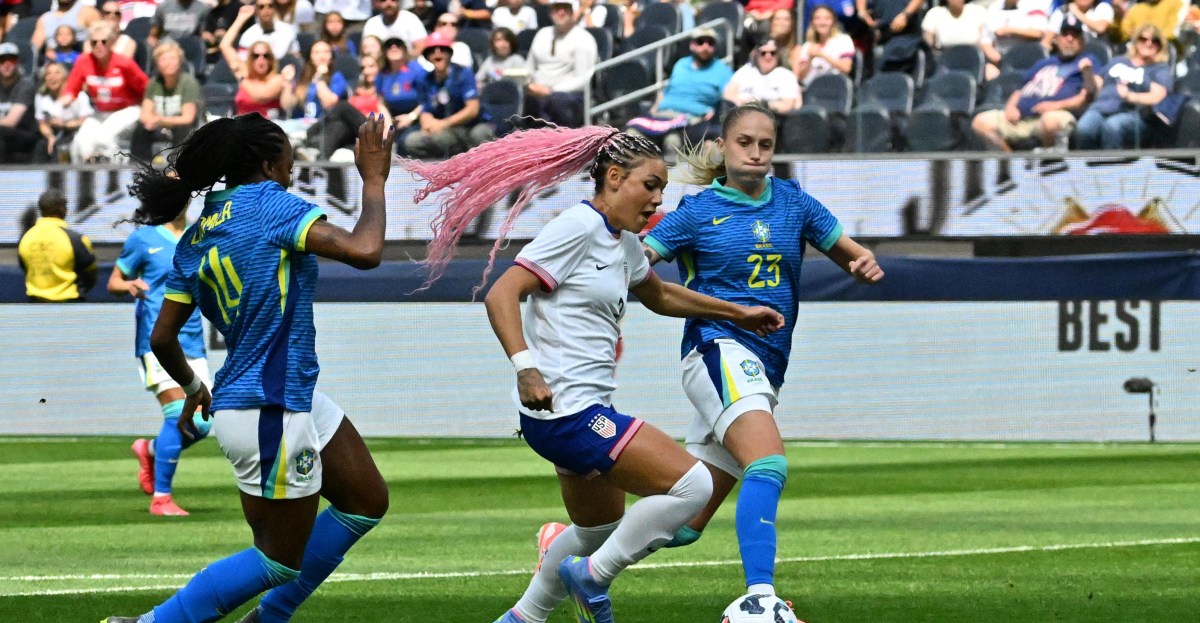
The United States Women’s National Team (USWNT) arrival in São Paulo signifies a deliberate shift toward high-stakes environmental exposure. By scheduling this friendly at the Neo Química Stadium, head coach Emma Hayes is executing a calculated operational stress test. The objective extends beyond match fitness; it is a strategic acclimatization exercise for the 2027 FIFA Women’s World Cup, prioritizing psychological resilience and tactical adaptability within the future host nation’s borders.
Operational Utility of ‘Tactical Chaos’
Hayes has identified Brazil’s high-variance, transitional style—which she labels “chaos”—as the ideal catalyst for defensive evolution. Unlike the rigid positional structures common in CONCACAF or UEFA play, the Brazilian approach disrupts traditional mid-block stability. For the USWNT, this match serves as a laboratory to refine defensive communication and reactive positioning when structural patterns collapse. The goal is to cultivate “anti-fragility,” ensuring the squad can maintain performance integrity under the unpredictable duress typical of knockout-stage football.
The Triple Espresso: Reintegrating Asymmetric Offensive Engines
A primary tactical focal point is the anticipated reunion of the “Triple Espresso” front line: Trinity Rodman, Sophia Smith, and Mallory Swanson. This trio, which has evolved significantly since the 2024 Olympic Gold Medal match, offers a unique blend of verticality and creative autonomy. Their reintegration is vital for testing the team’s high-press execution and transition efficiency. From a strategic standpoint, their collective synergy forces opponents into defensive dilemmas, effectively neutralizing Brazilian attacking ambitions by pinning back their fullbacks.
Brazil’s Resurgence and Host-Nation Pressure
Undergoing a tactical transformation of their own, Brazil enters this fixture as a resurgent force. While recent volatility against regional rivals persists, their high-ceiling offensive output against South Korea and Zambia highlights a dangerous technical evolution. As the 2027 hosts, the Brazilian Football Confederation (CBF) faces institutional pressure to prove competitive parity with the reigning Olympic champions. This environment provides the USWNT with a rare opportunity to scout the tactical nuances of a primary contender in a hostile, high-visibility setting.
Institutional Context and Media Strategy
The selection of São Paulo’s premier infrastructure underscores the commercial weight of the USWNT brand. Broadcasting through TBS, Telemundo, and Universo ensures maximum reach across English and Spanish-speaking demographics, reinforcing the team’s status as a top-tier sports property. Furthermore, while other global fixtures face cancellations due to logistical hurdles, the execution of this tour highlights the robust financial and organizational stability shared by the USSF and CBF, providing both teams with a distinct competitive advantage in tournament preparation.
Projecting 2027 Readiness
Every operational variable in this window—from travel logistics to pitch quality—serves as a data point for 2027 readiness. The internal competition for roster spots is intensified by the difficulty of the assignment, forcing players to demonstrate cognitive flexibility alongside physical output. By embracing the “chaos” of the Brazilian environment now, Hayes ensures that by 2027, the USWNT will have transitioned from a team that survives disorder to one that thrives within it.