NJ Senate Race: Murphy Triumphs in GOP Primary, Faces Booker Challenge
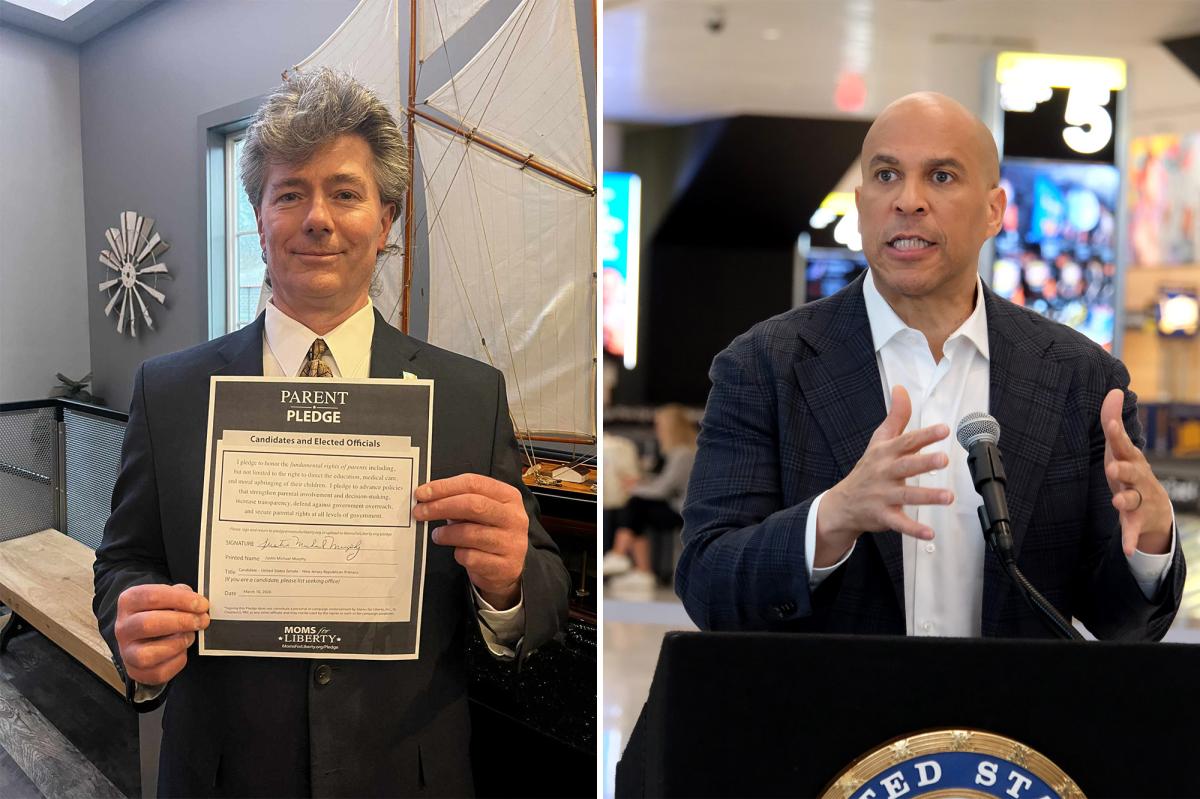
Burlington County attorney Justin Murphy has emerged victorious in the New Jersey Republican Senate primary, clinching the party’s nomination to challenge incumbent Democrat Cory Booker in the November general election. His win, against a field including a former state trooper, a broadcaster, and a surgeon, signals a focused Republican effort in a state where the GOP has not held a U.S. Senate seat since 1972.
The Democratic Party’s established dominance in New Jersey presents a significant structural hurdle. Murphy’s candidacy must overcome decades of electoral trends that favor Democrats, demanding a strategy that can bridge partisan divides or energize a skeptical electorate.
Murphy’s Platform: Energy, Security, and Conservative Appeal
Murphy’s campaign centers on a platform emphasizing energy independence, advocating for expanded energy projects on federal lands. This aligns with national GOP priorities and aims to resonate with voters concerned about energy costs and industrial policy. Additional platform pillars include a strong U.S. border military presence and a return to stricter drug enforcement policies, designed to galvanize conservative base support.
Strategic Positioning and Candidate Profile
As a U.S. Navy veteran and former local official in Tabernacle Township, Murphy leverages a narrative of public service to differentiate himself from Senator Booker. His experience in local government provides a foundation, though scaling to a statewide Senate campaign requires substantial growth in operational and financial capacity.
Securing approximately 33% of the vote in a four-way primary, Murphy achieved a consolidated mandate within the party. However, this internal victory precedes the broader challenge of an electoral landscape historically tilted against Republican Senate candidates in New Jersey.
Financial Disparities and Grassroots Strategy
Initial reports highlight a significant financial disadvantage for Murphy compared to the well-established fundraising machine of a two-term incumbent. In contemporary Senate races, campaign finance directly impacts media buys, field operations, and voter engagement analytics.
Murphy’s path to victory hinges on maximizing grassroots mobilization and earned media to offset a likely deficit in campaign capital. Overcoming this financial disparity and a deeply entrenched political environment will be crucial for his general election prospects.
Ideological Contrast with Incumbent Booker
The contest presents a stark ideological contrast. Murphy’s opposition to marijuana legalization and emphasis on parental rights and cultural issues diverge sharply from Senator Booker’s legislative record and policy stances.
This clear policy divergence offers voters a distinct choice, forcing them to weigh Booker’s incumbency and national profile against Murphy’s call for a fundamental shift in federal priorities. The success of Murphy’s strategy will depend on whether these issues can resonate with New Jersey’s crucial suburban swing voters.
Historical Context and Electoral Outlook
New Jersey’s political history, marked by consistent Democratic strength in federal elections, provides the essential context for this race. The state’s last Republican senator was elected in 1982, underscoring the difficulty of unseating the incumbent.
As the campaign progresses, Murphy’s ability to expand his appeal beyond the Republican base, coupled with national party support and local economic factors, will determine his chances against Senator Booker in November.