
Operational Validation of Orbital Combat Integration
The successful execution of Operation Midnight Hammer (June 2025) and Operation Absolute Resolve (January 2026) has provided the U.S. Space Force with the empirical leverage necessary to advocate for a systemic expansion of institutional resources. These high-intensity raids, which synchronized over 100 aircraft and diverse multi-domain weapon systems, served as a live-environment validation of the service’s capability to maintain tactical superiority in contested theaters.
Lt. Gen. Gregory Gagnon, Commander of the Space Force’s Combat Forces Command, has categorized these milestones as inflection points that transition space assets from passive support to primary combat-enabling functions. By demonstrating that kinetic success in Iran and Venezuela was inextricably linked to orbital dominance, the service is positioning itself for a larger share of the Department of Defense’s future budgetary allocations.
The Architecture of the Global Sensor Network
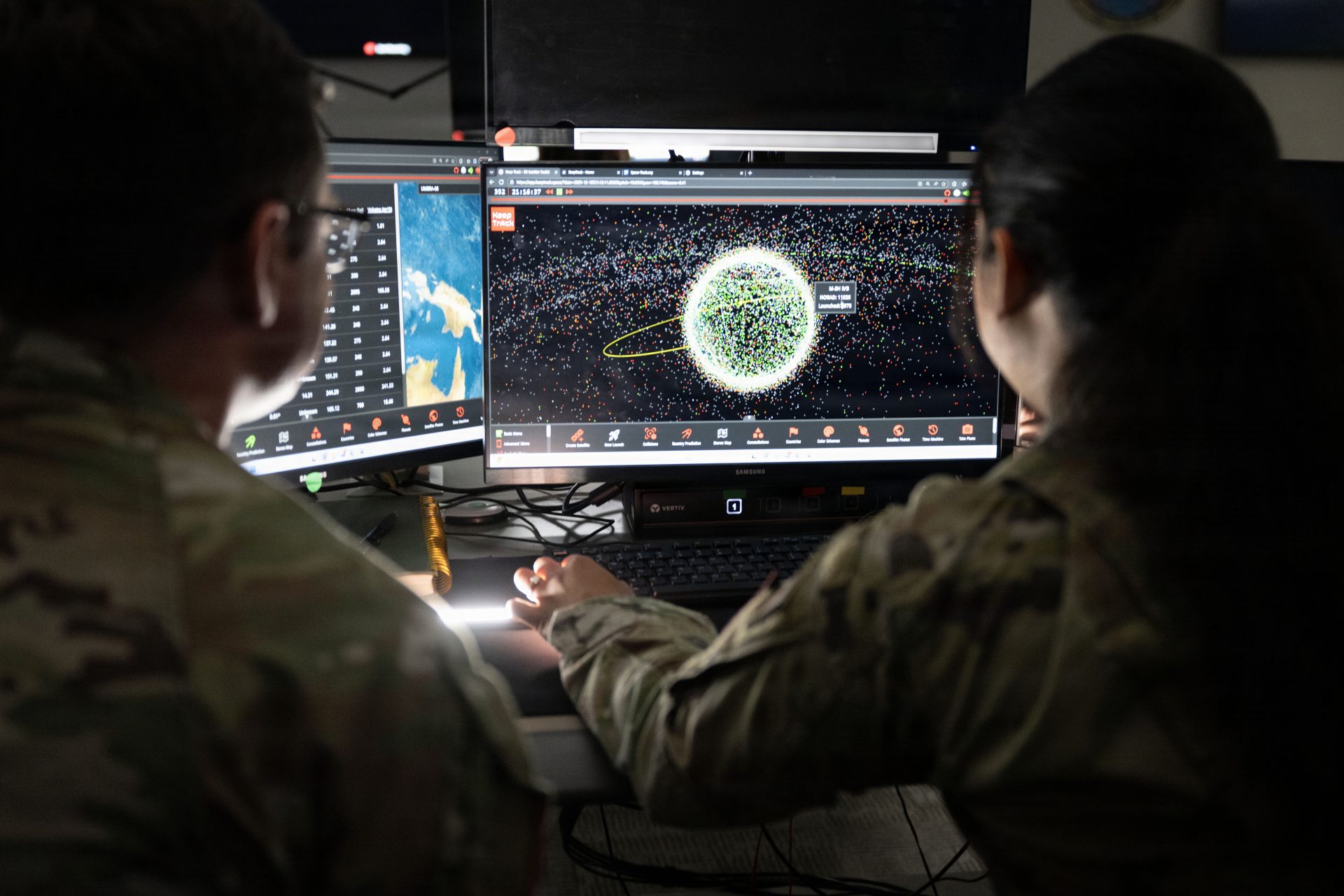
The operational reliance on a global sensor network during these missions underscores a sophisticated command and control (C2) architecture spanning Colorado, Europe, and Asia. Personnel maintained 24/7 crew positions to ensure a continuous informational advantage, effectively establishing a ‘follow-the-sun’ model that enables seamless transitions between regional commands during active engagements.
However, this distributed model introduces significant human capital strain and infrastructure requirements. The necessity of maintaining high-readiness crews across three distinct geographic hubs highlights an operational tempo that challenges current funding levels. This ‘invisible front line’ provides the essential positioning, navigation, and timing (PNT) data required for complex aerial maneuvers, without which the logistical coordination of large-scale raids would be functionally impossible.
Institutional Evolution: Toward Combat Forces Command
The central role of Combat Forces Command in these operations signals the maturation of the Space Force toward an aggressive, mission-oriented posture. This evolution reflects a mandate to move beyond the mere management of satellite constellations toward the active defense of orbital and terrestrial interests. By framing these tactical successes as products of specialized space expertise, the command is setting a precedent for how ‘Space Guardians’ will be integrated into future Joint Task Forces.
This shift necessitates a reevaluation of professional military education and training pipelines. As the demand for combat-ready space operators outpaces current administrative capacities, the leadership is emphasizing the service’s role as a kinetic enabler—a narrative aimed at influencing congressional testimony and defense appropriation hearings.
Fiscal Imperatives and Technological Resilience
The push for resources following these raids is a strategic demand for modernized, resilient infrastructure. The Iran and Venezuela operations exposed vulnerabilities that could be exploited if the global sensor network is not continuously hardened against electronic and kinetic counter-space threats. Pentagon leadership is utilizing these mission successes as a dual-purpose signal: a warning of power projection capabilities to adversaries and a fiscal alert to policymakers regarding the costs of technological dominance.
Future capital movement is expected to prioritize the hardening of ground stations and the diversification of orbital assets. The data from the 2025 and 2026 operations provides the requisite justification for the high-cost, long-term investments needed to maintain a persistent 24/7 global presence across multiple theaters.
Geopolitical Risk and Force Design
The capacity for rapid-succession power projection demonstrated in Iran and Venezuela fundamentally alters the risk calculus for regional actors. The strategic advantage of space-based sensors allows for precision and situational awareness that bypasses traditional defensive measures. Consequently, this success is likely to accelerate counter-space developments by adversaries seeking to parity the ‘high ground.’
Ultimately, the integration of space-dependent frameworks into future force design creates a feedback loop: operational success drives the demand for space-integrated technology across all military branches. To mitigate the risk of creating a single point of failure, the Space Force must now secure the resources to protect existing capabilities while expanding to meet the requirements of an increasingly contested orbital environment.
Photo by TBIT on Pixabay.