
Strategic Imperatives at the Season’s Close
The final LaLiga EA Sports fixture between Valencia CF and FC Barcelona at the Mestalla stadium serves as a diagnostic marker for both organizations. Beyond the immediate sporting outcome, the match highlights the intersection of institutional instability and the broader requirement for structural recalibration in modern football.
Recent security incidents surrounding the venue underscore the operational friction between club governance and supporter sentiment. This tension remains a recurring variable, impacting the administrative efficiency of high-profile European football clubs operating within increasingly polarized environments.
The Institutional Hedge: Multi-Disciplinary Dominance
FC Barcelona’s organizational strategy hinges on leveraging brand equity across diverse athletic domains. By securing 49 Champions League-equivalent titles across its professional sections—including handball, roller hockey, and futsal—the club has successfully mitigated the financial volatility inherent in the men’s football market.
This diversification strategy functions as a structural hedge. While the men’s football team undergoes tactical cycles, the consistent competitive excellence of these secondary divisions ensures a stabilized global market presence and reinforces the club’s institutional stability.
Economic Optimization and Squad Turnover
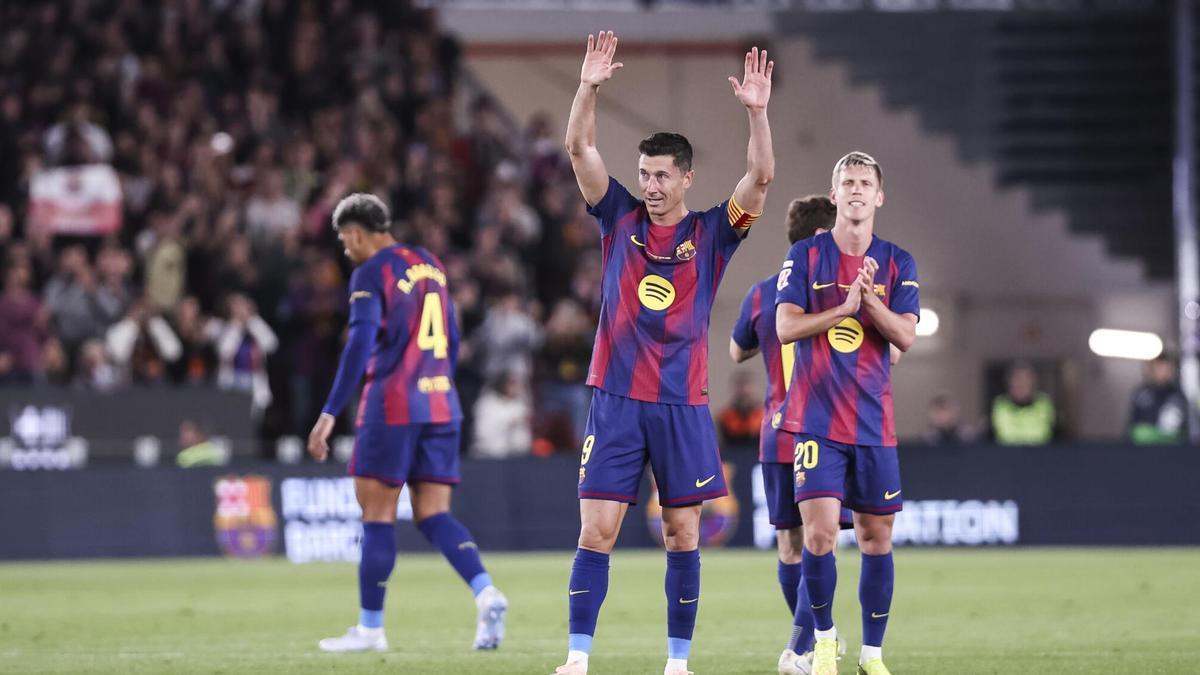
The fixture at Mestalla acts as an inflection point for the club’s human capital management. Potential departures of high-earning veterans, such as Robert Lewandowski, signal a pivot toward wage-structure rationalization. This transition reflects a move away from high-cost, short-term acquisition models toward a more sustainable integration of academy talent, exemplified by the emergence of players like Marc Casadó.
For stakeholders, these transitions represent a necessary adjustment to optimize long-term competitive longevity. The objective is to decouple future performance from historical salary inflation while maintaining a presence in the elite echelons of the sport.
Governance and Future Sustainability
The success of the women’s football program—cementing titles in 2021, 2023, 2024, and 2026—serves as a blueprint for aligning institutional capital with performance. This operational trajectory demonstrates how sports organizations can achieve sustainable growth by identifying and capitalizing on emerging competitive segments.
As the current cycle concludes, management must reconcile the shift in personnel with the preservation of organizational identity. Future institutional stability will depend on the effectiveness of this transition; investors and stakeholders remain focused on the club’s ability to balance financial discipline with the demands of top-tier performance.