The Strategic Return of a Core Asset
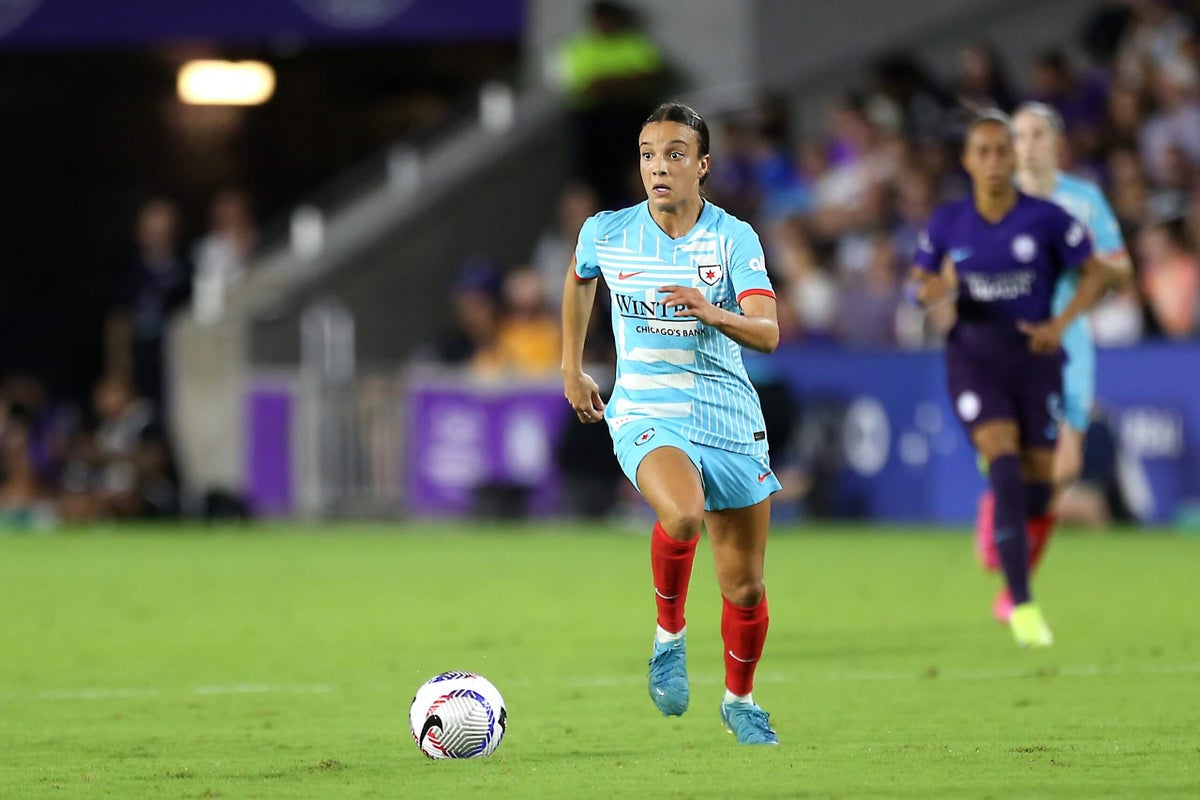
The activation of Mallory Swanson to the Chicago Stars roster marks a definitive inflection point for the club and the broader National Women’s Soccer League (NWSL) competitive ecosystem. Following an 18-month hiatus subsequent to the 2024 NWSL playoff quarterfinals, Swanson’s return signals the reintegration of a marquee offensive asset into a league characterized by rapid roster evolution and increasing tactical sophistication.
Swanson’s transition from maternity leave to match-day readiness serves as a barometer for the league’s athletic performance protocols. As one of 28 mothers currently holding active NWSL contracts, her return underscores the normalization of maternity leave as a formal component of elite athlete management, reflecting a broader structural shift in professional women’s sports.
Institutional Dynamics and Roster Management
The Chicago Stars’ decision to activate Swanson prior to the road match against the North Carolina Courage highlights the necessity of optimizing high-value assets within a parity-driven league. While the club maintains operational discretion regarding specific minute allocations, the return effectively raises the team’s offensive ceiling.
From a technical standpoint, Swanson’s reintegration introduces a dynamic element that defensive systems must recalibrate to address. Her ability to translate historical performance metrics into current tactical environments will provide empirical data on the long-term sustainability of peak athletic performance following career breaks in the NWSL.
The ‘Triple Espresso’ and League Stability
Swanson’s role within the U.S. Women’s National Team’s (USWNT) attacking unit—the ‘Triple Espresso’—positions her return within a wider context of national team continuity. With fellow core members Trinity Rodman and Sophia Wilson navigating their own intermittent absences during the 2025 season, the synchronized recovery of these athletes is vital for maintaining the USWNT’s performance benchmarks and marketability.
Operational Integration and Load Management
For the Chicago Stars, the challenge lies in reconciling the established 2025 squad chemistry with Swanson’s specific skill set. The team’s tactical adjustments during her absence must now evolve to integrate her offensive profile. Consequently, the organization has implemented data-driven load management protocols, ensuring that the transition to full-match fitness mitigates injury risk while maximizing long-term competitive utility.
Market and Cultural Intersection
Public discourse surrounding Swanson’s return is amplified by her intersection with broader urban sports culture, notably via her association with professional baseball. This cross-sport visibility bolsters the NWSL’s cultural footprint, attracting diversified audiences. Ultimately, the league’s success in facilitating these transitions—balancing the professional requirements of elite play with the demands of parenthood—remains a core indicator of its institutional maturity.