Commercial Velocity and Brand Equity Conversion
The launch of Subnautica 2 represents a watershed moment for the survival-crafting genre, moving 2 million units within its initial 12-hour window. This commercial velocity is a direct result of meticulously cultivated brand equity, evidenced by a 5-million-user wishlist on Steam. The transition from consumer intent to active engagement was seamless, yielding a cross-platform peak concurrent player count of 651,000. This data confirms a highly optimized marketing-to-sales pipeline capable of mobilizing a loyal community across Steam, Xbox, and the Epic Games Store simultaneously.
Iterative Development: The Strategic Early Access Roadmap
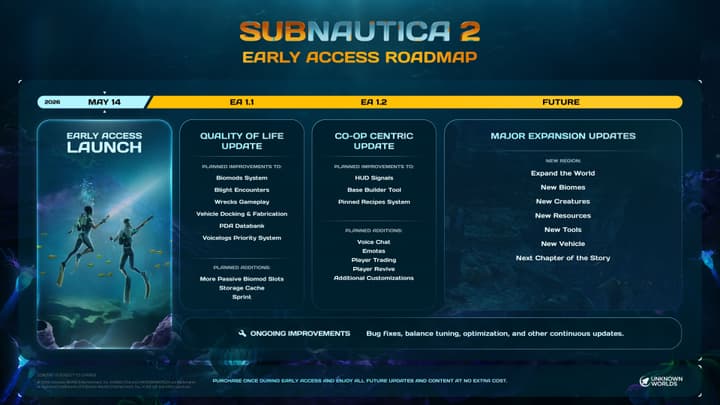
Unknown Worlds has implemented a tiered operational framework for its Early Access phase, prioritizing technical stability to mitigate initial churn. The roadmap differentiates between immediate quality-of-life (QoL) refinements and long-term content expansions. By addressing friction points for the 467,000 concurrent Steam users first, the studio stabilizes its player base before introducing high-complexity features. The subsequent focus on co-op infrastructure is a calculated move to broaden the total addressable market (TAM), pivoting the franchise toward social survival—a significant growth vector for the genre.
Institutional Governance and the Krafton Legal Resolution
Subnautica 2’s success follows a period of high-stakes institutional instability. A protracted legal dispute between Unknown Worlds’ executive leadership and parent company Krafton necessitated a shift in the launch window from its original 2025 target. The March judicial ruling proved a critical stabilizer, reinstating the CEO and preserving the creative autonomy essential to the franchise’s identity. This resolution mitigated the risks of corporate-subsidiary misalignment, allowing the team to finalize the product under a reorganized internal workflow that prioritized quality over a premature release.
Market Positioning and Resource Allocation
The studio’s commitment to a live-service operational model requires sustained capital allocation and a responsive development cycle. Future updates—introducing biomes, fauna, and narrative arcs—are designed to drive retention. Under Krafton’s ownership, the studio’s ability to manage large-scale content drops while maintaining system-level stability will be a test of its expanded operational capacity. Furthermore, the multi-platform distribution strategy hedges against ecosystem-specific volatility, ensuring the title remains a cornerstone of Krafton’s portfolio.
Conclusion: Synthesis of Resilience and Innovation
Subnautica 2 serves as a case study in navigating corporate conflict without compromising product integrity. The reinstatement of leadership following the March ruling not only stabilized morale but also ensured that playtest feedback was effectively integrated into the launch build. As the title evolves, its success will likely influence industry-wide pre-launch engagement strategies and the prioritization of social features in traditionally solitary experiences. Unknown Worlds has demonstrated that even amid institutional turbulence, a robust IP can achieve record-breaking market penetration.