
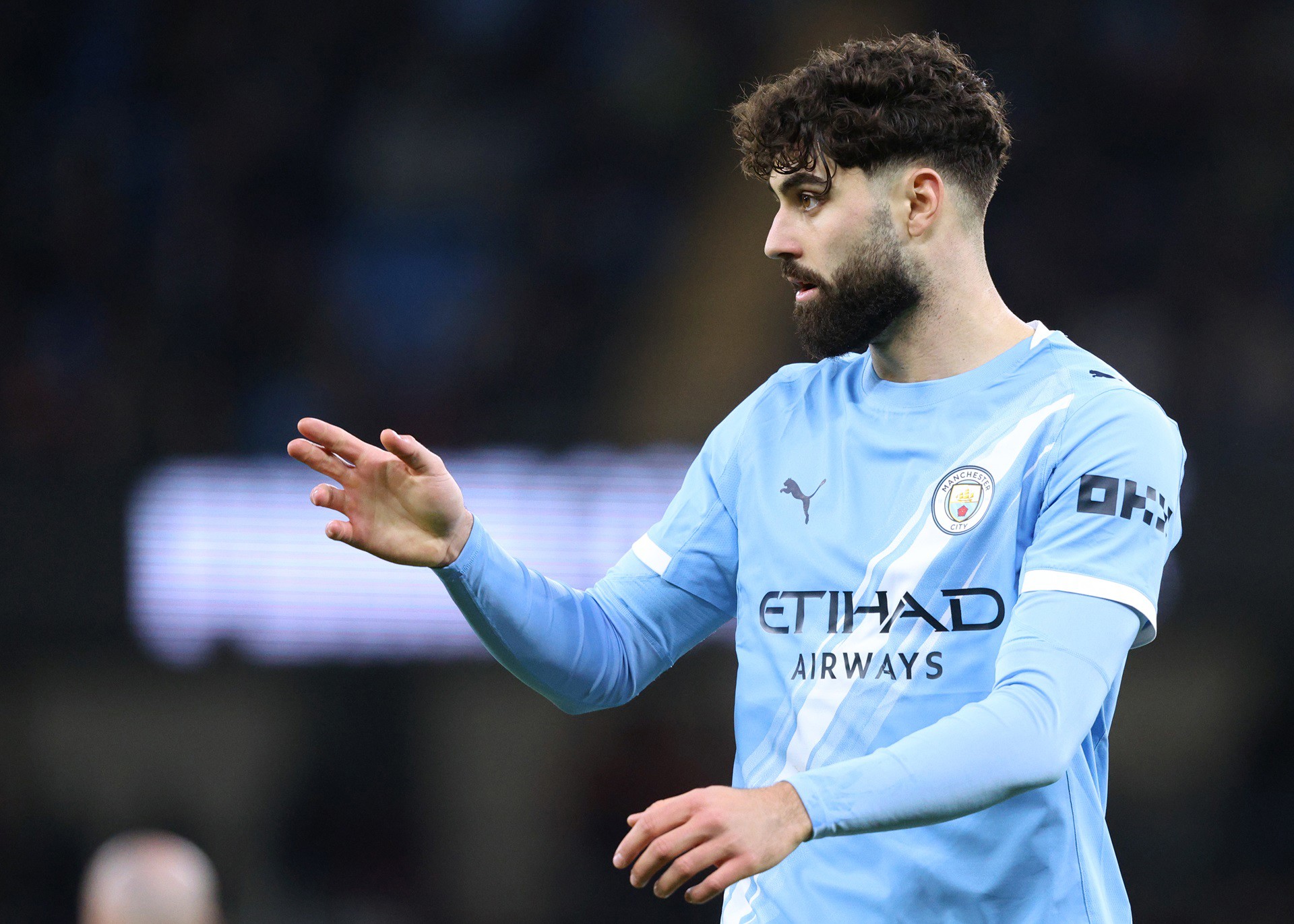
The Premier League title race has entered a state of heightened volatility following Arsenal’s comprehensive victory over West Ham. This result has significantly altered the competitive calculus for Manchester City, forcing a recalibration of their tactical approach. Pundit Danny Murphy has gone as far as to declare the race effectively concluded, citing Arsenal’s favorable scheduling and Crystal Palace’s potential distraction by upcoming European commitments. This external skepticism serves as the backdrop for Pep Guardiola’s latest strategic gamble: a six-man rotation designed to maintain physical equilibrium during a congested fixture period.
Defensive Reconfiguration and Structural Fluidity
The reintegration of Josko Gvardiol into the starting lineup marks a pivotal shift in City’s defensive architecture. Making his first appearance since early January, Gvardiol’s profile as a ball-progressing defender provides a necessary outlet on the left flank. The inclusion of Abdukodir Khusanov and Marc Guéhi alongside him suggests a transition toward a hybrid defensive system—likely a flexible three-man backline that can expand to five under pressure. This setup is specifically engineered to neutralize the vertical threat posed by Palace’s Jean-Philippe Mateta and Eddie Nketiah during transitional phases.
By utilizing Rayan Ait-Nouri and Matheus Nunes as inverted or high-positioned wing-backs, Guardiola is attempting to monopolize the central corridor while maintaining horizontal width. This structural density is intended to insulate the defense against counter-attacks, ensuring that City can sustain high-pressure phases without exposing the backline to isolated 1v1 scenarios.
Offensive Load Management and the Bench Strategic Reserve
The decision to utilize Erling Haaland and Jérémy Doku as second-half contingencies represents a sophisticated approach to load management. In their absence, the attacking burden shifts to Antoine Semenyo and Omar Marmoush, players whose mobility allows for a more fluid, interchanging front three. This tactical pivot relies on the creative orchestration of Phil Foden and Bernardo Silva to exploit localized pockets of space within the Palace defensive block. Without the static presence of a traditional number nine, City’s offensive output becomes more decentralized and difficult to track.
The depth of the City bench—featuring Ruben Dias, John Stones, and Mateo Kovacic—highlights the club’s advantage in human capital. This redundancy allows for mid-match tactical pivots that can fundamentally alter the game’s tempo. From a strategic perspective, the bench serves as a deterrent, forcing Crystal Palace to prepare for multiple offensive archetypes within the same ninety-minute window.
The European Final Variable and Palace’s Incentive Structure
Crystal Palace enters the Etihad under a unique set of institutional pressures. The shadow of an upcoming European final introduces a complex incentive structure; manager Oliver Glasner must balance immediate league competitiveness with the historical imperative of securing continental silverware. Murphy’s assertion that the title race is ‘over’ rests largely on the assumption that Palace’s intensity will be compromised by this prioritization. However, with Dean Henderson captaining a resilient side featuring Jefferson Lerma and Will Hughes, Palace remains a potent disruptor capable of leveraging physical superiority in midfield.
Narrative Resilience and Commercial Implications
The media narrative surrounding an ‘inevitable’ Arsenal triumph exerts psychological pressure that City must navigate. This environment tests the institutional resilience of the squad, requiring a performance that transcends mere tactical execution. For the Premier League as a commercial entity, the stakes of this match are significant. A City victory preserves the competitive tension necessary for global viewership, whereas any dropped points would validate the narrative of a concluded race, potentially diminishing the broadcast value of the remaining fixtures.
Conclusion: The Depth Factor in Modern Title Races
As the match progresses, the success of Guardiola’s six changes will serve as a case study in squad management. The integration of players like Khusanov and Marmoush into a high-stakes environment provides critical data on City’s long-term strategic trajectory. Whether this rotation is a masterstroke of physical preservation or a vulnerability to be exploited by a disciplined Palace side remains the central question. Ultimately, this fixture is not just a battle for three points, but a pivotal moment in the broader narrative of the 2023-24 campaign, where the margins of error have reached their absolute limit.
Photo by 1864750 on Pixabay.