
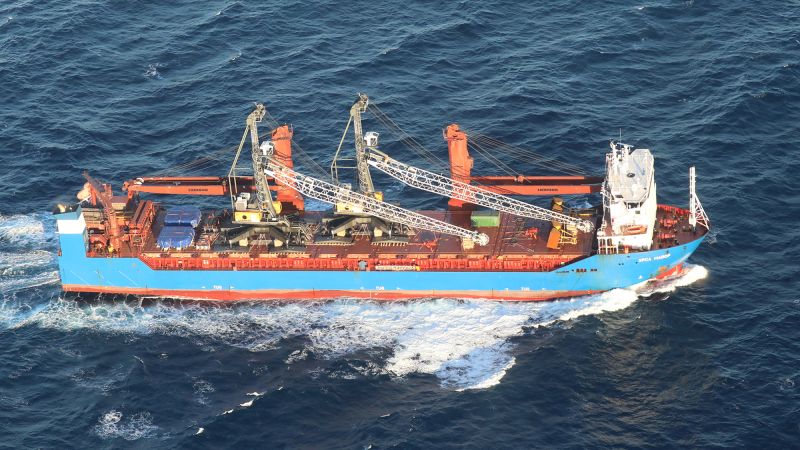
Mysterious Sinking of Ursa Major Raises Geopolitical Alarms
The sinking of the Russian cargo ship Ursa Major in the Mediterranean Sea on December 23, 2024, approximately 60 miles off the coast of Spain, has become a focal point of international scrutiny. CNN’s investigation suggests the vessel was likely transporting two nuclear reactors intended for submarines, a cargo with profound strategic implications, potentially destined for North Korea.
This incident, shrouded in secrecy, may represent a covert interdiction by a Western military power aiming to prevent the transfer of advanced nuclear technology from Russia to North Korea. This alliance is particularly sensitive given North Korea’s recent military support for Russia’s invasion of Ukraine.
Strategic Implications of Reactor Transfer
The potential delivery of submarine nuclear reactors to North Korea would represent a substantial technological leap for Pyongyang’s naval capabilities, significantly altering the strategic balance in the Indo-Pacific. Enhanced submarine-based deterrence and power projection capabilities would be a serious concern for South Korea, Japan, and the United States, potentially triggering regional arms race escalations.
Russia’s involvement in such a transfer underscores a deepening strategic partnership with North Korea, extending beyond conventional military aid into sensitive nuclear technology areas. This cooperation carries significant proliferation risks and potentially violates international sanctions regimes against North Korea.
Unexplained Circumstances and Military Surveillance
The circumstances surrounding the Ursa Major’s demise remain unexplained, with reports indicating prior explosions. This opacity fuels speculation about external military action or an internal catastrophic event related to its sensitive cargo. Limited Spanish government statements highlight the delicate geopolitical sensitivities.
Further deepening the mystery, public flight data reveals U.S. nuclear “sniffer” aircraft conducted surveillance flights over the sunken ship’s location twice in the past year. This intensified aerial monitoring suggests a keen U.S. interest in the vessel’s cargo and the events leading to its sinking, potentially indicating intelligence gathering or an assessment of residual nuclear material.
Post-Sinking Activity and Espionage Concerns
Adding another layer of intrigue, a vessel suspected of being a Russian spy ship reportedly visited the wreckage a week after the Ursa Major sank, accompanied by four further explosions, according to a source familiar with the Spanish investigation. This activity raises serious concerns about potential Russian efforts to salvage sensitive components, destroy evidence, or assess the extent of any external intervention.
The presence of a suspected Russian intelligence vessel at the site of a sunken Russian ship carrying potentially illicit nuclear material points to a high-stakes operation for information gathering and damage control, suggesting Russia’s active management of the incident’s strategic fallout and potential non-proliferation norm violations.
Broader Geopolitical and Security Ramifications
The Ursa Major incident occurs against a backdrop of increased geopolitical friction and a deepening strategic cooperation between Russia and North Korea, viewed by international observers as a challenge to the global security architecture and a destabilizing factor in East Asia and Eastern Europe.
The potential interdiction of this shipment, if confirmed, would signify a bold, high-risk move by Western intelligence agencies. While aimed at preventing proliferation, such actions carry inherent risks of escalation and unintended consequences, particularly in interactions with nuclear-armed states, highlighting the clandestine nature of modern geopolitical competition and the far-reaching implications of advanced technology transfers.
Impact on International Non-Proliferation Regimes
The alleged attempted transfer of submarine nuclear reactors to North Korea directly challenges international non-proliferation treaties and UN Security Council resolutions, undermining their efficacy and credibility. This incident may prompt a re-evaluation of enforcement mechanisms and intelligence-sharing protocols among non-proliferation-committed nations, underscoring the persistent threat of clandestine technology transfers and the need for robust monitoring and interdiction capabilities.
Economic and Maritime Security Dimensions
The sinking of a commercial vessel, regardless of cargo, impacts shipping insurance, maritime safety regulations, and global supply chains. The “shadow fleet” often used for transporting sensitive goods operates in less regulated environments, increasing voyage risks. The incident also raises questions about maritime security in the critical Mediterranean shipping lane, highlighting the complex interplay between commercial shipping, national security, and international law, and emphasizing the need for greater transparency and accountability in maritime operations involving sensitive cargoes.
Future Investigations and Transparency
The ongoing Spanish investigation is critical for determining the Ursa Major’s cargo, the cause of explosions, and the extent of any external involvement. Cooperation and transparency from Russia, Spain, and the U.S. will shape international understanding. The incident serves as a stark reminder of challenges in monitoring and controlling advanced military technology proliferation and the intricate geopolitical maneuvering involved, with the global community closely watching for developments that could reshape regional security and non-proliferation efforts.

Photo by l_dol on Pixabay.