
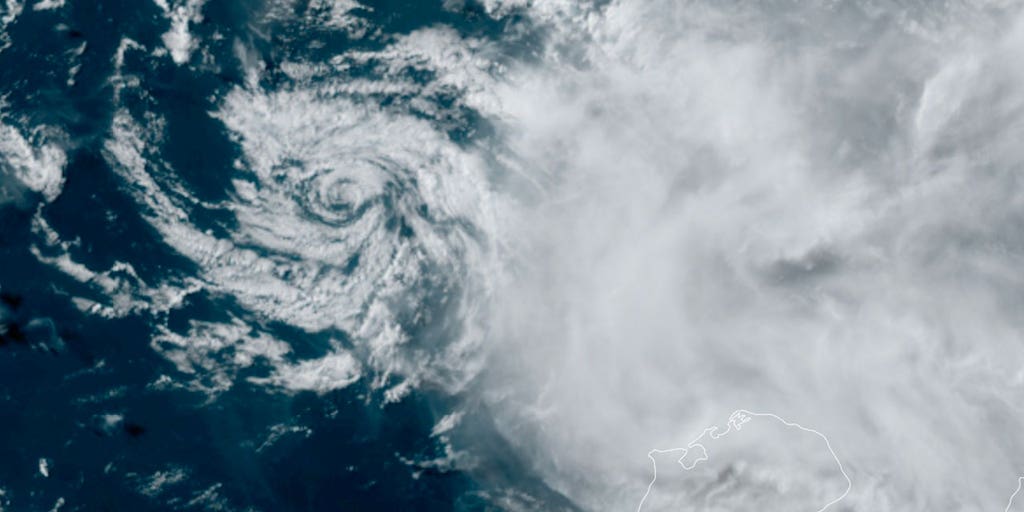
Super El Niño Accelerates, Reshaping Global Hurricane Outlook for 2026
The global climate system faces the confirmed, 100% probability of a rapidly accelerating Super El Niño establishing itself during the 2026 season. This intensified climate phenomenon, characterized by central Pacific Ocean sea surface temperatures (SSTs) consistently exceeding the 0.5 degrees Celsius El Niño benchmark, signifies a critical re-evaluation point for global weather dynamics. Its profound influence is poised to exert regionally divergent impacts on tropical cyclone activity across the Atlantic and Eastern Pacific basins, demanding urgent strategic adaptation.
El Niño’s Bifurcated Impact: Atlantic Suppression vs. Eastern Pacific Intensification
The anticipated Super El Niño is projected to significantly suppress open-ocean hurricane development in the Atlantic Basin for the 2026 season. This suppressive effect stems primarily from increased vertical wind shear, a meteorological condition where wind speeds and/or directions change sharply with altitude. El Niño typically strengthens the subtropical jet stream and alters the atmospheric Walker Circulation, which together amplify wind shear across the main development region of the Atlantic. This intense shearing disrupts the vertical structure of nascent tropical storms, preventing their organization, intensification, and sustained convective activity.
Crucially, while broad Atlantic suppression is expected, the complex atmospheric responses to El Niño introduce a critical regional nuance: the potential for increased localized tropical activity within the northern Gulf of Mexico and along the Southeast Coast of the United States. Altered steering currents, shifts in atmospheric subsidence, and localized sea surface temperature anomalies could funnel developing systems into these areas or allow for closer-to-coast formation, underscoring the imperative for regional emergency management agencies to maintain heightened vigilance despite a generally quieter seasonal forecast.
Conversely, the Eastern Pacific hurricane season, which commences earlier, is projected to experience substantial intensification due to the strong El Niño. Experts indicate this climate pattern could ‘turbocharge’ the 2026 Eastern Pacific season, potentially leading to a heightened number and intensity of tropical cyclones. Favorable conditions driven by El Niño include warmer SSTs, reduced wind shear, and enhanced atmospheric instability across the basin. Unlike the Atlantic, the Eastern Pacific benefits from the absence of dry, dust-laden air surges originating from the Sahara Desert, which often inhibit early Atlantic storm formation. This inherent regional advantage, amplified by El Niño, creates a distinct and elevated risk profile for coastal communities and maritime operations.
Potential impacts from an invigorated Eastern Pacific season extend across significant geographical areas, including Mexico, Hawaii, and the Southwest United States. For these regions, the accelerating El Niño translates directly into elevated operational challenges for disaster preparedness, demanding proactive resource allocation, intensified public communication, and robust inter-agency coordination.
Navigating Forecast Variability: Strategic Preparedness and Risk Refinement
Forecasters from entities like Colorado State University (CSU) and AccuWeather have generally indicated an average to below-average Atlantic hurricane season for 2026. These initial predictions, offering a broad statistical outlook, are underpinned by factors such as the anticipated El Niño-driven wind shear and the expectation of mixed rather than uniformly very warm Atlantic water temperatures. Warmer ocean temperatures are a primary fuel source for powerful storms, so a less uniform thermal profile, combined with enhanced shear, can mitigate some intensity risks.
However, as articulated by Volusia County Emergency Management Director Clint Mecham, the statistical probability of a quieter season does not negate the catastrophic potential of a single direct hit. This “one storm” principle is paramount in disaster preparedness, highlighting the critical need for sustained readiness regardless of seasonal forecasts. The official Atlantic hurricane season spans June 1 through November 30, with NOAA’s comprehensive outlook typically released in late May, providing foundational data for governmental agencies, insurance providers, and the private sector to refine strategic planning and resource allocation.
CSU’s specific predictions for the Atlantic basin—including, for example, two major hurricanes, six overall hurricanes, and thirteen named storms—provide quantitative benchmarks for risk assessment. Such detailed forecasts enable stakeholders to model potential scenarios, stress-test infrastructure, to adjust operational readiness, from supply chain logistics to emergency shelter planning, recognizing that localized impacts can diverge significantly from broad statistical averages.
Regional Climate Shifts: Hydrological Extremes and Economic Exposure
Beyond hurricane activity, the Super El Niño is poised to induce a significantly wetter winter across the entire Southern Tier of the United States. This substantial shift in precipitation patterns carries profound implications for critical sectors: agriculture, water resource management, and urban infrastructure across a vast geographical expanse. While increased rainfall can alleviate drought conditions in some areas, it simultaneously elevates risks of localized flash flooding, impacting transportation networks, public utilities, and residential properties. Municipalities and state agencies in these regions must proactively assess and reinforce stormwater management systems and flood control mechanisms.
The agricultural industry, particularly in states reliant on specific seasonal rainfall patterns, faces a complex duality of opportunities and challenges. While increased moisture can benefit certain crops, excessive or poorly timed precipitation can lead to crop damage, planting delays, and logistical complications, directly influencing commodity markets and regional economic stability. The energy sector, especially those with infrastructure in the Gulf of Mexico, faces the dual threat of localized tropical activity and altered precipitation patterns, necessitating robust operational continuity and supply chain resilience strategies.
The financial services sector, notably insurance and reinsurance markets, must recalibrate their exposure models to account for these divergent regional impacts. While a suppressed Atlantic season might suggest lower overall claims in one region, the potential for intensified Eastern Pacific activity and a dramatically wet Southern U.S. winter introduces new areas of concentrated risk, potential liabilities, and requires sophisticated portfolio diversification strategies.
Adaptive Governance and Public Communication in Evolving Climate Realities
The documented realities underscore the indispensable role of scientific institutions in delivering timely and precise climate predictions. Organizations such as NOAA, Colorado State University, and AccuWeather serve as foundational pillars for public and private sector decision-making, translating complex meteorological data into actionable intelligence. However, communicating these nuanced forecasts to the public—especially when predictions involve contrasting regional impacts like suppression in one basin and intensification in another—presents a significant institutional challenge. Emergency management agencies are tasked with balancing statistical probabilities against the absolute necessity of individual preparedness, aiming to prevent both complacency and undue alarm.
This emphasis on preparedness, even amidst forecasts of an average or below-average season, reflects a mature understanding of disaster risk management. It prioritizes resilience and proactive measures over reactive responses, acknowledging that even a single severe event can unleash profound and lasting socioeconomic consequences. Long-term strategic planning for coastal development, infrastructure investment, and land-use policies must increasingly integrate the recurring patterns of the El Niño-Southern Oscillation (ENSO) cycle. The accelerating Super El Niño serves as a potent reminder of climate’s dynamic nature and the imperative for adaptive governance frameworks.
Ultimately, the confluence of an accelerating Super El Niño, its contrasting effects on global hurricane basins, and the anticipated hydrological extremes across the Southern U.S. necessitates a sophisticated, multi-faceted response. Stakeholders across government, industry, and communities must leverage these advanced insights to fortify resilience, strategically mitigate exposure, and safeguard operational continuity in the face of evolving climate realities.