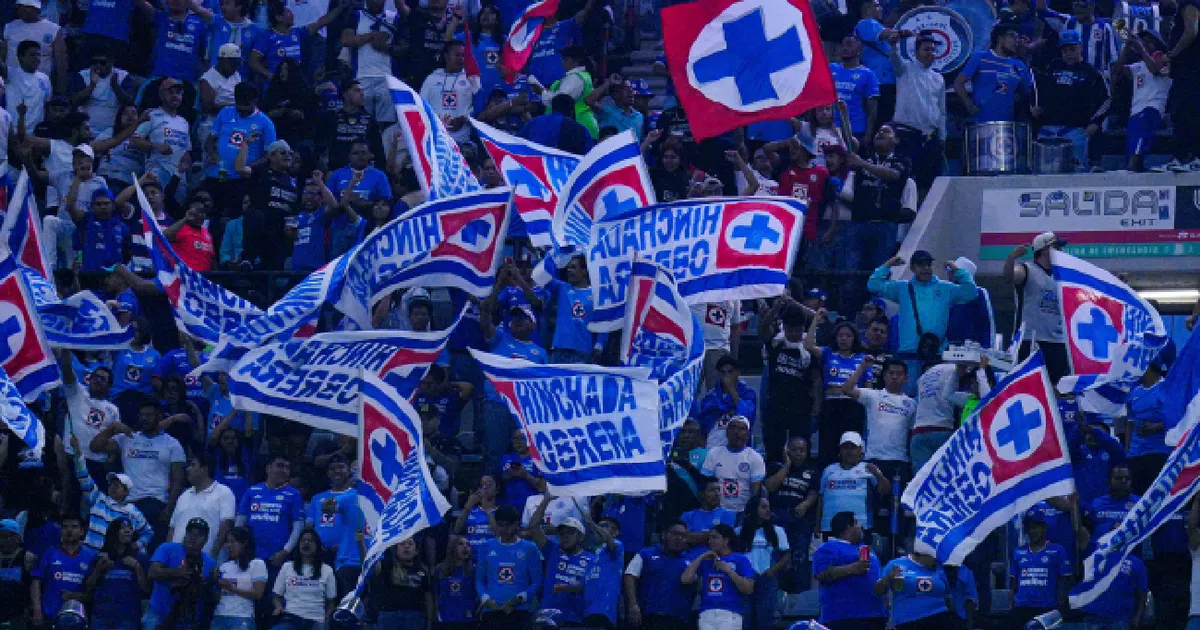
The Clausura 2026 Quarter-final second leg between Cruz Azul and Atlas transcends standard playoff competition, serving as a litmus test for the club’s transition into a sustained domestic hegemon. Following the high-water mark of their 2025 international success, the organization now faces the operational imperative of converting home-field advantage into measurable progress toward a domestic double.
Psychological Assets and Environmental Engineering
Preparations at Estadio Azteca involve more than logistical readiness; they represent a calculated deployment of psychological leverage. The coordinated mosaic by La Sangre Azul is a strategic initiative designed to manipulate the venue’s acoustics and visual density, creating a high-pressure environment intended to disrupt Atlas’s tactical composure. This institutionalization of the fan experience converts brand loyalty into a tangible competitive asset, establishing a performance floor for the home side while testing the emotional resilience of the visitors.
Historical Trajectory and Stakeholder Expectations
The 2026 campaign is defined by the shift in narrative following Cruz Azul’s seventh Concachampions title in 2025. This achievement recalibrated stakeholder expectations, moving the club beyond the ‘drought-breaking’ era of 2021 into a period where annual domestic dominance is the baseline KPI. However, the shadow of previous Liguilla exits necessitates a clinical execution to prevent reputational regression. For the technical directorate, this match is about demonstrating that recent continental silverware was the byproduct of a robust system rather than an isolated competitive peak.
Commercial Scalability and Operational Revenue
Progression through the Liguilla phases offers exponential returns in match-day revenue, broadcasting premiums, and sponsorship activations. Within the high-capacity infrastructure of Estadio Azteca, the financial stakes are magnified. Advancing to the semi-finals secures additional high-leverage broadcasting windows, vital for optimizing the club’s commercial portfolio. Furthermore, the global visibility of these playoff fixtures serves as a critical driver for retail sales and digital engagement, reinforcing the club’s market position in the North American sports landscape.
Tactical Conflict: Pressure vs. Pragmatism
The match-up presents a stark contrast in tactical philosophy. Cruz Azul’s reliance on high-tempo offensive rotations faces a stern test against Atlas’s disciplined defensive blocks and transition-heavy game plan. The absence of mid-week international commitments in early 2026 has granted Cruz Azul a physical advantage, yet the tactical burden remains on the home side to dismantle a disruptive opponent. The outcome hinges on the squad’s ability to manage the ‘away goals’ risk while maintaining the clinical efficiency required in knockout football.
Conclusion: Defining the 2026 Fiscal and Sporting Cycle
Ultimately, the confrontation with Atlas determines the strategic direction for the remainder of the 2026 calendar year. A victory validates the current investment model and strengthens the club’s leverage in upcoming transfer windows and contract renewals. Conversely, an early exit would trigger an institutional audit of the technical project. As the second leg commences, the focus remains on whether Cruz Azul can synchronize its environmental advantages with tactical precision to secure its status at the apex of Mexican football.